

- Top User Rated

Filters
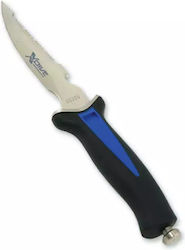
Clear- Spearfishing Knife: Unlike classic or folding knives, the stiletto features a thin, sharp, and hydrodynamic blade. It is the ideal choice for spearfishing, as it offers maximum precision and excellent penetration.
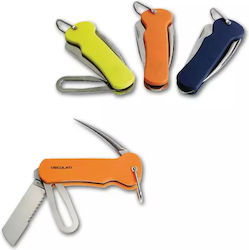
- Collapsible: Unlike fixed-blade knives, folding knives close, offering maximum safety and space savings. They are extremely compact, ideal for easy storage in your gear pocket.
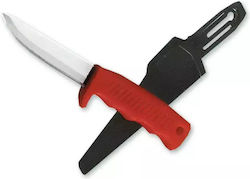
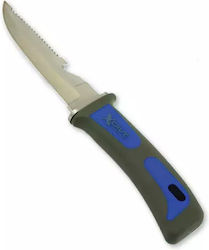
- Fixed Blade: Unlike folding knives, fixed-blade knives are more robust and always ready for immediate use. They have no moving parts, are very easy to clean of sand and salt, and offer maximum reliability underwater.
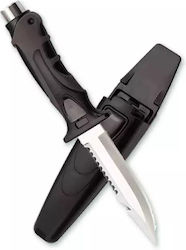
- Diving: Unlike speargun knives, diving knives are designed as practical safety tools. They usually feature a serrated blade to easily cut ropes or nets, providing complete peace of mind underwater.
- Spearfishing: Unlike simple diving knives, spearfishing knives have a pointed blade (stiletto) for the immediate dispatch of the catch. They are lighter, hydrodynamic, and fit perfectly in your hand or on your leg.
- Vest: Unlike mounting on the leg, placing it on the vest (BCD) keeps the knife always in your field of view. It ensures immediate access with both hands, reducing the risk of getting tangled in ropes or rocks.
- Flexible Hose: Unlike leg mounting, attaching it to the equipment hose keeps the knife always in front of you. It offers immediate access with both hands in an emergency, for complete safety on the seabed.
- Mini: Unlike larger knives, the mini blade (up to 9 cm) is extremely lightweight, compact, and discreet. It is the perfect backup tool that does not restrict your movements, fitting anywhere.
- Medium: Unlike very small or large knives, the medium blade (9–13 cm) offers the perfect balance. It combines flexibility and cutting power, making it the ideal choice for comfort and safety on every dive.
- Large: Unlike small knives, the large blade (over 13 cm) offers maximum cutting power and leverage. It is the ideal tool for heavy underwater tasks and for easily cutting thick ropes or nets.
- Stainless Steel: Unlike titanium, stainless steel is more affordable and can achieve a very sharp edge more easily. It is an ideal choice, as long as you rinse it with fresh water after diving so it does not rust.
- Titanium: Unlike steel, a titanium blade never rusts in saltwater. It is the top choice, as it is extremely lightweight, highly wear-resistant, and requires no maintenance after diving.
- Pointed: Unlike the blunt tip, the pointed tip offers excellent penetration. It is ideal for spearfishing and precision tasks on the seabed. However, it requires care so you do not accidentally puncture your suit or equipment.
- Flat: Unlike the pointed tip, the flat tip prevents accidentally puncturing your suit or equipment. It is a safer choice for diving and often serves as a practical tool (e.g., a screwdriver) on the seabed
- Up to 15 €: Top choice. Titanium offers 100% immunity to rust in saltwater, even without thorough rinsing. It is extremely lightweight, non-magnetic (safe near compasses), and retains its edge for years.
- 15 - 30 €: Compact and practical, it folds like a pocket knife for safe storage in the BCD vest pocket. Ideal as a backup tool. It is not recommended as the main rescue knife, as it takes time and usually requires two hands to open.
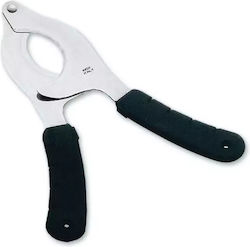
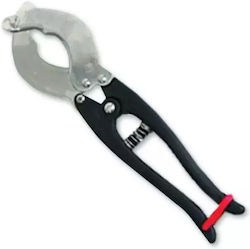
- 30 - 50 €: Specialized tool with a sturdy construction, designed exclusively for opening sea urchins and shellfish. It does not have a traditional blade, so it does not replace a diving knife, nor does it function as a safety tool for cutting ropes.
- 50 € and above: It features a thin, extremely sharp tip for easy penetration. It is the top choice for spearfishing, ensuring the immediate killing of the catch. It is not recommended as a safety knife due to the risk of puncturing equipment.