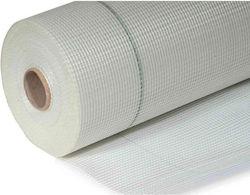
Polyester Fabric: Synthetic reinforcing fabrics used in waterproofing systems (such as applied waterproof coatings) to prevent cracking and increase the insulation’s strength and flexibility.
Fiberglass mesh: Fiberglass mesh embedded in mortars and thermal insulation renders. It protects exterior surfaces from cracking and provides mechanical strength.
Indicates the mesh’s density and strength per square metre. A higher weight usually means greater mechanical resistance to the stresses of plaster or insulation.
Lightweight (30–90 g/m²): Lightweight mesh suitable for minor repairs, thin plastering, or interior surfaces. It offers flexibility and easy installation without adding extra load to the structure.
Medium (100–150 g/m²): General-purpose meshes offering a balance of strength and flexibility. Commonly used in base coats and interior masonry reinforcement to prevent cracking.
Heavy Duty (160+ g/m²): Reinforced meshes weighing 160 g/m² or more. They provide greater mechanical strength in external thermal insulation systems, protecting render coatings against cracking and impacts in high-stress areas.
Standard Roll (1 m): The standard roll width, commonly chosen for reinforcing renders in external thermal insulation systems, ensures easy and uniform coverage of large masonry surfaces.
Tapes & Special Widths (Up to 0.9 m): Narrow-width mesh (up to 0.9 m) or mesh tape. Used for localized reinforcement, joints, corners, and insulation repairs, covering areas that do not require a full-width roll.
Indicates the dimensions of the openings (holes) between the mesh fibers (e.g. 4 × 4 mm). Determines how easily mortar can penetrate and the surface strength, depending on the application.