Cat.6: Supports speeds up to 10 Gbps over shorter distances (up to 55 meters), with better shielding to avoid interference.
Cat.6a: Supports speeds of 10 Gbps over longer distances (up to 100 meters) and has improved performance against electromagnetic interference.
Cat.7: Supports speeds up to 10 Gbps with enhanced shielding, suitable for industrial and professional uses.
Cat.8.1: Supports speeds up to 40 Gbps, mainly for data centers and professional applications, with excellent shielding for high performance over short distances (up to 30 meters).
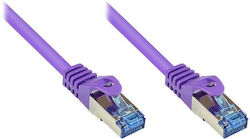
S/FTP: This type of cable has shielding both around each pair of wires and around the entire cable. It offers very high protection against interference (EMI/RFI) and is ideal for environments with high electromagnetic noise.
Optical Fiber: Optical fiber transmits data through light rather than electrical signals, offering much higher speeds and distances compared to metallic cables. It is resistant to electromagnetic interference.
U/UTP: U/UTP has no shielding at any point. It is widely used in local area networks (LAN) due to its low cost and ease of installation, but it is more susceptible to interference.
SF/UTP: This type features both foil and braid around the overall cable, but the wire pairs remain unshielded. It offers even greater protection against electromagnetic interference.
Pure Copper: Made of copper throughout its entire thickness. Offers low resistance, excellent conductivity, high mechanical strength, and durability. Suitable for electrical installations, high-speed networks (e.g., Cat6/Cat7), and long distances.
CCA: It consists of an aluminum core surrounded by a thin layer of copper. It is lighter and less expensive. It is not suitable for demanding installations, such as long-distance Ethernet/PoE (Power over Ethernet)



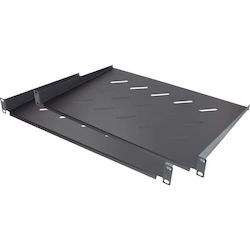


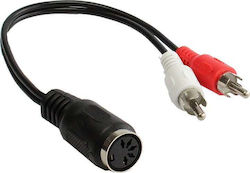
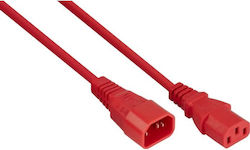


 Network Cable Adapters & Connectors

Be the first to leave a comment!