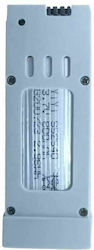
Li-Po: They offer more charging cycles just like Li-ion batteries, with the difference that they are lighter and have less chance of leaking, but they have lower capacity.
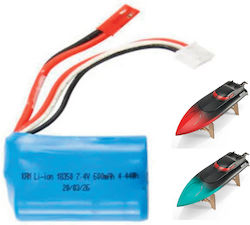
Li-ion: They offer more charging cycles compared to older ones based on nickel or lead. They do not discharge easily when stored and we can charge them whenever we want.
Ni-MH: They offer great capacity and are made with more environmentally friendly materials compared to Ni-Cd. They should only be recharged when fully discharged, otherwise they lose their performance.
The individual cells that are connected in series to provide the desired voltage (Volt). For example, a "3S" battery contains 3 lithium cells connected together. More cells mean higher voltage and usually greater power.
Wh is calculated using the formula: (Voltage x Capacity) / 1000. Batteries <100Wh, the IATA limit, are safe for carry-on luggage. Between 100Wh and 160Wh, airline approval is required, while batteries over 160Wh are not safe for flight.