S/FTP: This type of cable has shielding both around each pair of wires and around the entire cable. It offers very high protection against interference (EMI/RFI) and is ideal for environments with high electromagnetic noise.
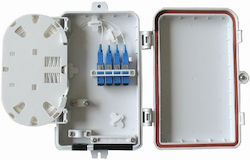
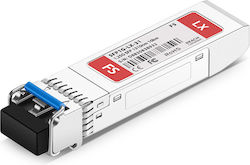
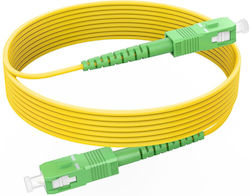
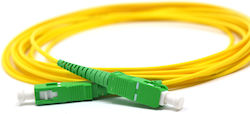
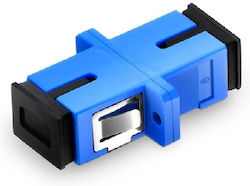
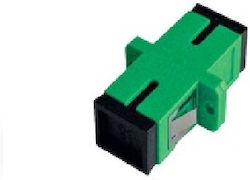
Optical Fiber: Optical fiber transmits data through light rather than electrical signals, offering much higher speeds and distances compared to metallic cables. It is resistant to electromagnetic interference.
U/UTP: U/UTP has no shielding at any point. It is widely used in local area networks (LAN) due to its low cost and ease of installation, but it is more susceptible to interference.
U/FTP (STP): Here, the cable pairs are shielded with aluminum, but the overall cable does not have additional shielding. It offers protection against interference per cable pair, improving performance in environments with moderate interference.
F/UTP: It has a general shielding around the outer part of the cable (usually made of foil), but the wire pairs are not shielded. It is often used in environments with a moderate level of interference.
SF/UTP: This type features both foil and braid around the overall cable, but the wire pairs remain unshielded. It offers even greater protection against electromagnetic interference.
SF/FTP: Each pair of cables is shielded, and the entire cable is also shielded with foil and braid. This type offers maximum protection against interference and is ideal for environments with very high noise levels.
S/UTP: The cable has an external shield (mesh) around the entire set of wire pairs, but the pairs themselves do not have additional shielding. It is a good choice for moderate levels of interference.
Direct Attach Copper: It is mainly used for high-speed connections over short distances between network devices, such as switches and routers. It is an economical cable that does not require additional transceivers.
F/FTP: Each pair of wires is shielded with foil, and there is also additional shielding around the entire cable, providing excellent protection against interference.