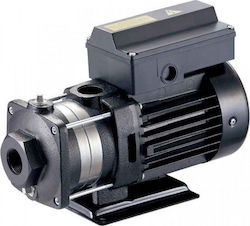
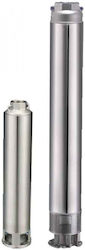
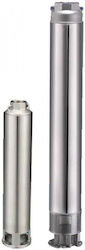
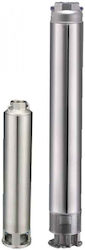
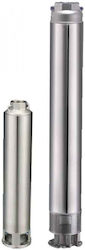
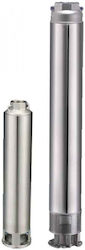
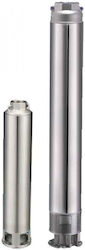
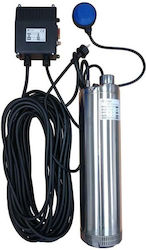
Waste Water / Sewage: Waste water / sewage pumps are used for pumping and transferring waste water, sewage, and other liquids containing solids or particles.
Well: They are designed to pump water from underground sources when the water is at a depth and are mainly used for water supply, irrigation, and other applications in areas that do not have easy access to surface water.
Drilling: Borehole pumps are used for pumping water or other liquids from underground boreholes (water sources) to surfaces for various purposes, such as water supply, irrigation, and industrial applications
Rainwater: Rainwater pumps are used for pumping rainwater.
Single-phase: They are used in domestic installations, small boreholes, tanks, and irrigation systems where there is no three-phase supply. Suitable for medium-scale water supply and pumping applications.
Three-phase: They are applied in boreholes, agricultural and industrial systems, as well as in homes with three-phase supply. They are used for high flow and pressure demands, such as irrigation networks, pumping stations, and large water supply installations.
It is the power required by the motor to operate the pump and move the fluid. It is measured in horsepower (hp) or kilowatts (kW) and depends on the flow rate, head height, and system resistance.
Electric: The power supply refers to the pump's need for electrical energy from an external power source, such as single-phase or three-phase electricity.
Battery-powered: Allows the pump to operate independently using batteries (e.g., 12V or 24V), and is ideal for applications without a fixed electrical connection. Additionally, it can be combined with solar energy