Human Detection: It analyzes movement and recognizes the silhouette of a person. This way, the system sends notifications only for human presence, ignoring false alarms from pets, leaves, or shadows.
Vehicle Detection: Recognizes the shape of vehicles. Suitable for parking areas or roads, sending notifications only for vehicles and ignoring other insignificant movements.
ONVIF: An open protocol that allows cameras and recorders from different manufacturers to communicate with each other. It provides the flexibility to combine cameras from one manufacturer with a recorder from another.
PoE: Each PoE port provides power and data through the same cable (plug-and-play).
Pre-installed HDD: The device comes with the hard drive already installed and configured.
4K: The top choice for ultimate detail. Essential if you want to digitally zoom in on the recorded image to clearly distinguish faces, license plates, or details in large areas, without the image breaking up.
Full HD: The market standard for everyday use. The most widespread resolution, offering very clear image quality for the majority of applications (homes, small shops). Ensures a good balance between image quality and storage space
Full HD+: Covers resolutions higher than standard 1080p (such as 4MP and 5MP), which are now the standard in quality security cameras. Offers noticeably better clarity than Full HD, allowing for improved object recognition.
HD: Mainly suitable for older technology cameras or for very simple area monitoring (e.g. a storage room) where it is sufficient to observe movement without requiring high clarity or feature recognition.
The technology that "shrinks" the video file. H.265+ uses half the space compared to H.264, offering twice as many days of recording. At the same time, the systems provide backward compatibility, fully supporting older cameras as well
H.265+: It is the most advanced compression. It "shrinks" video files significantly without losing quality. The benefit: It gives you double or even triple recording time on the same hard drive compared to older recorders. Ideal for larger backups
H.265: It is the successor to the older H.264. It is essential if you have high-resolution cameras (4MP and above), as it manages data much more efficiently, so the disk does not fill up immediately.
H.264: Suitable for connecting older cameras. Videos take up more space on the hard drive compared to modern ones (H.265), so storage may fill up more quickly.
H.264+: It is reliable, but video files take up more space than H.265/H.265+. It is mainly recommended for budget systems with a small number of low-resolution cameras.
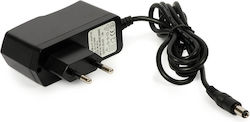
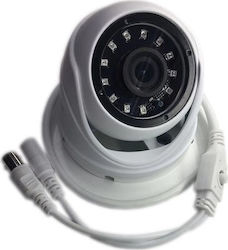 Surveillance Cameras