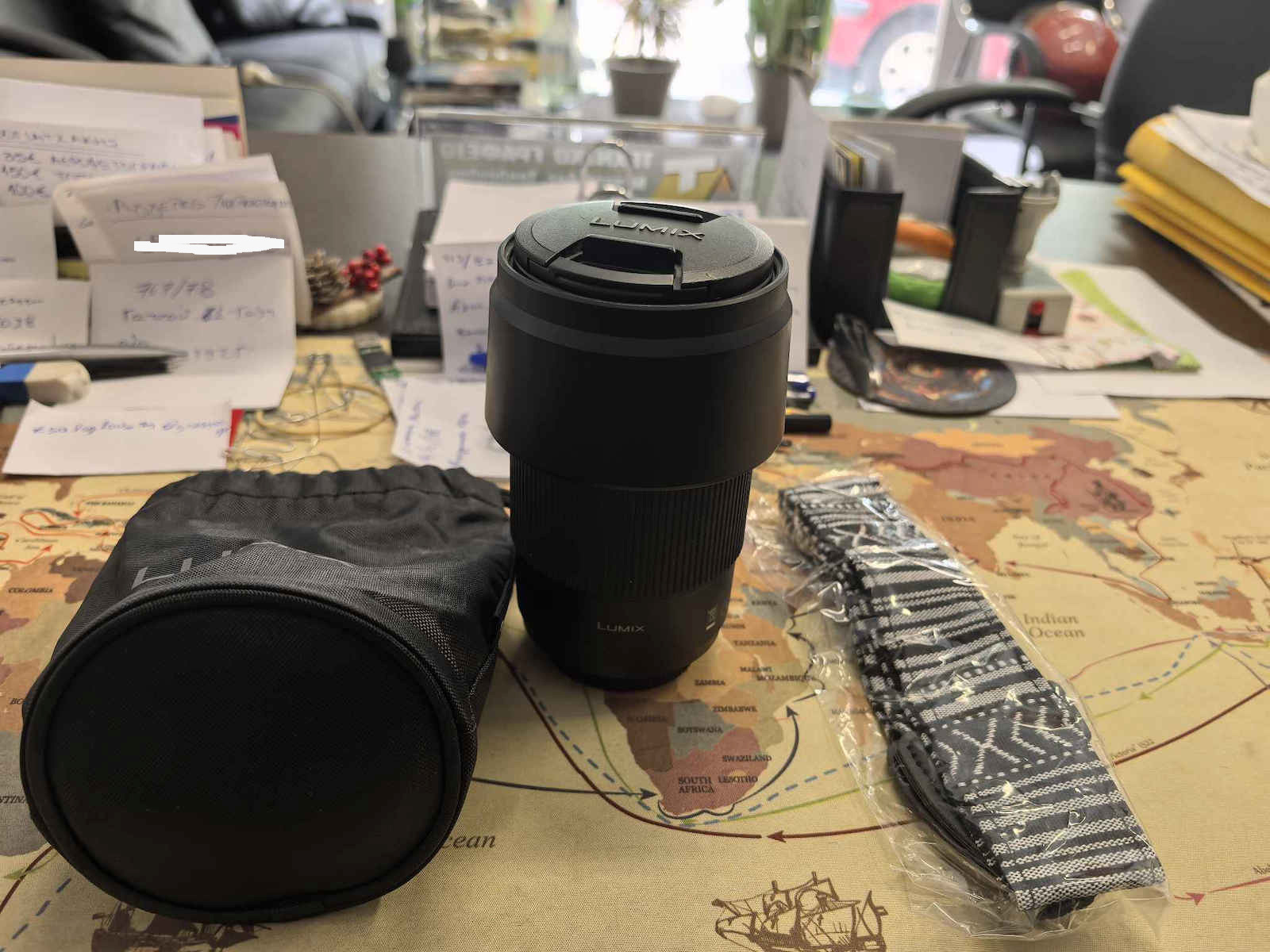
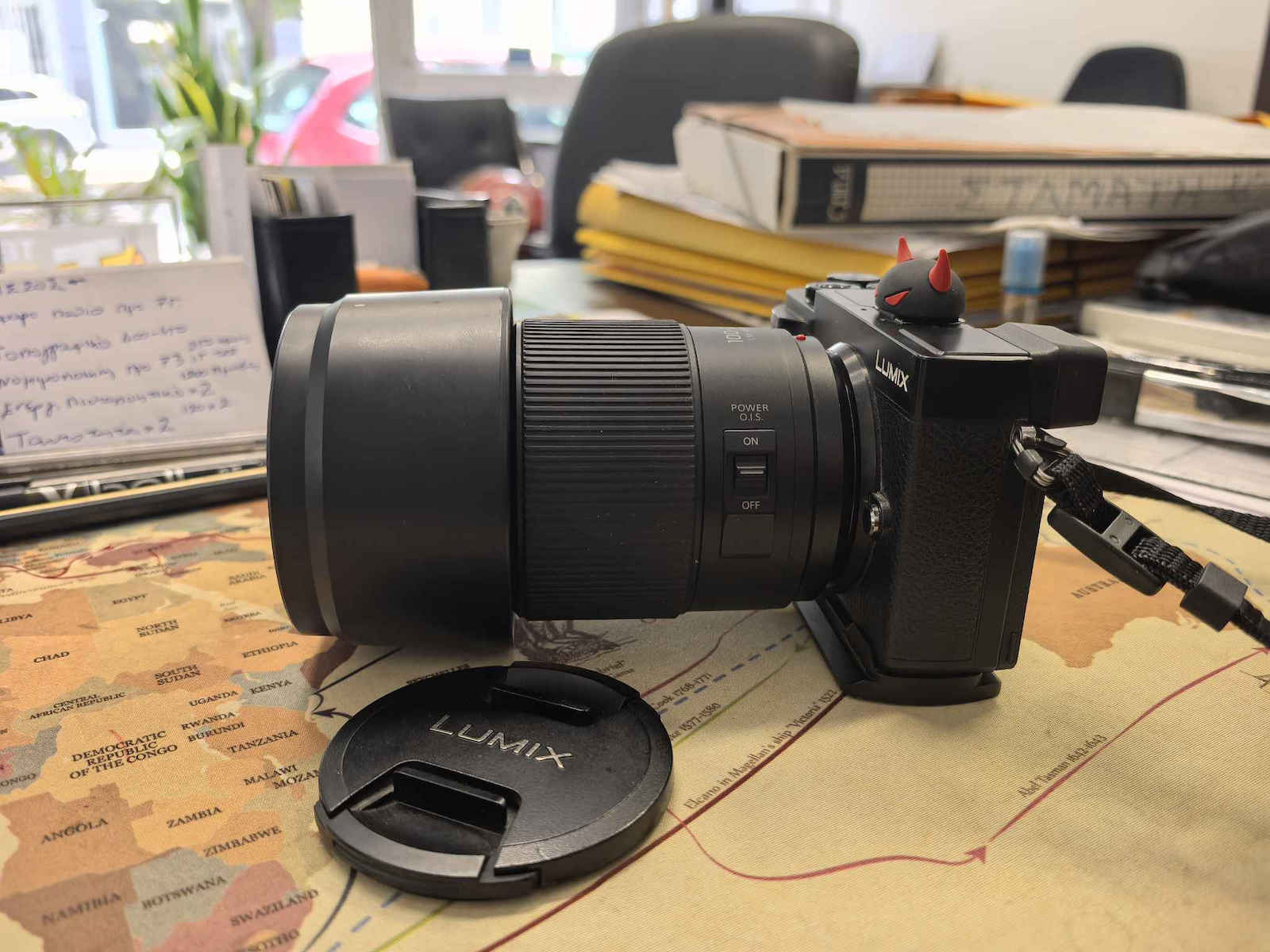
Before this, I had the Olympus m.zuiko 75-300/f4,5-6,3 mkII, which is the cheapest m4/3 lens with similar focal lengths. Before making the change, which cost me about 150€, I had the opportunity to test them on my camera. During use, there are the following differences:
- It is slightly heavier, but not dramatically so. They have the same length and slightly larger diameter.
- The construction seems better, and obviously it is since it is also weather/dust/cold resistant, etc. It also comes with a lens hood in the packaging, while for the zuiko lens you have to buy it separately (the original one is very expensive).
- It sits well on the compact GX9, and even better if you have a larger body.
- Being brighter, it makes it easier to have faster shutter speeds, and the built-in stabilization (the zuiko lens doesn't have it) works well with Panasonic bodies or, if you prefer, you can close it for Olympus (do your own tests to see what works better on Olympus).
Back on the computer, you can see some difference in microcontrast, especially in distant urban landscapes and details. Not dramatic differences, but visible at 1:1. Also, while the zuiko lens drops its performance quite a bit around 230-240mm, the lumix lens holds up a little longer, up to 260-280mm, depending on the specific pieces, of course.
Is it worth its money, and specifically the difference from the "cousin" zuiko? For me, yes, if you often need such focal lengths (up to 600mm in Full Frame!!!), and you can't spend over 1000€ that the next more expensive lenses in the system ask for, get it. If, on the other hand, it is for rare use and you do your work with more "normal" focal lengths up to 150-200mm (300-400mm in FF), there are good solutions with half the weight/size and almost half the price.
Πριν από αυτόν είχα τον Olympus m.zuiko 75-300/f4,5-6,3 mkII που είναι ο φθηνότερος φακός m4/3 με παραπλήσιες εστιακές αποστάσεις. Πριν προχωρήσω στην αλλαγή που μου κόστισε περίπου 150€, είχα την ευκαιρία να τους δοκιμάσω στην μηχανή μου. Κατά την χρήση υπάρχουν οι εξής διαφορές:
- Είναι λίγο πιο βαρύς αλλά όχι κάτι δραματικό, έχουν το ίδιο μήκος και έχει ελαφρά μεγαλύτερη διάμετρο.
- Η κατασκευή δείχνει καλύτερη, και προφανώς είναι αφού είναι και ανθεκτικός σε βροχή/σκόνες/κρύο κ.λπ. Επίσης υπάρχει σκίαστρο στην συσκευασία, ενώ για τον zuiko το αγοράζετε χωριστά (το original πανάκριβο).
- Στο χέρι κάθεται καλά φορεμένος στην μαζεμένη GX9, αν έχετε μεγαλύτερο σώμα ακόμα καλύτερα.
- Όντας πιο φωτεινός, διευκολύνει να έχεις πιο γρήγορους χρόνους και η ενσωματωμένη σταθεροποίηση (ο zuiko δεν έχει), συνεργάζεται καλά με σώματα panasonic ή αν θέλετε την κλείνετε για olympus (κάντε τις δοκιμές σας τι δουλεύει καλύτερα στις oly).
Πίσω στον υπολογιστή, βλέπεις κάμποση διαφορά στο μικροκοντραστ, ειδικά σε μακρινό αστικό τοπίο αλλά και φυλωσιές. Όχι δραματικές διαφορές αλλά ορατές στο 1:1. Επίσης, ενώ ο zuiko κάπου στα 230-240mm ρίχνει αρκετά την απόδοσή του, ο lumix αντέχει λίγο παραπάνω, έως τα 260-280mm, εξαρτάται κι από τα συγκεκριμένα κομμάτια βέβαια.
Αξίζει τα λεφτά του, και πιο ειδικά την διαφορά από τον "ξαδελφο" zuiko? Για μένα ναι, αν χρειάζεστε συχνά τέτοιες εστιακές (έως 600mm σε Full Frame!!!), και δεν μπορείτε να δώσετε τα πάνω από 1000€ που ζητάνε οι επόμενοι ακριβότεροι φακοί του συστήματος, πάρτε τον. Αν πάλι είναι για σπάνια χρήση και κάνετε την δουλειά σας με πιο "νορμαλ" εστιακές έως 150-200mm (300-400mm σε FF), υπάρχουν καλές λύσεις με το μισό βάρος/μέγεθος και σχεδόν τα μισά λεφτά.