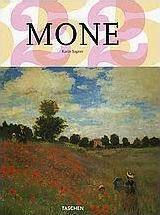
Oil painting in nature was a relatively new technique; this possibility was first given to painters in the 1840s when tubes for transporting paints were invented. According to Boudin, it was the only way to capture the first impression, because "whatever you paint on the spot has power, intensity, a liveliness that cannot be created in the studio."
The exploration of these ideas and nature in general would become the focus of Monet's work from then on. In the summer of 1858, he painted two landscapes alongside Boudin; these paintings were later exhibited in Le Havre, but unfortunately, their traces have been lost today.
Boudin took Monet with him to Honfleur, where he taught him to observe tonal nuances, perspective, and light. Later, Monet credited his decision to become a painter to this meeting with Boudin, with whom he kept close contact throughout his life.
"I owe my becoming a painter to Boudin. With his unmatched kindness, Boudin took on my education. My eyes slowly opened; I truly understood nature, and at the same time, I began to love it. I analyzed its forms, studied its colors. Six months later..., I announced to my father that I wanted to become a painter and left to study painting in Paris."