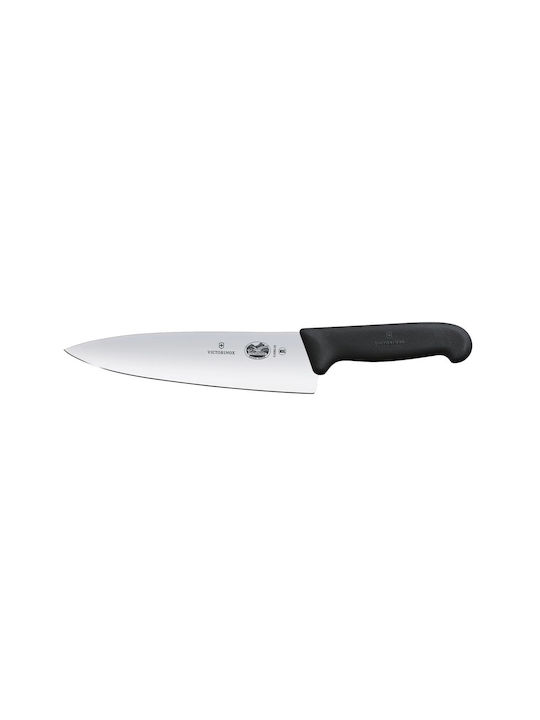
It is a good Chef knife for the home. For someone who doesn't have something similar, it becomes immediately essential and greatly facilitates food preparation, both before and after cooking the dish. It offers a sense of confidence in the hand.
Pros
It was the "cheapest of the good," setting the benchmark for the quality-price ratio.
It is made by a company that certainly adheres to its standards and guarantees.
It makes you feel like a professional. Quickly and naturally, it took the place of all my other food preparation knives, even for fruits and peeling due to the comfort of use and the better result.
The plastic handle is ergonomically more quality than it appears. Its texture resembles more of a non-slip ceramic than matte plastic – the photos do not do it justice. Probably as a budget product, they left the advertising to the name and the users and did not take care to get better photos to promote it.
Cons
Although it is a tremendous upgrade from conventional knives or lower quality ones (e.g., from IKEA), the need for a more user-friendly knife became apparent, perhaps with notches on the sides to prevent slices from sticking and rolling out of the preparation area, creating a mess. Or for specialized knives for 2-3 different uses.
Its size makes smaller cuts and different cutting or peeling techniques difficult. Often, a sharp edge or corner is left to "tell" you that you are lucky you didn't cut yourself on this.
It requires responsibility and selective attention. Conditions will not always be ideal. People may enter the kitchen for... a glass of water. When I do complex preparation, I inform everyone to stay away and ensure they comply. The extra attention affects the flow of cooking, at least for me.
Conclusion
It may not be a knife suitable for beginners, as it is a bit more specialized in design. However, it is a nice, comfortable, and quality tool that has served me well, and I have learned to use it without accidents. Of course, before anyone uses it, they must learn the cutting angles and how to gather their fingers on the supporting hand of the food and the blade. Basic rules are available on wiki-how or even short videos on YouTube for these. It doesn't require stress, but it demands responsibility, and finally, the completion of knowledge comes with practice.
Additionally
The suggestions for parallel purchases below the purchase are not random. It needs sharpening more often than I thought – with daily use, at least once a week. I preferred the Victorinox sharpener for its ease of switching between levels 1 and 2 with a switch and its style.
Είναι ένα καλό μαχαίρι Chef για το σπίτι. Σε κάποιον που δεν έχει κάτι αντίστοιχο γίνεται αμέσως απαραίτητο και διευκολύνει πάρα πολύ την προετοιμασία του φαγητού, τόσο πριν όσο και μετά την παρασκευή του πιάτου. Προσφέρει αίσθηση σιγουριάς στο χέρι.
Υπέρ
Ήταν το "φθηνότερο από τα καλά", θέτοντας το μέτρο σύγκρισης για τη σχέση ποιότητας-τιμής.
Κατασκευάζεται από μια εταιρεία που σίγουρα τηρεί τα στάνταρ και τις εγγυήσεις της.
Σε κάνει να αισθάνεσαι επαγγελματίας. Γρήγορα και φυσικά πήρε τη θέση όλων των άλλων μαχαιριών προετοιμασίας φαγητού μου, ακόμη και για φρούτα και ξεφλούδισμα λόγω της άνεσης στη χρήση και του καλύτερου αποτελέσματος.
Η πλαστική λαβή είναι εργονομική πιο ποιοτική και απ' ότι φαίνεται. Η υφή της μοιάζει περισσότερο με αντιολισθητικό κεραμικό παρά με ματ πλαστικό – οι φωτογραφίες το αδικούν. Μάλλον ως budget προϊόν άφησαν τη διαφήμιση στο όνομα και στους χρήστες και δεν φρόντισαν να του βγάλουν καλύτερες φωτογραφίες για να το προωθήσουν.
Κατά
Αν και είναι τρομερή αναβάθμιση από τα συμβατικά μαχαίρια ή τα χαμηλότερης ποιότητας (π.χ. του ΙΚΕΑ), φάνηκε η ανάγκη για ένα πιο φιλικό στον αμύητο μαχαίρι, ίσως με εγκοπές στα πλάγια για να μην κολλάνε οι φέτες και κυλούν εκτός χώρου προετοιμασίας, δημιουργώντας αταξία. Ή για εξειδικευμένα μαχαίρια για 2-3 διαφορετικές χρήσεις.
Το μέγεθός του δυσκολεύει τις μικρότερες κοπές και διαφορετικές τεχνικές κοπής ή ξεφλουδίσματος. Συχνά περισσεύει μια κοφτερή άκρη ή γωνία να σου "λέει" είσαι τυχερός είσαι που δεν κόπηκες από αυτό εδώ.
Απαιτεί υπευθυνότητα και επιλεκτική προσοχή. Οι συνθήκες δε θα είναι πάντα ιδανικές. Κόσμος μπορεί να μπει στην κουζίνα για… ένα νερό. Όταν κάνω πολύπλοκη προετοιμασία, ενημερώνω να μην πλησιάσει κανείς και φροντίζω να το τηρούν. Η επιπλέον προσοχή επηρεάζει τη ροή στο μαγείρεμα, τουλάχιστον σε μένα.
Συμπέρασμα
Ίσως να μην είναι μαχαίρι κατάλληλο για αρχάριους, καθώς είναι λίγο πιο εξειδικευμένο σχεδιαστικά. Πρόκειται όμως για ένα ωραίο, άνετο και ποιοτικό εργαλείο που με βόλεψε πολύ και έμαθα να το χρησιμοποιώ χωρίς ατυχήματα. Εννοείται πως πριν το χρησιμοποιήσει κανείς, πρέπει να μάθει τις γωνίες κοπής και πώς να μαζεύει τα δάχτυλα στο χέρι στήριξης του φαγητού και της λεπίδας. Βασικοί κανόνες, υπάρχουν στο wiki-how ή και σύντομα βίντεο ακόμη και στο youtube για αυτά. Δε θέλει άγχος όμως απαιτεί υπευθυνότητα και τέλος η ολοκλήρωση της γνώσης έρχεται με πράξη.
Επιπλέον
Οι προτάσεις για παράλληλες αγορές κάτω από την αγορά δεν είναι τυχαίες. Χρειάζεται ακόνισμα πιο συχνά απ' ό,τι θεωρούσα – με καθημερινή χρήση, τουλάχιστον μια φορά την εβδομάδα. Προτίμησα το ακονιστήρι της Victorinox για την ευκολία του στην αλλαγή σκάλας 1 και 2 με διακόπτη και το στυλ του.