Under the condition that the younger author or artist agrees to immerse themselves mnemonically in the world of the dead, to recognize beloved voices and shadows while conversing with them. This,...

Under the condition that the younger author or artist agrees to immerse themselves mnemonically in the world of the dead, to recognize beloved voices and shadows while conversing with them. This, after all, is what Nekyia means - a later word, derived from the Homeric word nekys, which means dead.

With this strange name to our ears, the Alexandrian...

See full description See full description

Top specs

  • Release Date 12/2002
  • Number of pages Number of pages 152
  • Language Greek
  • Cover Cover Soft
  • Year of publication Year of publication 2002
  • Publisher Publisher Metaichmio
  • See all
5 53
Delivery Wed, 19 Aug - Tue, 25 Aug
14,00 €   shipping cost
Sent from Greece
From Protoporia 5.0 (31)
Greece
20+ pieces
See Books on the page of Protoporia

Learn more about invoicing

Description

Description

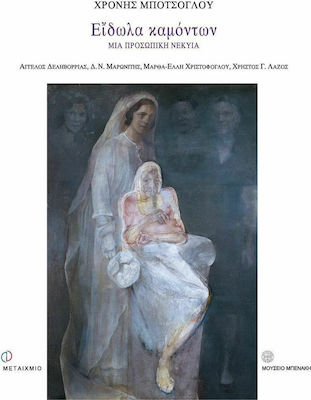
Under the condition that the younger author or artist agrees to immerse themselves mnemonically in the world of the dead, to recognize beloved voices and shadows while conversing with them. This, after all, is what Nekyia means - a later word, derived from the Homeric word nekys, which means dead.

With this strange name to our ears, the Alexandrian philologists aptly titled the eleventh rhapsody, indicating its content and direction. Because, as Fanis Kakridis correctly notes, "Nekyia is the summoning, a ceremony through which the living call the dead to rise from the depths of Hades, to advise them on the future." The same is stated by Chronis Botsoglou.

The dead, the souls, and their shadows are referred to in the twenty-fourth rhapsody as the idols of those who have passed. Idolon generally refers to a likeness; here it is the image of a body that has grown weary and exhausted. Since 'to grow weary' means: to get tired, to struggle, creating something difficult. And this exhausting toil can sometimes be the accomplished life, which, testing the endurance of the song, undermines it. Henceforth remains its shadow, its likeness. As a nostalgia for the once living body.

[Excerpt from the text on the back cover of the edition]
Manufacturer

See full description

Specifications

Specifications

Authors
CHronis Mpotsoglou, Dimitris N. Maronitis, Agelos Delivorrias, CHristos G. Lazos, Martha - Elli CHristofoglou
Publisher
Metaichmio
Language
Greek
Cover
Soft
Number of Pages
152
Release Date
12/2002
Type
Biography
Attribute
Artists
Publication Date
2002
Dimensions
21x27 cm
ISBN-13
9789603754718

Important information

Specifications are collected from official manufacturer websites. Please verify the specifications before proceeding with your final purchase. If you notice any problem you can report it here.

See all specifications

Description & Specifications

Under the condition that the younger author or artist agrees to immerse themselves mnemonically in the world of the dead, to recognize beloved voices and shadows while conversing with them. This, after all, is what Nekyia means - a later word, derived from the Homeric word nekys, which means dead.

With this strange name to our ears, the Alexandrian philologists aptly titled the eleventh rhapsody, indicating its content and direction. Because, as Fanis Kakridis correctly notes, "Nekyia is the summoning, a ceremony through which the living call the dead to rise from the depths of Hades, to advise them on the future." The same is stated by Chronis Botsoglou.

The dead, the souls, and their shadows are referred to in the twenty-fourth rhapsody as the idols of those who have passed. Idolon generally refers to a likeness; here it is the image of a body that has grown weary and exhausted. Since 'to grow weary' means: to get tired, to struggle, creating something difficult. And this exhausting toil can sometimes be the accomplished life, which, testing the endurance of the song, undermines it. Henceforth remains its shadow, its likeness. As a nostalgia for the once living body.

[Excerpt from the text on the back cover of the edition]

Manufacturer

Authors
CHronis Mpotsoglou, Dimitris N. Maronitis, Agelos Delivorrias, CHristos G. Lazos, Martha - Elli CHristofoglou
Publisher
Metaichmio
Language
Greek
Cover
Soft
Number of Pages
152
Release Date
12/2002
Type
Biography
Attribute
Artists
Publication Date
2002
Dimensions
21x27 cm
ISBN-13
9789603754718

Important information

Specifications are collected from official manufacturer websites. Please verify the specifications before proceeding with your final purchase. If you notice any problem you can report it here.

5,53 €
14,00 €   shipping cost