


11
87
€
Delivery
by Wed, 01 Jul
14,00 €
shipping cost
Sent from Greece
Set the delivery location to see products according to your choice.

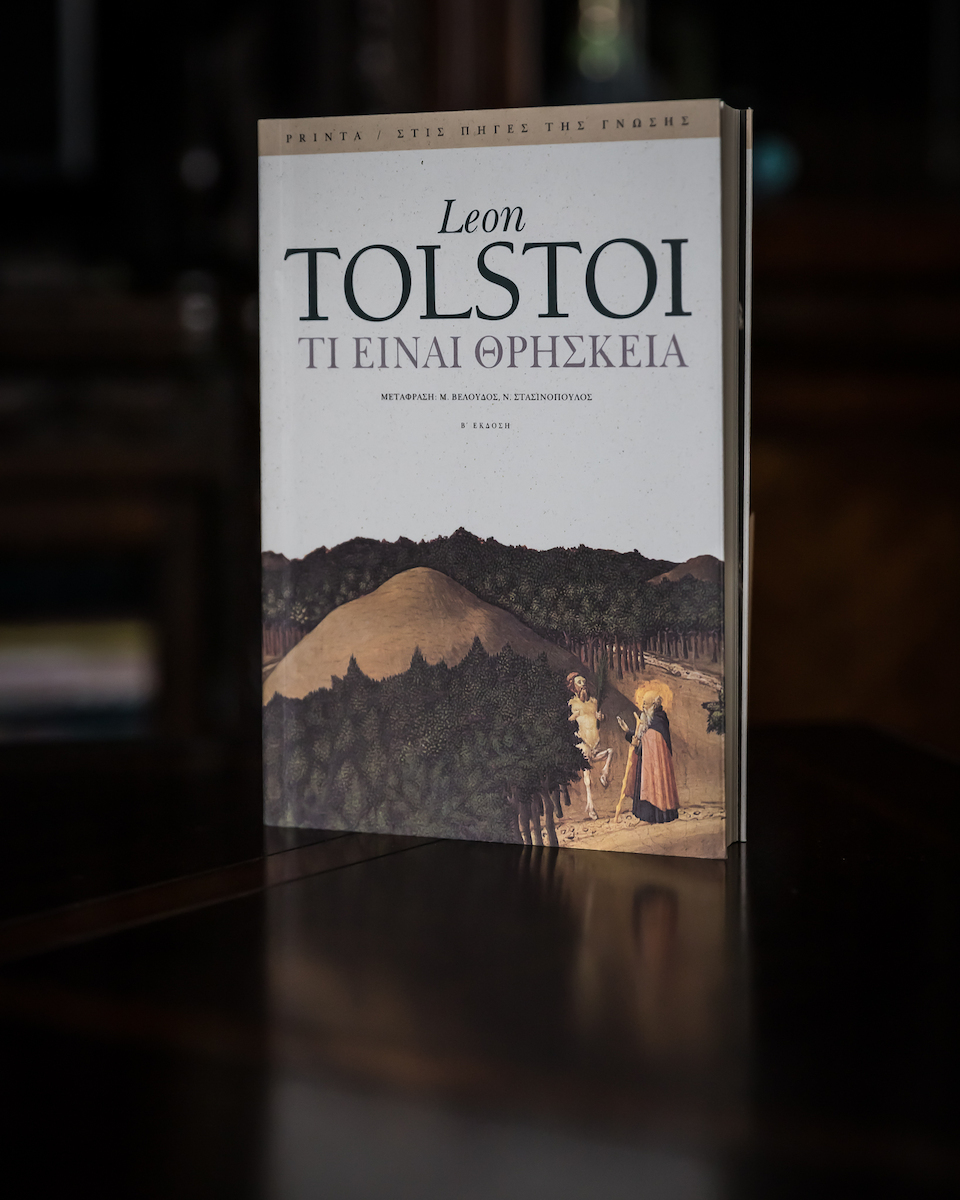
Author: Leo Tolstoy
The three texts by Tolstoy contained in this volume represent the essence of the author's mature thought. They discuss a version of religion that seeks love, the origin of humanity, faith as a...
The three texts by Tolstoy contained in this volume represent the essence of the author's mature thought. They discuss a version of religion that seeks love, the origin of humanity, faith as a universal attitude towards life that is not monopolized by the official religious institutions of the time.
Moreover, Tolstoy prefers to trust reason as the...
The three texts by Tolstoy contained in this volume represent the essence of the author's mature thought. They discuss a version of religion that seeks love, the origin of humanity, faith as a universal attitude towards life that is not monopolized by the official religious institutions of the time.
Moreover, Tolstoy prefers to trust reason as the understanding of the meaning of life and the way the infinity of God enters the world, rather than submission to plausible, outdated rituals. For him, the meaning of faith lies in the truth of love.
When love is universal, meaning it is directed towards all, then it generously returns to us; this faith is what grounds his opposition to materialism, a stance he consistently maintained until the end. Gorky said in 1910, the year of Tolstoy's death, "the world has stopped." However, by studying the quintessence of his thought, it is in our hands to disprove him.
[Excerpt from the text on the back cover of the edition]
Specifications are collected from official manufacturer websites. Please verify the specifications before proceeding with your final purchase. If you notice any problem you can report it here.

Is it the era we live in or his writings? When will Tolstoy be surpassed? And ultimately, for which reader is Tolstoy intended?
Known from "War and Peace," "Anna Karenina," "The Death of Ivan Ilyich," etc., Tolstoy went through an internal crisis in the 1870s (possibly some post-traumatic shock from the time he participated in the Crimean War), which led him to search for and rediscover Christianity from scratch; obviously, the Eastern - Orthodox - Christianity, and indeed in its Russian version, which struggles even to this day to shed its Greek-Byzantine roots. The result? A peculiar Christianity or a sect; a question mark. He certainly created an entire movement called "Tolstoyism."
A fervent anti-clericalist, he was excommunicated in 1901. He never received the Nobel Prize in Literature, although he was nominated every year from 1902 to 1906, while his funeral in 1910 was the first political funeral in Russia. His work influenced many prominent figures of the twentieth century, such as Mahatma Gandhi and Martin Luther King Jr.
The originality of Tolstoy, which becomes evident in this particular book, lies in the fact that he defended the moral mission of Christianity while simultaneously maintaining the principles of nature, as he interpreted them. The result was that instead of viewing human weaknesses generally and neutrally, he clearly denounced social institutions, such as the state, educational institutions, and the church, which he accused of distorting genuine Christianity and turning it either into paganism or atheism. And all this why? To continue distributing the fruits of power among themselves.
Some consider Tolstoy anarchistic and even the "father" of the movement known as "anarcho-Christianity" - for some "anarcho-Tolstoyism" or simply "Tolstoyism," introducing metaphysical reflections into anarchist, anti-systemic, and anti-authoritarian thought. He himself never admitted to being such a thing and even had a critical stance towards anarchists, as he had linked the entirety of the movement with the use of violence. For others, of course, he could not be anarchistic, as he accepted the existence of a principle that people ought to follow, although he presents it as a natural state. In any case, it is certain that he was influenced by Proudhon, who wrote "War and Peace" ("La Guerre et la Paix") in 1861 and, as it is said, inspired Tolstoy.
In his writings, Tolstoy does not resort to mysticism - he does not believe in an afterlife; he does not consider Jesus as the Son of God. However, it is this rationalistic approach of his, which, after the rejection of mysteries, rituals, and traditions, ends up ambiguous when it hints at metaphysical traces in defining both religion as "a specific relationship of man with the infinite universe" and morality as "the stable guide in life that arises from this relationship."
Overcoming his own contradictions, Tolstoy attacks the contradictions inherent in the coexistence of ecclesiastical Christianity and violence. He believes that these contradictions were rejected by various sects as well as some non-religious frameworks (he uses the term "teachings"), such as socialism, communism, and anarchism. The latest ones are considered as partly "manifestations of Christian consciousness in its true meaning, which denies violence." For Tolstoy, violence is something insatiable that, the more it is fed, the more it hungers. In other words, violence does not justify counter-violence for Tolstoy, which only results in an overall increase through its recycling. He observes that while love is listed as one of the virtues in all religions, only Christianity has established it as its non-negotiable foundation.
Tolstoy seems to be caught between two worlds: the logic and justice that passed into Christianity through ancient Greek education, for the bloodless resolution of (natural?) competitive relationships, and the pure, selfless, and unqualified love that Jesus brought. Thus, Tolstoy oscillates in this work, often without recognizing it or indifferent. And along with him, we oscillate a little less than a century and a half later, with some of us declaring "Tolstoyans" and some "Dostoevskyans," since, as George Steiner writes in "Tolstoy or Dostoevsky" (Antipodes Publications, 2015), neutrality in the dilemma of Tolstoy or Dostoevsky is impossible.
"What is Religion" was published in 1902, "The Law of Love and the Law of Violence" was published in 1908, while "Religion and Morality" had preceded it in 1894. All three texts are included in the present volume.
Φταίει η εποχή που ζούμε ή τα γραπτά του; Πότε θα ξεπεραστεί ο Τολστόι; Και εντέλει για ποιον αναγνώστη είναι ο Τολστόι;
Γνωστός από το «Πόλεμος και Ειρήνη», την «Άννα Καρένινα», τον «θάνατο του Ιβάν Ίλιτς» κ.α., ο Τολστόι πέρασε μια εσωτερική κρίση την δεκαετία του 1870 (ενδεχομένως κάποιο μετατραυματικό σοκ από την εποχή που συμμετείχε στον Πόλεμο της Κριμαίας), η οποία τον ώθησε στο να ψάξει και να ανακαλύψει από την αρχή τον Χριστιανισμό· προφανώς τον Ανατολικό - Ορθόδοξο - Χριστιανισμό και μάλιστα στη ρώσικη εκδοχή του, που σπαρταρά μέχρι τις ημέρες μας να πετάξει από πάνω του τις ελληνοβυζαντινές του ρίζες. Το αποτέλεσμα; Ένας ιδιότυπος Χριστιανισμός ή μια αίρεση· ερωτηματικό. Σίγουρα δημιούργησε ένα ολόκληρο ρεύμα που ονομάστηκε «τολστοΐσμός».
Φανατικός αντικληρικαλιστής, αφορίστηκε το 1901. Δεν έλαβε ποτέ το βραβείο Νόμπελ Λογοτεχνίας, καίτοι προτεινόταν κάθε χρόνο από το 1902 έως το 1906, ενώ η κηδεία του το 1910 υπήρξε η πρώτη πολιτική κηδεία της Ρωσίας. Το έργο του είχε επίδραση σε πολλές κορυφαίες προσωπικότητες του εικοστού αιώνα, όπως οι Μαχάτμα Γκάντι και Μάρτιν Λούθερ Κινγκ Τζούνιορ.
Η πρωτοτυπία του Τολστόι και αυτό γίνεται διακριτό στο συγκεκριμένο βιβλίο, έγκειται στο ότι υπερασπίστηκε την ηθική αποστολή του Χριστιανισμού ταυτόχρονα με τη διατήρηση των αρχών της φύσης, όπως τις ερμήνευε ο ίδιος. Το αποτέλεσμα ήταν ότι αντί να βλέπει τις ανθρώπινες αδυναμίες γενικά και ουδέτερα, κατήγγειλε καθαρά τους κοινωνικούς θεσμούς, όπως το κράτος, τα εκπαιδευτικά ιδρύματα και την εκκλησία, τους οποίους κατηγορεί ότι διαστρέβλωσαν το γνήσιο Χριστιανισμό και τον μετέτρεψαν είτε σε παγανισμό, είτε σε αθεΐα. Και όλα αυτά γιατί; Για να συνεχίσουν να διαμοιράζουν μεταξύ τους τους καρπούς της εξουσίας.
Μερικοί θωρούν τον Τολστόι αναρχικό και μάλιστα «πατέρα» του ρεύματος που αποκαλείται «αναρχοχριστιανισμός» - για κάποιους «αναρχοτολστοϊσμός» ή σκέτο «τολστοϊσμός», εισάγοντας μεταφυσικούς προβληματισμούς στον αναρχικό, αντισυστημικό και αντιεξουσιαστικό στοχασμό. Ο ίδιος πότε δεν παραδέχτηκε ότι ήταν κάτι τέτοιο και μάλιστα είχε επικριτική στάση για τους αναρχικούς, αφού είχε συνδέσει το σύνολο του κινήματος με τη χρήση βίας. Για άλλους, φυσικά, δεν θα μπορούσε να είναι αναρχικός, αφού αποδεχόταν την ύπαρξη μιας αρχής που οφείλουν οι άνθρωποι να ακολουθούν, παρότι ο ίδιος την παρουσιάζει ως φυσική κατάσταση. Σε κάθε περίπτωση, είναι σίγουρο ότι επηρεάστηκε από τον Προυντόν, ο οποίος έγραψε το 1861 το «Πόλεμος και Ειρήνη» («La Guerre et la Paix») και όπως λέγεται, ενέπνευσε τον Τολστόι.
Ο Τολστόι στα γραπτά του δεν καταφεύγει στον μυστικισμό - δεν πιστεύει στη μετά θάνατον ζωή· δεν θεωρεί τον Ιησούς ως Υιός Του Θεού. Ωστόσο είναι αυτή η ορθολογιστική προσέγγιση του η οποία, μετά την απόρριψη των μυστηρίων, των τελετουργιών και των παραδόσεων, καταλήγει αμφίσημη, όταν υπαινίσσεται μεταφυσικά ίχνη στον ορισμό τόσο της θρησκείας ως «μια συγκεκριμένη σχέση του ανθρώπου με το άπειρο σύμπαν» όσο και της ηθικής ως «το σταθερό οδηγό στη ζωή που απορρέει από αυτή τη σχέση».
Ξεπερνώντας τις δικές του αντιφάσεις, ο Τολστόι καταφέρεται εναντίον των αντιφάσεων που έχει η συνύπαρξη εκκλησιαστικού Χριστιανισμού και βίας. Και θεωρεί ότι αυτές τις αντιφάσεις ήρθαν να απορρίψουν οι διάφορες αιρέσεις αλλά και κάποια μη θρησκευτικά σχήματα (χρησιμοποιεί τον όρο «διδασκαλίες»), όπως ο σοσιαλισμός, ο κομμουνισμός και ο αναρχισμός. Τα τελευταία μάλιστα τα θεωρεί ως εν μέρει «εκδηλώσεις της χριστιανικής συνείδησης με την αληθινή της σημασία, που αρνείται τη βία.»
Για τον Τολστόι η βία είναι κάτι αδηφάγο που όσο τρέφεται τόσο περισσότερο πεινάει. Με άλλα λόγια η βία δεν δικαιολογεί την αντί-βία για τον Τολστόι, η οποία το μόνο αποτέλεσμα που έχει είναι η συνολική αύξηση διαμέσου της ανακύκλωσης της.
Παρατηρεί ότι ενώ η αγάπη συγκαταλέγεται ως μία από τις αρετές σε όλες τις θρησκείες, μόνο ο Χριστιανισμός την έθεσε ως αδιαπραγμάτευτη βάση του.
Ο Τολστόι φαίνεται να βρίσκεται ανάμεσα σε δύο κόσμους. Τη λογική και τη δικαιοσύνη που πέρασε στον Χριστιανισμό μέσω της αρχαιοελληνικής παιδείας, για την αναίμακτη επίλυση των (φυσικών;) ανταγωνιστικών σχέσεων και της καθαρής, ανιδιοτελούς και χωρίς αστερίσκους αγάπης που έφερε ο Ιησούς.
Πάλλεται, λοιπόν, και σε αυτό το έργο ο Τολστόι, πολλές φορές χωρίς να το αναγνωρίζει ή αδιαφορώντας. Και μαζί του παλλόμαστε και εμείς λίγο λιγότερο από ενάμιση αιώνα μετά, με κάποιους εξ' ημών να δηλώνουμε «τολστοϊκοί» και κάποιοι «ντοστογιεφσκικοί», αφού, όπως γράφει ο Τζωρτζ Στάινερ στο «Τολστόι ή Ντοστογιέφσκι» (Εκδόσεις Αντίποδες, 2015), η ουδετερότητα στο δίλημμα Τολστόι ή Ντοστογιέφσκι είναι αδύνατη.
Το «Τι είναι Θρησκεία», εκδόθηκε το 1902, το «Ο Νόμος της Αγάπης και ο Νόμος της Βιας» εκδόθηκε το 1908, ενώ το «Θρησκεία και Ηθική» είχε προηγηθεί από το 1894. Και τα τρία κείμενα περιέχονται στον ανά χείρας τόμο.
Is it the era we live in or his writings? When will Tolstoy be surpassed? And ultimately, for which reader is Tolstoy intended?
Known from "War and Peace," "Anna Karenina," "The Death of Ivan Ilyich," etc., Tolstoy went through an internal crisis in the 1870s (possibly some post-traumatic shock from the time he participated in the Crimean War), which led him to search for and rediscover Christianity from scratch; obviously, the Eastern - Orthodox - Christianity, and indeed in its Russian version, which struggles even to this day to shed its Greek-Byzantine roots. The result? A peculiar Christianity or a sect; a question mark. He certainly created an entire movement called "Tolstoyism."
A fervent anti-clericalist, he was excommunicated in 1901. He never received the Nobel Prize in Literature, although he was nominated every year from 1902 to 1906, while his funeral in 1910 was the first political funeral in Russia. His work influenced many prominent figures of the twentieth century, such as Mahatma Gandhi and Martin Luther King Jr.
The originality of Tolstoy, which becomes evident in this particular book, lies in the fact that he defended the moral mission of Christianity while simultaneously maintaining the principles of nature, as he interpreted them. The result was that instead of viewing human weaknesses generally and neutrally, he clearly denounced social institutions, such as the state, educational institutions, and the church, which he accused of distorting genuine Christianity and turning it either into paganism or atheism. And all this why? To continue distributing the fruits of power among themselves.
Some consider Tolstoy anarchistic and even the "father" of the movement known as "anarcho-Christianity" - for some "anarcho-Tolstoyism" or simply "Tolstoyism," introducing metaphysical reflections into anarchist, anti-systemic, and anti-authoritarian thought. He himself never admitted to being such a thing and even had a critical stance towards anarchists, as he had linked the entirety of the movement with the use of violence. For others, of course, he could not be anarchistic, as he accepted the existence of a principle that people ought to follow, although he presents it as a natural state. In any case, it is certain that he was influenced by Proudhon, who wrote "War and Peace" ("La Guerre et la Paix") in 1861 and, as it is said, inspired Tolstoy.
In his writings, Tolstoy does not resort to mysticism - he does not believe in an afterlife; he does not consider Jesus as the Son of God. However, it is this rationalistic approach of his, which, after the rejection of mysteries, rituals, and traditions, ends up ambiguous when it hints at metaphysical traces in defining both religion as "a specific relationship of man with the infinite universe" and morality as "the stable guide in life that arises from this relationship."
Overcoming his own contradictions, Tolstoy attacks the contradictions inherent in the coexistence of ecclesiastical Christianity and violence. He believes that these contradictions were rejected by various sects as well as some non-religious frameworks (he uses the term "teachings"), such as socialism, communism, and anarchism. The latest ones are considered as partly "manifestations of Christian consciousness in its true meaning, which denies violence." For Tolstoy, violence is something insatiable that, the more it is fed, the more it hungers. In other words, violence does not justify counter-violence for Tolstoy, which only results in an overall increase through its recycling. He observes that while love is listed as one of the virtues in all religions, only Christianity has established it as its non-negotiable foundation.
Tolstoy seems to be caught between two worlds: the logic and justice that passed into Christianity through ancient Greek education, for the bloodless resolution of (natural?) competitive relationships, and the pure, selfless, and unqualified love that Jesus brought. Thus, Tolstoy oscillates in this work, often without recognizing it or indifferent. And along with him, we oscillate a little less than a century and a half later, with some of us declaring "Tolstoyans" and some "Dostoevskyans," since, as George Steiner writes in "Tolstoy or Dostoevsky" (Antipodes Publications, 2015), neutrality in the dilemma of Tolstoy or Dostoevsky is impossible.
"What is Religion" was published in 1902, "The Law of Love and the Law of Violence" was published in 1908, while "Religion and Morality" had preceded it in 1894. All three texts are included in the present volume.
Φταίει η εποχή που ζούμε ή τα γραπτά του; Πότε θα ξεπεραστεί ο Τολστόι; Και εντέλει για ποιον αναγνώστη είναι ο Τολστόι;
Γνωστός από το «Πόλεμος και Ειρήνη», την «Άννα Καρένινα», τον «θάνατο του Ιβάν Ίλιτς» κ.α., ο Τολστόι πέρασε μια εσωτερική κρίση την δεκαετία του 1870 (ενδεχομένως κάποιο μετατραυματικό σοκ από την εποχή που συμμετείχε στον Πόλεμο της Κριμαίας), η οποία τον ώθησε στο να ψάξει και να ανακαλύψει από την αρχή τον Χριστιανισμό· προφανώς τον Ανατολικό - Ορθόδοξο - Χριστιανισμό και μάλιστα στη ρώσικη εκδοχή του, που σπαρταρά μέχρι τις ημέρες μας να πετάξει από πάνω του τις ελληνοβυζαντινές του ρίζες. Το αποτέλεσμα; Ένας ιδιότυπος Χριστιανισμός ή μια αίρεση· ερωτηματικό. Σίγουρα δημιούργησε ένα ολόκληρο ρεύμα που ονομάστηκε «τολστοΐσμός».
Φανατικός αντικληρικαλιστής, αφορίστηκε το 1901. Δεν έλαβε ποτέ το βραβείο Νόμπελ Λογοτεχνίας, καίτοι προτεινόταν κάθε χρόνο από το 1902 έως το 1906, ενώ η κηδεία του το 1910 υπήρξε η πρώτη πολιτική κηδεία της Ρωσίας. Το έργο του είχε επίδραση σε πολλές κορυφαίες προσωπικότητες του εικοστού αιώνα, όπως οι Μαχάτμα Γκάντι και Μάρτιν Λούθερ Κινγκ Τζούνιορ.
Η πρωτοτυπία του Τολστόι και αυτό γίνεται διακριτό στο συγκεκριμένο βιβλίο, έγκειται στο ότι υπερασπίστηκε την ηθική αποστολή του Χριστιανισμού ταυτόχρονα με τη διατήρηση των αρχών της φύσης, όπως τις ερμήνευε ο ίδιος. Το αποτέλεσμα ήταν ότι αντί να βλέπει τις ανθρώπινες αδυναμίες γενικά και ουδέτερα, κατήγγειλε καθαρά τους κοινωνικούς θεσμούς, όπως το κράτος, τα εκπαιδευτικά ιδρύματα και την εκκλησία, τους οποίους κατηγορεί ότι διαστρέβλωσαν το γνήσιο Χριστιανισμό και τον μετέτρεψαν είτε σε παγανισμό, είτε σε αθεΐα. Και όλα αυτά γιατί; Για να συνεχίσουν να διαμοιράζουν μεταξύ τους τους καρπούς της εξουσίας.
Μερικοί θωρούν τον Τολστόι αναρχικό και μάλιστα «πατέρα» του ρεύματος που αποκαλείται «αναρχοχριστιανισμός» - για κάποιους «αναρχοτολστοϊσμός» ή σκέτο «τολστοϊσμός», εισάγοντας μεταφυσικούς προβληματισμούς στον αναρχικό, αντισυστημικό και αντιεξουσιαστικό στοχασμό. Ο ίδιος πότε δεν παραδέχτηκε ότι ήταν κάτι τέτοιο και μάλιστα είχε επικριτική στάση για τους αναρχικούς, αφού είχε συνδέσει το σύνολο του κινήματος με τη χρήση βίας. Για άλλους, φυσικά, δεν θα μπορούσε να είναι αναρχικός, αφού αποδεχόταν την ύπαρξη μιας αρχής που οφείλουν οι άνθρωποι να ακολουθούν, παρότι ο ίδιος την παρουσιάζει ως φυσική κατάσταση. Σε κάθε περίπτωση, είναι σίγουρο ότι επηρεάστηκε από τον Προυντόν, ο οποίος έγραψε το 1861 το «Πόλεμος και Ειρήνη» («La Guerre et la Paix») και όπως λέγεται, ενέπνευσε τον Τολστόι.
Ο Τολστόι στα γραπτά του δεν καταφεύγει στον μυστικισμό - δεν πιστεύει στη μετά θάνατον ζωή· δεν θεωρεί τον Ιησούς ως Υιός Του Θεού. Ωστόσο είναι αυτή η ορθολογιστική προσέγγιση του η οποία, μετά την απόρριψη των μυστηρίων, των τελετουργιών και των παραδόσεων, καταλήγει αμφίσημη, όταν υπαινίσσεται μεταφυσικά ίχνη στον ορισμό τόσο της θρησκείας ως «μια συγκεκριμένη σχέση του ανθρώπου με το άπειρο σύμπαν» όσο και της ηθικής ως «το σταθερό οδηγό στη ζωή που απορρέει από αυτή τη σχέση».
Ξεπερνώντας τις δικές του αντιφάσεις, ο Τολστόι καταφέρεται εναντίον των αντιφάσεων που έχει η συνύπαρξη εκκλησιαστικού Χριστιανισμού και βίας. Και θεωρεί ότι αυτές τις αντιφάσεις ήρθαν να απορρίψουν οι διάφορες αιρέσεις αλλά και κάποια μη θρησκευτικά σχήματα (χρησιμοποιεί τον όρο «διδασκαλίες»), όπως ο σοσιαλισμός, ο κομμουνισμός και ο αναρχισμός. Τα τελευταία μάλιστα τα θεωρεί ως εν μέρει «εκδηλώσεις της χριστιανικής συνείδησης με την αληθινή της σημασία, που αρνείται τη βία.»
Για τον Τολστόι η βία είναι κάτι αδηφάγο που όσο τρέφεται τόσο περισσότερο πεινάει. Με άλλα λόγια η βία δεν δικαιολογεί την αντί-βία για τον Τολστόι, η οποία το μόνο αποτέλεσμα που έχει είναι η συνολική αύξηση διαμέσου της ανακύκλωσης της.
Παρατηρεί ότι ενώ η αγάπη συγκαταλέγεται ως μία από τις αρετές σε όλες τις θρησκείες, μόνο ο Χριστιανισμός την έθεσε ως αδιαπραγμάτευτη βάση του.
Ο Τολστόι φαίνεται να βρίσκεται ανάμεσα σε δύο κόσμους. Τη λογική και τη δικαιοσύνη που πέρασε στον Χριστιανισμό μέσω της αρχαιοελληνικής παιδείας, για την αναίμακτη επίλυση των (φυσικών;) ανταγωνιστικών σχέσεων και της καθαρής, ανιδιοτελούς και χωρίς αστερίσκους αγάπης που έφερε ο Ιησούς.
Πάλλεται, λοιπόν, και σε αυτό το έργο ο Τολστόι, πολλές φορές χωρίς να το αναγνωρίζει ή αδιαφορώντας. Και μαζί του παλλόμαστε και εμείς λίγο λιγότερο από ενάμιση αιώνα μετά, με κάποιους εξ' ημών να δηλώνουμε «τολστοϊκοί» και κάποιοι «ντοστογιεφσκικοί», αφού, όπως γράφει ο Τζωρτζ Στάινερ στο «Τολστόι ή Ντοστογιέφσκι» (Εκδόσεις Αντίποδες, 2015), η ουδετερότητα στο δίλημμα Τολστόι ή Ντοστογιέφσκι είναι αδύνατη.
Το «Τι είναι Θρησκεία», εκδόθηκε το 1902, το «Ο Νόμος της Αγάπης και ο Νόμος της Βιας» εκδόθηκε το 1908, ενώ το «Θρησκεία και Ηθική» είχε προηγηθεί από το 1894. Και τα τρία κείμενα περιέχονται στον ανά χείρας τόμο.
The three texts by Tolstoy contained in this volume represent the essence of the author's mature thought. They discuss a version of religion that seeks love, the origin of humanity, faith as a universal attitude towards life that is not monopolized by the official religious institutions of the time.
Moreover, Tolstoy prefers to trust reason as the understanding of the meaning of life and the way the infinity of God enters the world, rather than submission to plausible, outdated rituals. For him, the meaning of faith lies in the truth of love.
When love is universal, meaning it is directed towards all, then it generously returns to us; this faith is what grounds his opposition to materialism, a stance he consistently maintained until the end. Gorky said in 1910, the year of Tolstoy's death, "the world has stopped." However, by studying the quintessence of his thought, it is in our hands to disprove him.
[Excerpt from the text on the back cover of the edition]
Specifications are collected from official manufacturer websites. Please verify the specifications before proceeding with your final purchase. If you notice any problem you can report it here.
Is it the era we live in or his writings? When will Tolstoy be surpassed? And ultimately, for which reader is Tolstoy intended?
Known from "War and Peace," "Anna Karenina," "The Death of Ivan Ilyich," etc., Tolstoy went through an internal crisis in the 1870s (possibly some post-traumatic shock from the time he participated in the Crimean War), which led him to search for and rediscover Christianity from scratch; obviously, the Eastern - Orthodox - Christianity, and indeed in its Russian version, which struggles even to this day to shed its Greek-Byzantine roots. The result? A peculiar Christianity or a sect; a question mark. He certainly created an entire movement called "Tolstoyism."
A fervent anti-clericalist, he was excommunicated in 1901. He never received the Nobel Prize in Literature, although he was nominated every year from 1902 to 1906, while his funeral in 1910 was the first political funeral in Russia. His work influenced many prominent figures of the twentieth century, such as Mahatma Gandhi and Martin Luther King Jr.
The originality of Tolstoy, which becomes evident in this particular book, lies in the fact that he defended the moral mission of Christianity while simultaneously maintaining the principles of nature, as he interpreted them. The result was that instead of viewing human weaknesses generally and neutrally, he clearly denounced social institutions, such as the state, educational institutions, and the church, which he accused of distorting genuine Christianity and turning it either into paganism or atheism. And all this why? To continue distributing the fruits of power among themselves.
Some consider Tolstoy anarchistic and even the "father" of the movement known as "anarcho-Christianity" - for some "anarcho-Tolstoyism" or simply "Tolstoyism," introducing metaphysical reflections into anarchist, anti-systemic, and anti-authoritarian thought. He himself never admitted to being such a thing and even had a critical stance towards anarchists, as he had linked the entirety of the movement with the use of violence. For others, of course, he could not be anarchistic, as he accepted the existence of a principle that people ought to follow, although he presents it as a natural state. In any case, it is certain that he was influenced by Proudhon, who wrote "War and Peace" ("La Guerre et la Paix") in 1861 and, as it is said, inspired Tolstoy.
In his writings, Tolstoy does not resort to mysticism - he does not believe in an afterlife; he does not consider Jesus as the Son of God. However, it is this rationalistic approach of his, which, after the rejection of mysteries, rituals, and traditions, ends up ambiguous when it hints at metaphysical traces in defining both religion as "a specific relationship of man with the infinite universe" and morality as "the stable guide in life that arises from this relationship."
Overcoming his own contradictions, Tolstoy attacks the contradictions inherent in the coexistence of ecclesiastical Christianity and violence. He believes that these contradictions were rejected by various sects as well as some non-religious frameworks (he uses the term "teachings"), such as socialism, communism, and anarchism. The latest ones are considered as partly "manifestations of Christian consciousness in its true meaning, which denies violence." For Tolstoy, violence is something insatiable that, the more it is fed, the more it hungers. In other words, violence does not justify counter-violence for Tolstoy, which only results in an overall increase through its recycling. He observes that while love is listed as one of the virtues in all religions, only Christianity has established it as its non-negotiable foundation.
Tolstoy seems to be caught between two worlds: the logic and justice that passed into Christianity through ancient Greek education, for the bloodless resolution of (natural?) competitive relationships, and the pure, selfless, and unqualified love that Jesus brought. Thus, Tolstoy oscillates in this work, often without recognizing it or indifferent. And along with him, we oscillate a little less than a century and a half later, with some of us declaring "Tolstoyans" and some "Dostoevskyans," since, as George Steiner writes in "Tolstoy or Dostoevsky" (Antipodes Publications, 2015), neutrality in the dilemma of Tolstoy or Dostoevsky is impossible.
"What is Religion" was published in 1902, "The Law of Love and the Law of Violence" was published in 1908, while "Religion and Morality" had preceded it in 1894. All three texts are included in the present volume.
Φταίει η εποχή που ζούμε ή τα γραπτά του; Πότε θα ξεπεραστεί ο Τολστόι; Και εντέλει για ποιον αναγνώστη είναι ο Τολστόι;
Γνωστός από το «Πόλεμος και Ειρήνη», την «Άννα Καρένινα», τον «θάνατο του Ιβάν Ίλιτς» κ.α., ο Τολστόι πέρασε μια εσωτερική κρίση την δεκαετία του 1870 (ενδεχομένως κάποιο μετατραυματικό σοκ από την εποχή που συμμετείχε στον Πόλεμο της Κριμαίας), η οποία τον ώθησε στο να ψάξει και να ανακαλύψει από την αρχή τον Χριστιανισμό· προφανώς τον Ανατολικό - Ορθόδοξο - Χριστιανισμό και μάλιστα στη ρώσικη εκδοχή του, που σπαρταρά μέχρι τις ημέρες μας να πετάξει από πάνω του τις ελληνοβυζαντινές του ρίζες. Το αποτέλεσμα; Ένας ιδιότυπος Χριστιανισμός ή μια αίρεση· ερωτηματικό. Σίγουρα δημιούργησε ένα ολόκληρο ρεύμα που ονομάστηκε «τολστοΐσμός».
Φανατικός αντικληρικαλιστής, αφορίστηκε το 1901. Δεν έλαβε ποτέ το βραβείο Νόμπελ Λογοτεχνίας, καίτοι προτεινόταν κάθε χρόνο από το 1902 έως το 1906, ενώ η κηδεία του το 1910 υπήρξε η πρώτη πολιτική κηδεία της Ρωσίας. Το έργο του είχε επίδραση σε πολλές κορυφαίες προσωπικότητες του εικοστού αιώνα, όπως οι Μαχάτμα Γκάντι και Μάρτιν Λούθερ Κινγκ Τζούνιορ.
Η πρωτοτυπία του Τολστόι και αυτό γίνεται διακριτό στο συγκεκριμένο βιβλίο, έγκειται στο ότι υπερασπίστηκε την ηθική αποστολή του Χριστιανισμού ταυτόχρονα με τη διατήρηση των αρχών της φύσης, όπως τις ερμήνευε ο ίδιος. Το αποτέλεσμα ήταν ότι αντί να βλέπει τις ανθρώπινες αδυναμίες γενικά και ουδέτερα, κατήγγειλε καθαρά τους κοινωνικούς θεσμούς, όπως το κράτος, τα εκπαιδευτικά ιδρύματα και την εκκλησία, τους οποίους κατηγορεί ότι διαστρέβλωσαν το γνήσιο Χριστιανισμό και τον μετέτρεψαν είτε σε παγανισμό, είτε σε αθεΐα. Και όλα αυτά γιατί; Για να συνεχίσουν να διαμοιράζουν μεταξύ τους τους καρπούς της εξουσίας.
Μερικοί θωρούν τον Τολστόι αναρχικό και μάλιστα «πατέρα» του ρεύματος που αποκαλείται «αναρχοχριστιανισμός» - για κάποιους «αναρχοτολστοϊσμός» ή σκέτο «τολστοϊσμός», εισάγοντας μεταφυσικούς προβληματισμούς στον αναρχικό, αντισυστημικό και αντιεξουσιαστικό στοχασμό. Ο ίδιος πότε δεν παραδέχτηκε ότι ήταν κάτι τέτοιο και μάλιστα είχε επικριτική στάση για τους αναρχικούς, αφού είχε συνδέσει το σύνολο του κινήματος με τη χρήση βίας. Για άλλους, φυσικά, δεν θα μπορούσε να είναι αναρχικός, αφού αποδεχόταν την ύπαρξη μιας αρχής που οφείλουν οι άνθρωποι να ακολουθούν, παρότι ο ίδιος την παρουσιάζει ως φυσική κατάσταση. Σε κάθε περίπτωση, είναι σίγουρο ότι επηρεάστηκε από τον Προυντόν, ο οποίος έγραψε το 1861 το «Πόλεμος και Ειρήνη» («La Guerre et la Paix») και όπως λέγεται, ενέπνευσε τον Τολστόι.
Ο Τολστόι στα γραπτά του δεν καταφεύγει στον μυστικισμό - δεν πιστεύει στη μετά θάνατον ζωή· δεν θεωρεί τον Ιησούς ως Υιός Του Θεού. Ωστόσο είναι αυτή η ορθολογιστική προσέγγιση του η οποία, μετά την απόρριψη των μυστηρίων, των τελετουργιών και των παραδόσεων, καταλήγει αμφίσημη, όταν υπαινίσσεται μεταφυσικά ίχνη στον ορισμό τόσο της θρησκείας ως «μια συγκεκριμένη σχέση του ανθρώπου με το άπειρο σύμπαν» όσο και της ηθικής ως «το σταθερό οδηγό στη ζωή που απορρέει από αυτή τη σχέση».
Ξεπερνώντας τις δικές του αντιφάσεις, ο Τολστόι καταφέρεται εναντίον των αντιφάσεων που έχει η συνύπαρξη εκκλησιαστικού Χριστιανισμού και βίας. Και θεωρεί ότι αυτές τις αντιφάσεις ήρθαν να απορρίψουν οι διάφορες αιρέσεις αλλά και κάποια μη θρησκευτικά σχήματα (χρησιμοποιεί τον όρο «διδασκαλίες»), όπως ο σοσιαλισμός, ο κομμουνισμός και ο αναρχισμός. Τα τελευταία μάλιστα τα θεωρεί ως εν μέρει «εκδηλώσεις της χριστιανικής συνείδησης με την αληθινή της σημασία, που αρνείται τη βία.»
Για τον Τολστόι η βία είναι κάτι αδηφάγο που όσο τρέφεται τόσο περισσότερο πεινάει. Με άλλα λόγια η βία δεν δικαιολογεί την αντί-βία για τον Τολστόι, η οποία το μόνο αποτέλεσμα που έχει είναι η συνολική αύξηση διαμέσου της ανακύκλωσης της.
Παρατηρεί ότι ενώ η αγάπη συγκαταλέγεται ως μία από τις αρετές σε όλες τις θρησκείες, μόνο ο Χριστιανισμός την έθεσε ως αδιαπραγμάτευτη βάση του.
Ο Τολστόι φαίνεται να βρίσκεται ανάμεσα σε δύο κόσμους. Τη λογική και τη δικαιοσύνη που πέρασε στον Χριστιανισμό μέσω της αρχαιοελληνικής παιδείας, για την αναίμακτη επίλυση των (φυσικών;) ανταγωνιστικών σχέσεων και της καθαρής, ανιδιοτελούς και χωρίς αστερίσκους αγάπης που έφερε ο Ιησούς.
Πάλλεται, λοιπόν, και σε αυτό το έργο ο Τολστόι, πολλές φορές χωρίς να το αναγνωρίζει ή αδιαφορώντας. Και μαζί του παλλόμαστε και εμείς λίγο λιγότερο από ενάμιση αιώνα μετά, με κάποιους εξ' ημών να δηλώνουμε «τολστοϊκοί» και κάποιοι «ντοστογιεφσκικοί», αφού, όπως γράφει ο Τζωρτζ Στάινερ στο «Τολστόι ή Ντοστογιέφσκι» (Εκδόσεις Αντίποδες, 2015), η ουδετερότητα στο δίλημμα Τολστόι ή Ντοστογιέφσκι είναι αδύνατη.
Το «Τι είναι Θρησκεία», εκδόθηκε το 1902, το «Ο Νόμος της Αγάπης και ο Νόμος της Βιας» εκδόθηκε το 1908, ενώ το «Θρησκεία και Ηθική» είχε προηγηθεί από το 1894. Και τα τρία κείμενα περιέχονται στον ανά χείρας τόμο.
Is it the era we live in or his writings? When will Tolstoy be surpassed? And ultimately, for which reader is Tolstoy intended?
Known from "War and Peace," "Anna Karenina," "The Death of Ivan Ilyich," etc., Tolstoy went through an internal crisis in the 1870s (possibly some post-traumatic shock from the time he participated in the Crimean War), which led him to search for and rediscover Christianity from scratch; obviously, the Eastern - Orthodox - Christianity, and indeed in its Russian version, which struggles even to this day to shed its Greek-Byzantine roots. The result? A peculiar Christianity or a sect; a question mark. He certainly created an entire movement called "Tolstoyism."
A fervent anti-clericalist, he was excommunicated in 1901. He never received the Nobel Prize in Literature, although he was nominated every year from 1902 to 1906, while his funeral in 1910 was the first political funeral in Russia. His work influenced many prominent figures of the twentieth century, such as Mahatma Gandhi and Martin Luther King Jr.
The originality of Tolstoy, which becomes evident in this particular book, lies in the fact that he defended the moral mission of Christianity while simultaneously maintaining the principles of nature, as he interpreted them. The result was that instead of viewing human weaknesses generally and neutrally, he clearly denounced social institutions, such as the state, educational institutions, and the church, which he accused of distorting genuine Christianity and turning it either into paganism or atheism. And all this why? To continue distributing the fruits of power among themselves.
Some consider Tolstoy anarchistic and even the "father" of the movement known as "anarcho-Christianity" - for some "anarcho-Tolstoyism" or simply "Tolstoyism," introducing metaphysical reflections into anarchist, anti-systemic, and anti-authoritarian thought. He himself never admitted to being such a thing and even had a critical stance towards anarchists, as he had linked the entirety of the movement with the use of violence. For others, of course, he could not be anarchistic, as he accepted the existence of a principle that people ought to follow, although he presents it as a natural state. In any case, it is certain that he was influenced by Proudhon, who wrote "War and Peace" ("La Guerre et la Paix") in 1861 and, as it is said, inspired Tolstoy.
In his writings, Tolstoy does not resort to mysticism - he does not believe in an afterlife; he does not consider Jesus as the Son of God. However, it is this rationalistic approach of his, which, after the rejection of mysteries, rituals, and traditions, ends up ambiguous when it hints at metaphysical traces in defining both religion as "a specific relationship of man with the infinite universe" and morality as "the stable guide in life that arises from this relationship."
Overcoming his own contradictions, Tolstoy attacks the contradictions inherent in the coexistence of ecclesiastical Christianity and violence. He believes that these contradictions were rejected by various sects as well as some non-religious frameworks (he uses the term "teachings"), such as socialism, communism, and anarchism. The latest ones are considered as partly "manifestations of Christian consciousness in its true meaning, which denies violence." For Tolstoy, violence is something insatiable that, the more it is fed, the more it hungers. In other words, violence does not justify counter-violence for Tolstoy, which only results in an overall increase through its recycling. He observes that while love is listed as one of the virtues in all religions, only Christianity has established it as its non-negotiable foundation.
Tolstoy seems to be caught between two worlds: the logic and justice that passed into Christianity through ancient Greek education, for the bloodless resolution of (natural?) competitive relationships, and the pure, selfless, and unqualified love that Jesus brought. Thus, Tolstoy oscillates in this work, often without recognizing it or indifferent. And along with him, we oscillate a little less than a century and a half later, with some of us declaring "Tolstoyans" and some "Dostoevskyans," since, as George Steiner writes in "Tolstoy or Dostoevsky" (Antipodes Publications, 2015), neutrality in the dilemma of Tolstoy or Dostoevsky is impossible.
"What is Religion" was published in 1902, "The Law of Love and the Law of Violence" was published in 1908, while "Religion and Morality" had preceded it in 1894. All three texts are included in the present volume.
Φταίει η εποχή που ζούμε ή τα γραπτά του; Πότε θα ξεπεραστεί ο Τολστόι; Και εντέλει για ποιον αναγνώστη είναι ο Τολστόι;
Γνωστός από το «Πόλεμος και Ειρήνη», την «Άννα Καρένινα», τον «θάνατο του Ιβάν Ίλιτς» κ.α., ο Τολστόι πέρασε μια εσωτερική κρίση την δεκαετία του 1870 (ενδεχομένως κάποιο μετατραυματικό σοκ από την εποχή που συμμετείχε στον Πόλεμο της Κριμαίας), η οποία τον ώθησε στο να ψάξει και να ανακαλύψει από την αρχή τον Χριστιανισμό· προφανώς τον Ανατολικό - Ορθόδοξο - Χριστιανισμό και μάλιστα στη ρώσικη εκδοχή του, που σπαρταρά μέχρι τις ημέρες μας να πετάξει από πάνω του τις ελληνοβυζαντινές του ρίζες. Το αποτέλεσμα; Ένας ιδιότυπος Χριστιανισμός ή μια αίρεση· ερωτηματικό. Σίγουρα δημιούργησε ένα ολόκληρο ρεύμα που ονομάστηκε «τολστοΐσμός».
Φανατικός αντικληρικαλιστής, αφορίστηκε το 1901. Δεν έλαβε ποτέ το βραβείο Νόμπελ Λογοτεχνίας, καίτοι προτεινόταν κάθε χρόνο από το 1902 έως το 1906, ενώ η κηδεία του το 1910 υπήρξε η πρώτη πολιτική κηδεία της Ρωσίας. Το έργο του είχε επίδραση σε πολλές κορυφαίες προσωπικότητες του εικοστού αιώνα, όπως οι Μαχάτμα Γκάντι και Μάρτιν Λούθερ Κινγκ Τζούνιορ.
Η πρωτοτυπία του Τολστόι και αυτό γίνεται διακριτό στο συγκεκριμένο βιβλίο, έγκειται στο ότι υπερασπίστηκε την ηθική αποστολή του Χριστιανισμού ταυτόχρονα με τη διατήρηση των αρχών της φύσης, όπως τις ερμήνευε ο ίδιος. Το αποτέλεσμα ήταν ότι αντί να βλέπει τις ανθρώπινες αδυναμίες γενικά και ουδέτερα, κατήγγειλε καθαρά τους κοινωνικούς θεσμούς, όπως το κράτος, τα εκπαιδευτικά ιδρύματα και την εκκλησία, τους οποίους κατηγορεί ότι διαστρέβλωσαν το γνήσιο Χριστιανισμό και τον μετέτρεψαν είτε σε παγανισμό, είτε σε αθεΐα. Και όλα αυτά γιατί; Για να συνεχίσουν να διαμοιράζουν μεταξύ τους τους καρπούς της εξουσίας.
Μερικοί θωρούν τον Τολστόι αναρχικό και μάλιστα «πατέρα» του ρεύματος που αποκαλείται «αναρχοχριστιανισμός» - για κάποιους «αναρχοτολστοϊσμός» ή σκέτο «τολστοϊσμός», εισάγοντας μεταφυσικούς προβληματισμούς στον αναρχικό, αντισυστημικό και αντιεξουσιαστικό στοχασμό. Ο ίδιος πότε δεν παραδέχτηκε ότι ήταν κάτι τέτοιο και μάλιστα είχε επικριτική στάση για τους αναρχικούς, αφού είχε συνδέσει το σύνολο του κινήματος με τη χρήση βίας. Για άλλους, φυσικά, δεν θα μπορούσε να είναι αναρχικός, αφού αποδεχόταν την ύπαρξη μιας αρχής που οφείλουν οι άνθρωποι να ακολουθούν, παρότι ο ίδιος την παρουσιάζει ως φυσική κατάσταση. Σε κάθε περίπτωση, είναι σίγουρο ότι επηρεάστηκε από τον Προυντόν, ο οποίος έγραψε το 1861 το «Πόλεμος και Ειρήνη» («La Guerre et la Paix») και όπως λέγεται, ενέπνευσε τον Τολστόι.
Ο Τολστόι στα γραπτά του δεν καταφεύγει στον μυστικισμό - δεν πιστεύει στη μετά θάνατον ζωή· δεν θεωρεί τον Ιησούς ως Υιός Του Θεού. Ωστόσο είναι αυτή η ορθολογιστική προσέγγιση του η οποία, μετά την απόρριψη των μυστηρίων, των τελετουργιών και των παραδόσεων, καταλήγει αμφίσημη, όταν υπαινίσσεται μεταφυσικά ίχνη στον ορισμό τόσο της θρησκείας ως «μια συγκεκριμένη σχέση του ανθρώπου με το άπειρο σύμπαν» όσο και της ηθικής ως «το σταθερό οδηγό στη ζωή που απορρέει από αυτή τη σχέση».
Ξεπερνώντας τις δικές του αντιφάσεις, ο Τολστόι καταφέρεται εναντίον των αντιφάσεων που έχει η συνύπαρξη εκκλησιαστικού Χριστιανισμού και βίας. Και θεωρεί ότι αυτές τις αντιφάσεις ήρθαν να απορρίψουν οι διάφορες αιρέσεις αλλά και κάποια μη θρησκευτικά σχήματα (χρησιμοποιεί τον όρο «διδασκαλίες»), όπως ο σοσιαλισμός, ο κομμουνισμός και ο αναρχισμός. Τα τελευταία μάλιστα τα θεωρεί ως εν μέρει «εκδηλώσεις της χριστιανικής συνείδησης με την αληθινή της σημασία, που αρνείται τη βία.»
Για τον Τολστόι η βία είναι κάτι αδηφάγο που όσο τρέφεται τόσο περισσότερο πεινάει. Με άλλα λόγια η βία δεν δικαιολογεί την αντί-βία για τον Τολστόι, η οποία το μόνο αποτέλεσμα που έχει είναι η συνολική αύξηση διαμέσου της ανακύκλωσης της.
Παρατηρεί ότι ενώ η αγάπη συγκαταλέγεται ως μία από τις αρετές σε όλες τις θρησκείες, μόνο ο Χριστιανισμός την έθεσε ως αδιαπραγμάτευτη βάση του.
Ο Τολστόι φαίνεται να βρίσκεται ανάμεσα σε δύο κόσμους. Τη λογική και τη δικαιοσύνη που πέρασε στον Χριστιανισμό μέσω της αρχαιοελληνικής παιδείας, για την αναίμακτη επίλυση των (φυσικών;) ανταγωνιστικών σχέσεων και της καθαρής, ανιδιοτελούς και χωρίς αστερίσκους αγάπης που έφερε ο Ιησούς.
Πάλλεται, λοιπόν, και σε αυτό το έργο ο Τολστόι, πολλές φορές χωρίς να το αναγνωρίζει ή αδιαφορώντας. Και μαζί του παλλόμαστε και εμείς λίγο λιγότερο από ενάμιση αιώνα μετά, με κάποιους εξ' ημών να δηλώνουμε «τολστοϊκοί» και κάποιοι «ντοστογιεφσκικοί», αφού, όπως γράφει ο Τζωρτζ Στάινερ στο «Τολστόι ή Ντοστογιέφσκι» (Εκδόσεις Αντίποδες, 2015), η ουδετερότητα στο δίλημμα Τολστόι ή Ντοστογιέφσκι είναι αδύνατη.
Το «Τι είναι Θρησκεία», εκδόθηκε το 1902, το «Ο Νόμος της Αγάπης και ο Νόμος της Βιας» εκδόθηκε το 1908, ενώ το «Θρησκεία και Ηθική» είχε προηγηθεί από το 1894. Και τα τρία κείμενα περιέχονται στον ανά χείρας τόμο.
