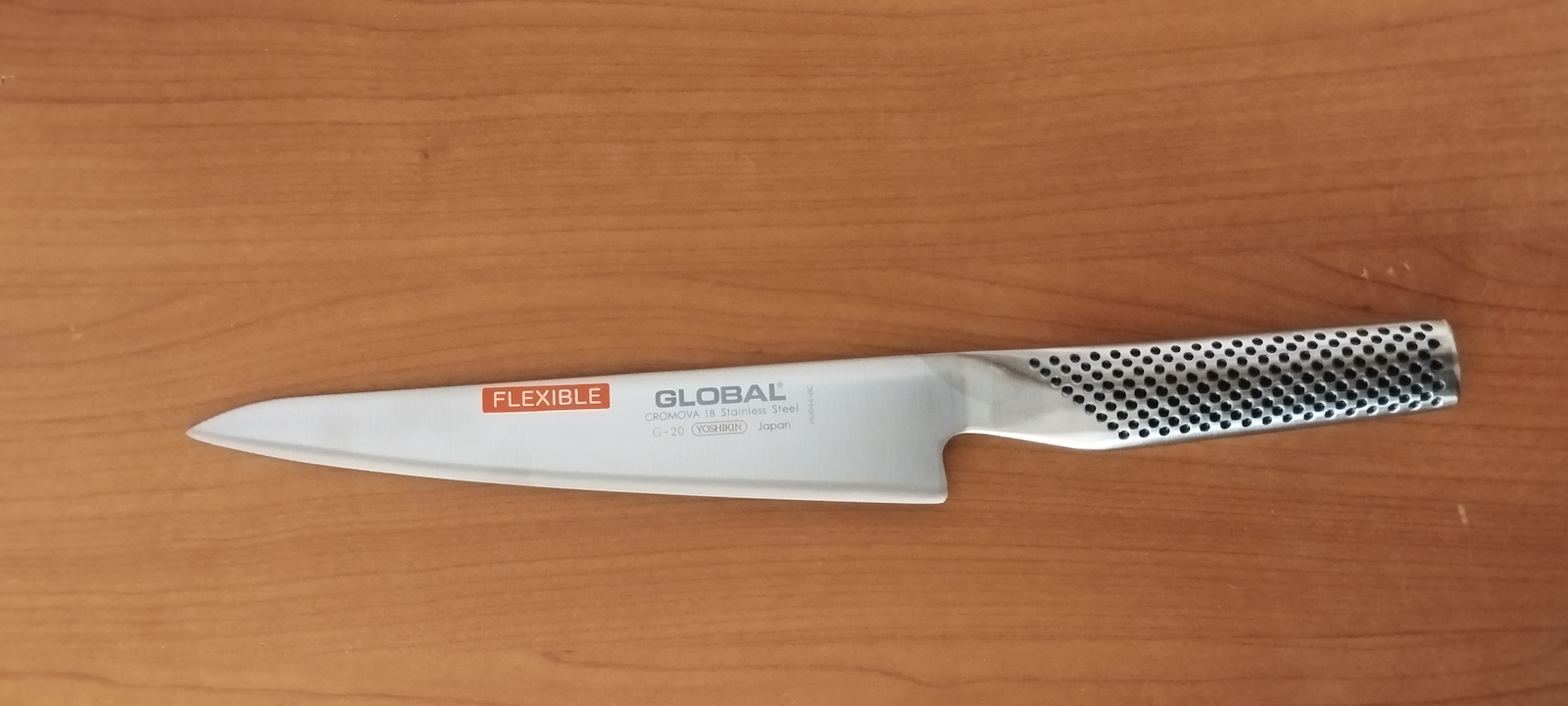
The filleting knife is designed to offer precision and ease of use. The long, thin blade of the knife is extremely flexible to cut your meat or fish without resistance and help you prepare fish fillets easily & quickly in seconds. Ideal for cutting fish such as salmon, swordfish, trout, as well as any type of meat.
Filleting Knife
The filleting knife is designed to offer precision and ease of use. The long, thin blade of the knife is extremely flexible to cut your meat or fish without resistance and help you prepare fish fillets easily & quickly in seconds. Ideal for cutting fish such as salmon, swordfish, trout, as well as any type of meat.
Blade Material
The blade of the knife is made from high-carbon stainless steel. This particular stainless steel is called CROMOVA 18, and it is hard enough for the knives to maintain their sharpness for a long time, while still being relatively easy to sharpen.
The chromium content corresponds to 18% of the steel, which is why the steel has this specific name. The high chromium content contributes to the blade's resistance to stains.
The blade's hardness rating is 58 (±1) HRC (a knife with a hardness above 56 HRC is considered good).
Handle
The handle is made of stainless steel which provides durability and resistance to corrosion, while it also features ridges for more stability even with wet hands. Its weight is evenly balanced with that of the blade for perfect equilibrium.
Cutting board
It is recommended that cuts be made on wooden or plastic cutting surfaces. Glass, stone, and marble cutting surfaces are unsuitable, as they can cause permanent damage to the knife blades.
Cleaning
Wash the knife with warm water before using it for the first time. After each use, make sure to wash the knife without delay (with a simple detergent) and dry it with a soft cloth. Especially if you have cut acidic foods, you must wash the knife immediately after use.
For your safety, you should always wipe the knife away from your body and away from the edge, with a cloth or towel.
It is not recommended to wash it in the dishwasher but by hand, in order to protect its material and maintain its sharpness for a long time.
Sharpening
No matter how sharp a knife is initially, after some use it needs sharpening, which you can achieve with a sharpener, whetstone, or honing rod.
You can tell if your knife cuts well with an easy test using the knife and a piece of paper. A sharp knife can easily and cleanly cut a piece of paper. In contrast, a knife that needs sharpening will struggle and its cut will be jagged.
It is also recommended to occasionally have your knives sharpened by a professional to repair any potential damage to the blade edge and to maintain sharpness.
- Product Number
- G-20
- Type
- Fillet
- Material
- Stainless Steel
- Handle Material
- Metallic
- Japanese
- Yes
- Professional Series
- Yes
- Household Use
- No
- Pieces
- 1 pcs
- Blade Length
- 21 cm
- with Non-Stick Coating
- No
- Dishwasher safe
- No
Important information
Specifications are collected from official manufacturer websites. Please verify the specifications before proceeding with your final purchase. If you notice any problem you can report it here.