


7
10
€
Delivery
Fri, 26 Jun - Tue, 30 Jun
14,00 €
shipping cost
Sent from Greece
Set the delivery location to see products according to your choice.
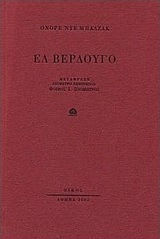
"El verdugo" means "The Executioner" and in this narrative, the 19th-century French novelist Honoré de Balzac chose to keep the Spanish title from its first publication in the newspaper "La Mode" (28-1-1830) until the last - it was included in the 15th volume of his work "La comedie humaine" ("The Human Comedy").
In this novella, he artfully narrates a blood-soaked episode of the French campaign in Spain in 1808 and its subsequent tragedy, showing more sympathy for the Spanish rebels than for his fellow conquerors, as he, along with a large part of French society in 1830, feels the need to express his disgust for the French Revolution, Napoleonic epic, and Bonapartism.
The central character, a victim of Spanish prejudices against his class, charm, and reputation as a nobleman, is forced by the conquerors to become the executioner of his own family, experiencing a drama that transforms him into a figure of ancient tragedy. [...]
One of his shortest but also earliest works, this narrative by Balzac is translated into Greek for the first time and, as noted in the afterword of the Greek edition by translator Phoebus I. Piombinos, "Balzac introduces the modern form of horror into prose" at a time when "the theme of the executioner corresponded to a current of morbid curiosity on the part of the French reading public" and becomes, according to the translator, "a typical exponent of excessive romanticism, as he presents descriptions of extreme contrast, such as the peaceful and beautiful Mediterranean landscape bathed in moonlight, with the cheerful evening party on one hand, and the slaughter of the conquerors on the other, as well as the revelry of the French officers during the execution of the Spaniards." Through the simplicity of his style, something Balzac is not accustomed to, the tragedy of the story is more pronounced and the revulsion that the narrative's theme provokes in the reader becomes more poignant.
The Greek edition of "El verdugo" is accompanied by reproductions of three out of the 80 engravings by the famous Spanish painter Goya that make up the monumental series "Desastres de la guerra" ("Disasters of War"), which are housed in the National Art Gallery, as Goya was also inspired by the same Spanish uprising.
Specifications are collected from official manufacturer websites. Please verify the specifications before proceeding with your final purchase. If you notice any problem you can report it here.