6
31
€
Delivery
Wed, 26 Aug - Fri, 28 Aug
14,00 €
shipping cost
Sent from Greece
Set the delivery location to see products according to your choice.
Top specs
 Number of pages
32
Number of pages
32
 Cover
Soft
Cover
Soft
 Year of publication
1997
Year of publication
1997
 Publisher
Politistiko Idryma Omilou Peiraios
Publisher
Politistiko Idryma Omilou Peiraios
LANDSCAPE AND NATURAL ENVIRONMENT
With an area of 4,419 sq. km, Arcadia is the largest prefecture in the Peloponnese. Covering the central part, it borders all the other prefectures of the peninsula, and its total population today is 105,000 residents, which is 50,000 fewer than it was at the beginning of the century (151,000 according to the 1920 census).
The mountainous terrain and the difficulty of accessing the Peloponnesian hinterland have not favored the creation of large urban centers in the area. The largest city and capital of the prefecture, Tripoli, has only 22,500 inhabitants, while the populations of the capitals of the other provinces in Arcadia are much smaller (Megalopolis 4,700 inhabitants, Leonidio 3,800, and Dimitsana 740).
Before the opening of the new Corinth-Tripoli highway, which tunnels through Mount Artemisio north of Nestani, access to Tripoli was via Argos-Kiveri, along the winding road of Ahladokambos, which was also the ancient entry road to Arcadia.
This area also sees the entry of the railway line into Arcadia, covering approximately 100 km, passing through Tripoli and Megalopolis, before continuing towards Messinia.
As 45% of the area of the prefecture consists of grazing lands (scrublands and open spaces), livestock farming remains a widely practiced activity. This is followed by agriculture, with the main crops being cereals (wheat and forage plants) and fruit trees (apple, pear, cherry, almond, walnut, chestnut, and olive trees), and forest exploitation in the large forests of Mainalon and Parnon.
A notable resource is also the mineral wealth, with the lignites of Megalopolis and the marbles of Parnon. The most significant industrial installation is the thermal power plant in Megalopolis, which also marks the landscape of the large basin.
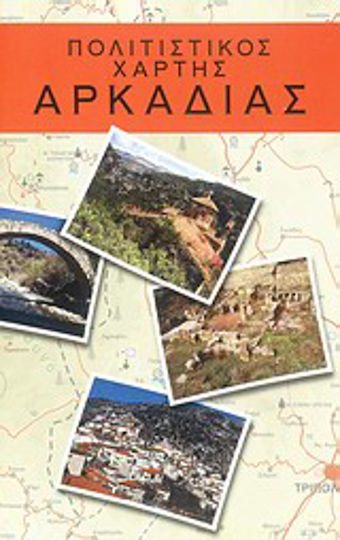
Another electricity generation unit exists at the NW edge of the prefecture, the hydroelectric plant of Ladon, while most industrial and artisanal units are concentrated in the Tripoli area. However, the most important resource in the region is tourism due to the many archaeological and historical sites and monuments, as well as the natural landscapes, which we will explore in detail through the tourist routes of the map.
Specifications are collected from official manufacturer websites. Please verify the specifications before proceeding with your final purchase. If you notice any problem you can report it here.