Special Lamps

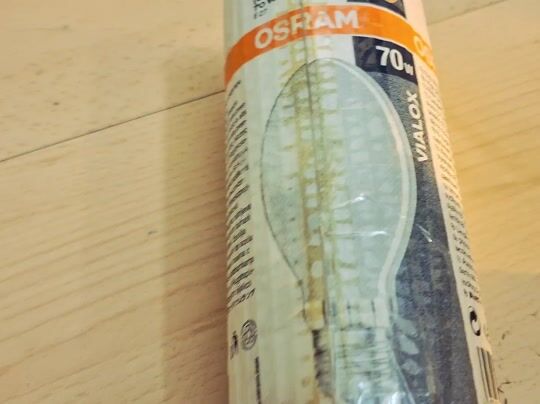
Osram Sodium Lamp 70W for Socket E27 Code: 015767

High-pressure sodium lamp with internal VIALOX NAV-E/I 70W/E E27 igniter.

Benefits of using the product:

  • High luminous efficiency

Application area:

  • Roads
  • Outdoor lighting
  • Industrial installations
  • ...

High-pressure sodium lamp with internal VIALOX NAV-E/I 70W/E E27 igniter.

Benefits of using the product:

  • High luminous efficiency

Application area:

  • Roads
  • Outdoor lighting
  • Industrial installations
  • Intended for use in closed and open luminaires
  • Outdoor applications - only in suitable luminaires

Electrical data:

  • Nominal power: 70W
  • Lamp current: 0.98A
  • ...
See full description See full description

Description

Description

High-pressure sodium lamp with internal VIALOX NAV-E/I 70W/E E27 igniter.

Benefits of using the product:

  • High luminous efficiency

Application area:

  • Roads
  • Outdoor lighting
  • Industrial installations
  • Intended for use in closed and open luminaires
  • Outdoor applications - only in suitable luminaires

Electrical data:

  • Nominal power: 70W
  • Lamp current: 0.98A
  • Nominal voltage: 90V

Photometric data:

  • Luminous flux: 5600lm
  • Nominal luminous flux: 5900lm
  • General color rendering index Ra: ≤25
  • Color temperature: 2000K

Dimensions and weight:

  • Length: 156mm
  • Diameter: 71mm
  • Weight: 56g

Temperatures:

  • Maximum permissible temperature of the outer lamp: 210°C
  • Maximum permissible leveling temperature: 310°C

Durability:

  • Durability factor after 20,000 hours: 0.75
  • Durability B50: 24000h

Additional product data:

  • Cap (typical solution): E27
  • Shape/version: Coated
  • Nominal mercury content: 19 mg
  • Capabilities: For use in indoor lighting: No
  • Dimmable: Yes
  • Permissible working position: Any

Certificates and standards:

  • Energy efficiency class: A
  • Energy consumption: 77kWh/1000h

Summary:

  • Type: Sodium vapor lamp
  • Power: 70W
  • Color rendering: 25
  • Color temperature: 2000K
  • Total length: 156mm
  • Average lifespan: 24000h
  • Energy consumption: 77kWh/1000h
  • Luminous flux: 5600lm
  • Diameter: 71mm
  • Series: Vialox

Manufacturer

See full description

Specifications

Specifications

Product Number
015767
Type
Special Uses - Sodium
Application
E27
Power
70 W
Lumen
84 lm

Important information

Specifications are collected from official manufacturer websites. Please verify the specifications before proceeding with your final purchase. If you notice any problem you can report it here.

See all specifications

Reviews (1)

Reviews

  1. 1
  2. 4 stars
    0
  3. 3 stars
    0
  4. 2 stars
    0
  5. 1 star
    0
Review this product

Reviews photos

Reviews photos
Reviews photos
Reviews photos
Reviews photos

Reviews by our members

  • Mach_Solven
    5
    3 out of 3 members found this review helpful

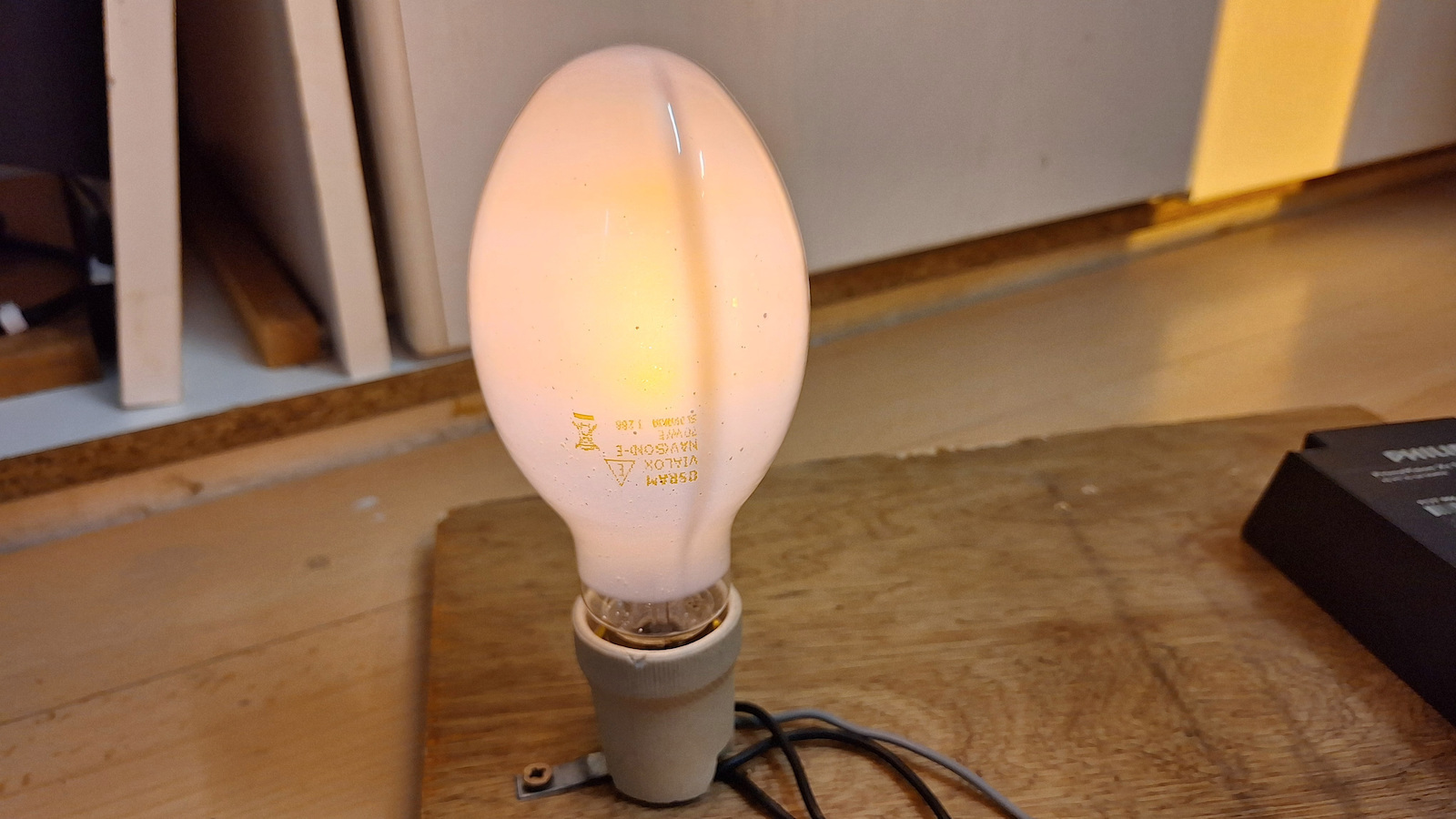
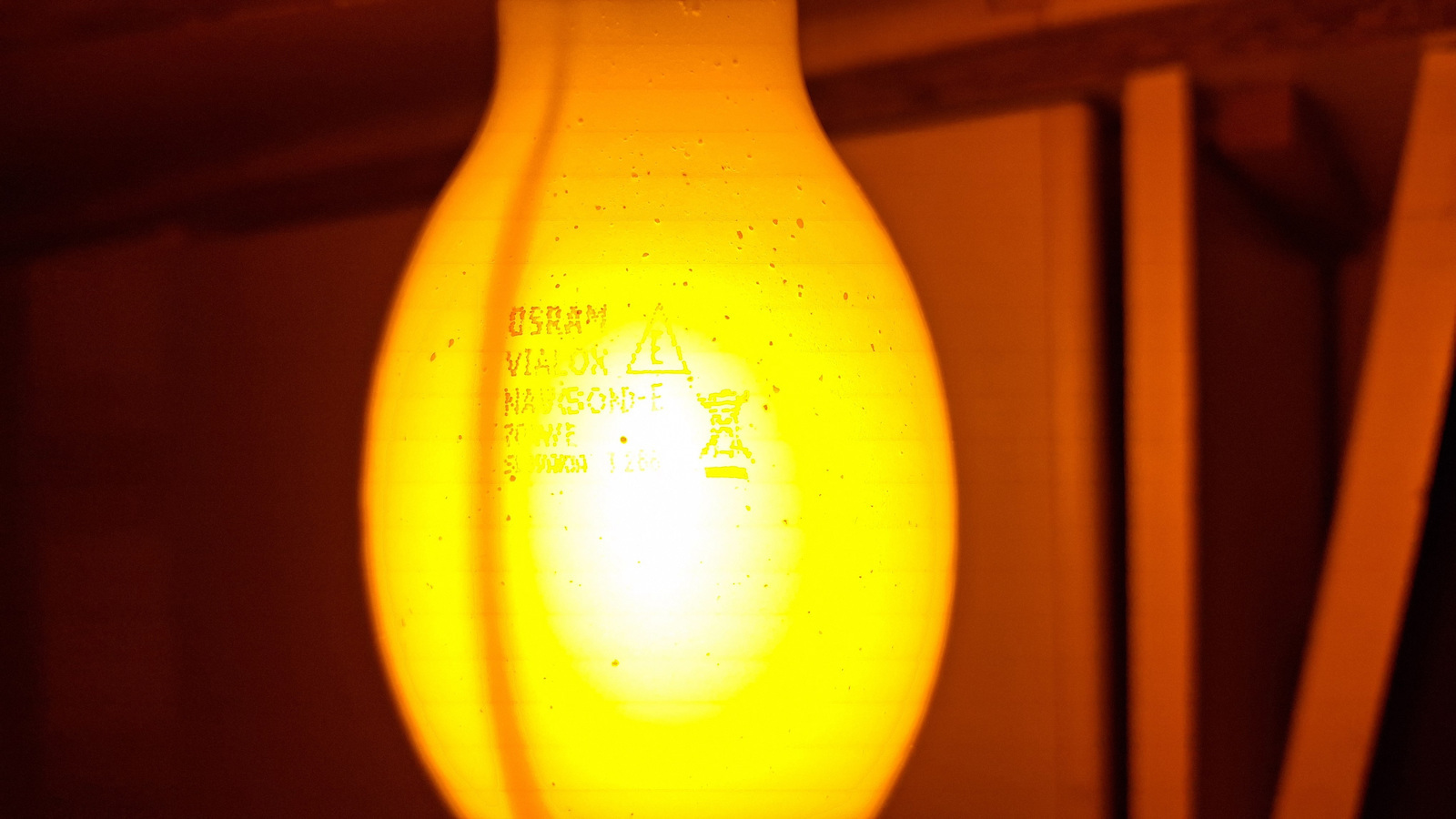
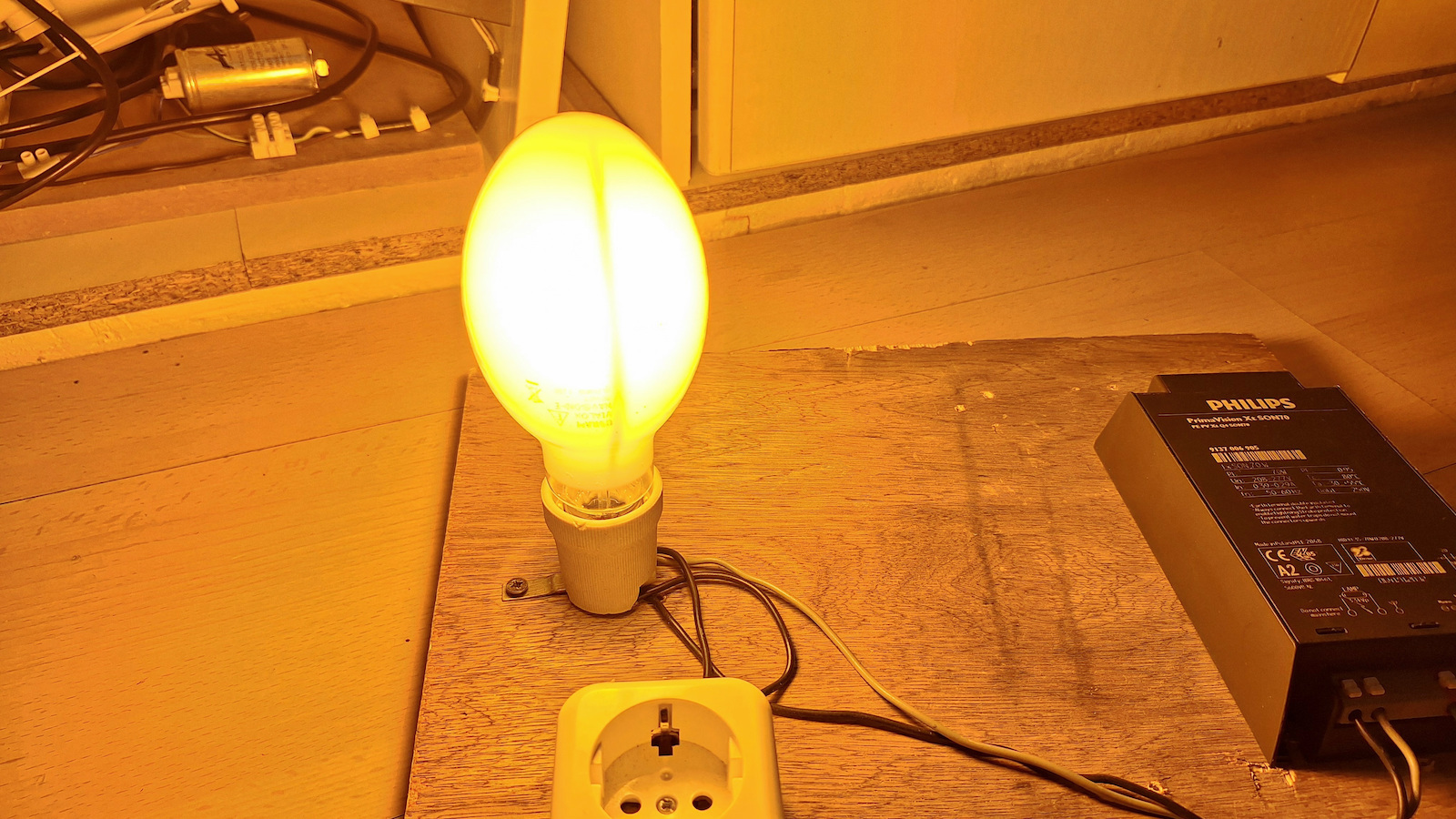
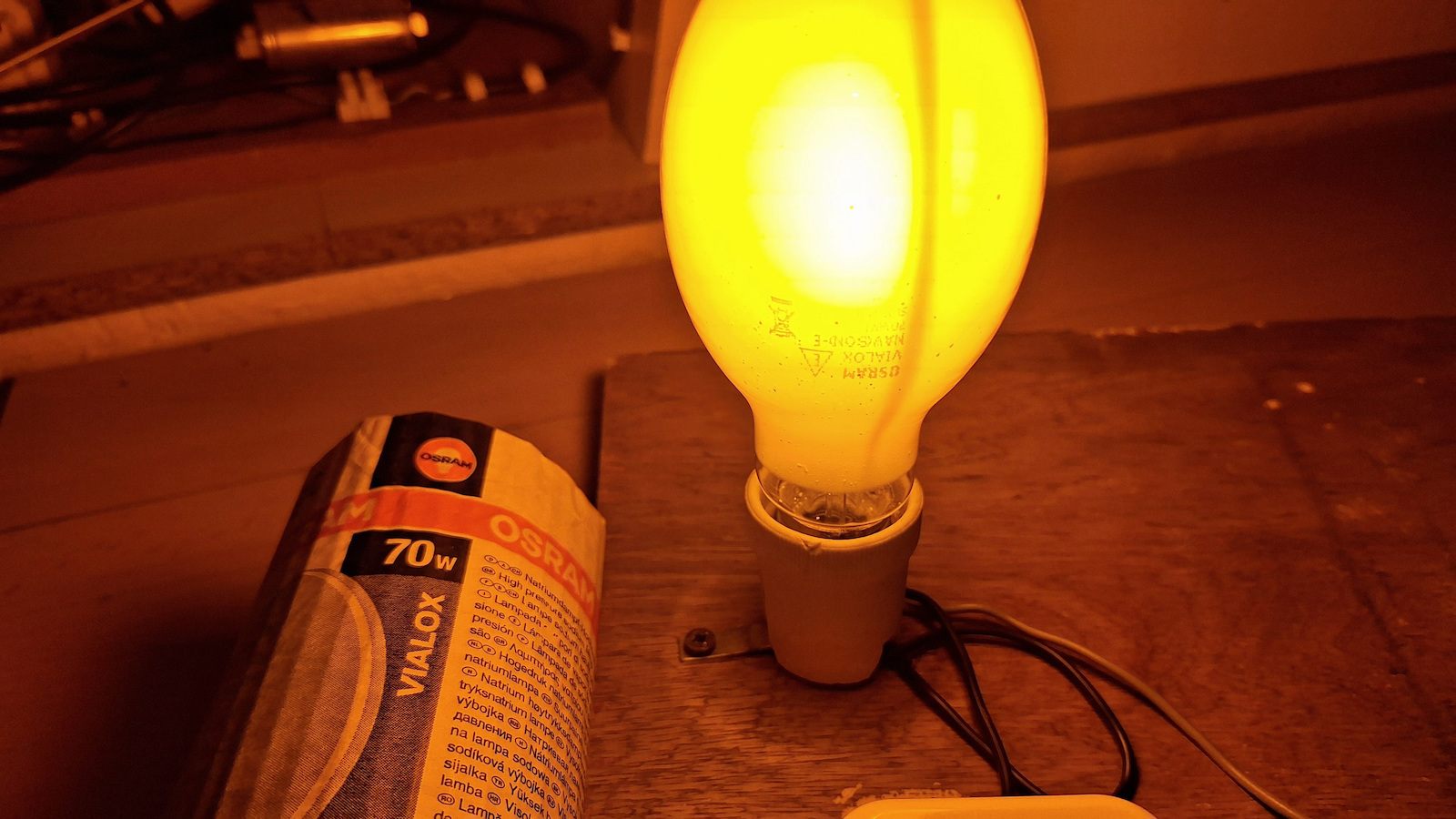
    ATTENTION! To start this lamp, some components are needed, such as a ballast, a starter, and a capacitor to operate, or with an electronic ballast, but high-pressure sodium lamps with a built-in starter like this one—but the one I got in my hands does not have a built-in starter, so you need to check inside if it has one. If you see a small barrel-shaped component, that is the starter, which looks like those used in fluorescent lamps. This is what starts the lamp; you do not need a separate starter, only a magnetic ballast and a capacitor. It will not work with an electronic ballast, as all electronic ballasts have an integrated ignition system. Electronic ballasts are designed only for HID lamps that do not have an internal starter. Also, do not plug discharge lamps, including high-pressure sodium lamps, directly into the socket because this can destroy the lamp. Without the ballast, too much current will pass through, resulting in damage, while the ballast is the current limiter that the lamp needs. For example, a 70W high-pressure sodium lamp needs about 0.95-0.98A and a voltage of 88-90V to operate correctly, and essentially, this is what the ballast does: it keeps the lamp running, providing stable current to the lamp, although not 100% effectively, which is why the lamp flickers because the Hz remain at 50, compared to electronic ballasts where the Hz rise to 90 and above! So, if we plug the lamp directly into the socket, much more amperage will pass through and the voltage will be at 230V instead of the 90V needed, resulting in the lamp being overloaded and burning out immediately. It is also good to use a capacitor for power factor correction, which is quite necessary to minimize system losses, mainly from the ballast. For a lamp power of 70 and 100 watts, a 12μf capacitor at 250 volts is needed—that is the voltage the capacitor can withstand!!! As for the lamp, I tested it and saw that it flickers normally, has quite good build quality, ignites fairly quickly, and takes about 4.5 minutes to reach maximum output if it is a magnetic ballast. With an electronic ballast, the lamp will warm up much faster, about 2-2.5 minutes to reach maximum brightness. Small size and delivers quite a lot, 5900 Lumens. As I used it for hours, I saw that it has no defect. Now, its reliability in terms of lifespan and overall durability will be shown over the years. This particular lamp has an average lifespan of 24,000 hours, which means with 0% start-up failure, with 10-12 hours of daily use on average and switching on/off once a day, it will last about 11-13 years. But since this is not feasible, the lifespan will be about 8-10 years. Of course, in rare cases, HPS lamps from Osram of Slovenian manufacture from older productions have lasted even a little more than 15 years before reaching a state called cycling, which basically means it only turns on and off continuously. This means the lamp has reached the end of its life, resulting in drawing slightly higher current and the ballast cannot support it to stay on, causing this phenomenon. But such cases are rare with HPS lamps that last more than 14-15 years, but their luminous efficacy will be reduced by 20-30%, and in most cases, they will warn with the cycling phenomenon, at which point immediate replacement of the lamp is necessary!

    Translated from Greek ·
    Did you find this review helpful?
  • ATTENTION! To start this lamp, some components are needed, such as a ballast, a starter, and a capacitor to operate, or with an electronic ballast, but high-pressure sodium lamps with a built-in starter like this one—but the one I got in my hands does not have a built-in starter, so you need to check inside if it has one. If you see a small barrel-shaped component, that is the starter, which looks like those used in fluorescent lamps. This is what starts the lamp; you do not need a separate starter, only a magnetic ballast and a capacitor. It will not work with an electronic ballast, as all electronic ballasts have an integrated ignition system. Electronic ballasts are designed only for HID lamps that do not have an internal starter. Also, do not plug discharge lamps, including high-pressure sodium lamps, directly into the socket because this can destroy the lamp. Without the ballast, too much current will pass through, resulting in damage, while the ballast is the current limiter that the lamp needs. For example, a 70W high-pressure sodium lamp needs about 0.95-0.98A and a voltage of 88-90V to operate correctly, and essentially, this is what the ballast does: it keeps the lamp running, providing stable current to the lamp, although not 100% effectively, which is why the lamp flickers because the Hz remain at 50, compared to electronic ballasts where the Hz rise to 90 and above! So, if we plug the lamp directly into the socket, much more amperage will pass through and the voltage will be at 230V instead of the 90V needed, resulting in the lamp being overloaded and burning out immediately. It is also good to use a capacitor for power factor correction, which is quite necessary to minimize system losses, mainly from the ballast. For a lamp power of 70 and 100 watts, a 12μf capacitor at 250 volts is needed—that is the voltage the capacitor can withstand!!! As for the lamp, I tested it and saw that it flickers normally, has quite good build quality, ignites fairly quickly, and takes about 4.5 minutes to reach maximum output if it is a magnetic ballast. With an electronic ballast, the lamp will warm up much faster, about 2-2.5 minutes to reach maximum brightness. Small size and delivers quite a lot, 5900 Lumens. As I used it for hours, I saw that it has no defect. Now, its reliability in terms of lifespan and overall durability will be shown over the years. This particular lamp has an average lifespan of 24,000 hours, which means with 0% start-up failure, with 10-12 hours of daily use on average and switching on/off once a day, it will last about 11-13 years. But since this is not feasible, the lifespan will be about 8-10 years. Of course, in rare cases, HPS lamps from Osram of Slovenian manufacture from older productions have lasted even a little more than 15 years before reaching a state called cycling, which basically means it only turns on and off continuously. This means the lamp has reached the end of its life, resulting in drawing slightly higher current and the ballast cannot support it to stay on, causing this phenomenon. But such cases are rare with HPS lamps that last more than 14-15 years, but their luminous efficacy will be reduced by 20-30%, and in most cases, they will warn with the cycling phenomenon, at which point immediate replacement of the lamp is necessary!

    Translated from Greek ·
    3
  • See all

Description & Specifications

High-pressure sodium lamp with internal VIALOX NAV-E/I 70W/E E27 igniter.

Benefits of using the product:

  • High luminous efficiency

Application area:

  • Roads
  • Outdoor lighting
  • Industrial installations
  • Intended for use in closed and open luminaires
  • Outdoor applications - only in suitable luminaires

Electrical data:

  • Nominal power: 70W
  • Lamp current: 0.98A
  • Nominal voltage: 90V

Photometric data:

  • Luminous flux: 5600lm
  • Nominal luminous flux: 5900lm
  • General color rendering index Ra: ≤25
  • Color temperature: 2000K

Dimensions and weight:

  • Length: 156mm
  • Diameter: 71mm
  • Weight: 56g

Temperatures:

  • Maximum permissible temperature of the outer lamp: 210°C
  • Maximum permissible leveling temperature: 310°C

Durability:

  • Durability factor after 20,000 hours: 0.75
  • Durability B50: 24000h

Additional product data:

  • Cap (typical solution): E27
  • Shape/version: Coated
  • Nominal mercury content: 19 mg
  • Capabilities: For use in indoor lighting: No
  • Dimmable: Yes
  • Permissible working position: Any

Certificates and standards:

  • Energy efficiency class: A
  • Energy consumption: 77kWh/1000h

Summary:

  • Type: Sodium vapor lamp
  • Power: 70W
  • Color rendering: 25
  • Color temperature: 2000K
  • Total length: 156mm
  • Average lifespan: 24000h
  • Energy consumption: 77kWh/1000h
  • Luminous flux: 5600lm
  • Diameter: 71mm
  • Series: Vialox

Manufacturer

Product Number
015767
Type
Special Uses - Sodium
Application
E27
Power
70 W
Lumen
84 lm

Important information

Specifications are collected from official manufacturer websites. Please verify the specifications before proceeding with your final purchase. If you notice any problem you can report it here.

Reviews (1)

  1. 1
  2. 4 stars
    0
  3. 3 stars
    0
  4. 2 stars
    0
  5. 1 star
    0
Review this product

Reviews photos

Reviews photos
Reviews photos
Reviews photos
Reviews photos

Reviews by our members

  • Mach_Solven
    5
    3 out of 3 members found this review helpful

    ATTENTION! To start this lamp, some components are needed, such as a ballast, a starter, and a capacitor to operate, or with an electronic ballast, but high-pressure sodium lamps with a built-in starter like this one—but the one I got in my hands does not have a built-in starter, so you need to check inside if it has one. If you see a small barrel-shaped component, that is the starter, which looks like those used in fluorescent lamps. This is what starts the lamp; you do not need a separate starter, only a magnetic ballast and a capacitor. It will not work with an electronic ballast, as all electronic ballasts have an integrated ignition system. Electronic ballasts are designed only for HID lamps that do not have an internal starter. Also, do not plug discharge lamps, including high-pressure sodium lamps, directly into the socket because this can destroy the lamp. Without the ballast, too much current will pass through, resulting in damage, while the ballast is the current limiter that the lamp needs. For example, a 70W high-pressure sodium lamp needs about 0.95-0.98A and a voltage of 88-90V to operate correctly, and essentially, this is what the ballast does: it keeps the lamp running, providing stable current to the lamp, although not 100% effectively, which is why the lamp flickers because the Hz remain at 50, compared to electronic ballasts where the Hz rise to 90 and above! So, if we plug the lamp directly into the socket, much more amperage will pass through and the voltage will be at 230V instead of the 90V needed, resulting in the lamp being overloaded and burning out immediately. It is also good to use a capacitor for power factor correction, which is quite necessary to minimize system losses, mainly from the ballast. For a lamp power of 70 and 100 watts, a 12μf capacitor at 250 volts is needed—that is the voltage the capacitor can withstand!!! As for the lamp, I tested it and saw that it flickers normally, has quite good build quality, ignites fairly quickly, and takes about 4.5 minutes to reach maximum output if it is a magnetic ballast. With an electronic ballast, the lamp will warm up much faster, about 2-2.5 minutes to reach maximum brightness. Small size and delivers quite a lot, 5900 Lumens. As I used it for hours, I saw that it has no defect. Now, its reliability in terms of lifespan and overall durability will be shown over the years. This particular lamp has an average lifespan of 24,000 hours, which means with 0% start-up failure, with 10-12 hours of daily use on average and switching on/off once a day, it will last about 11-13 years. But since this is not feasible, the lifespan will be about 8-10 years. Of course, in rare cases, HPS lamps from Osram of Slovenian manufacture from older productions have lasted even a little more than 15 years before reaching a state called cycling, which basically means it only turns on and off continuously. This means the lamp has reached the end of its life, resulting in drawing slightly higher current and the ballast cannot support it to stay on, causing this phenomenon. But such cases are rare with HPS lamps that last more than 14-15 years, but their luminous efficacy will be reduced by 20-30%, and in most cases, they will warn with the cycling phenomenon, at which point immediate replacement of the lamp is necessary!

    Translated from Greek ·
    Did you find this review helpful?
  • ATTENTION! To start this lamp, some components are needed, such as a ballast, a starter, and a capacitor to operate, or with an electronic ballast, but high-pressure sodium lamps with a built-in starter like this one—but the one I got in my hands does not have a built-in starter, so you need to check inside if it has one. If you see a small barrel-shaped component, that is the starter, which looks like those used in fluorescent lamps. This is what starts the lamp; you do not need a separate starter, only a magnetic ballast and a capacitor. It will not work with an electronic ballast, as all electronic ballasts have an integrated ignition system. Electronic ballasts are designed only for HID lamps that do not have an internal starter. Also, do not plug discharge lamps, including high-pressure sodium lamps, directly into the socket because this can destroy the lamp. Without the ballast, too much current will pass through, resulting in damage, while the ballast is the current limiter that the lamp needs. For example, a 70W high-pressure sodium lamp needs about 0.95-0.98A and a voltage of 88-90V to operate correctly, and essentially, this is what the ballast does: it keeps the lamp running, providing stable current to the lamp, although not 100% effectively, which is why the lamp flickers because the Hz remain at 50, compared to electronic ballasts where the Hz rise to 90 and above! So, if we plug the lamp directly into the socket, much more amperage will pass through and the voltage will be at 230V instead of the 90V needed, resulting in the lamp being overloaded and burning out immediately. It is also good to use a capacitor for power factor correction, which is quite necessary to minimize system losses, mainly from the ballast. For a lamp power of 70 and 100 watts, a 12μf capacitor at 250 volts is needed—that is the voltage the capacitor can withstand!!! As for the lamp, I tested it and saw that it flickers normally, has quite good build quality, ignites fairly quickly, and takes about 4.5 minutes to reach maximum output if it is a magnetic ballast. With an electronic ballast, the lamp will warm up much faster, about 2-2.5 minutes to reach maximum brightness. Small size and delivers quite a lot, 5900 Lumens. As I used it for hours, I saw that it has no defect. Now, its reliability in terms of lifespan and overall durability will be shown over the years. This particular lamp has an average lifespan of 24,000 hours, which means with 0% start-up failure, with 10-12 hours of daily use on average and switching on/off once a day, it will last about 11-13 years. But since this is not feasible, the lifespan will be about 8-10 years. Of course, in rare cases, HPS lamps from Osram of Slovenian manufacture from older productions have lasted even a little more than 15 years before reaching a state called cycling, which basically means it only turns on and off continuously. This means the lamp has reached the end of its life, resulting in drawing slightly higher current and the ballast cannot support it to stay on, causing this phenomenon. But such cases are rare with HPS lamps that last more than 14-15 years, but their luminous efficacy will be reduced by 20-30%, and in most cases, they will warn with the cycling phenomenon, at which point immediate replacement of the lamp is necessary!

    Translated from Greek ·
    3
  • See all
15,84 €
14,00 €   shipping cost