History Books

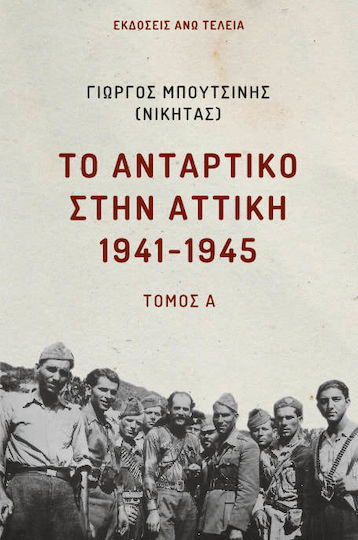
Το αντάρτικο στην Αττική 1941-1945, Volume A

Author: Giorgos Mpoutsinis

Seventy-five years after the departure of the German occupation forces from Greece, the history of ELAS in Attica remains almost unknown. Rarely do we encounter in the historiography of the Resistance...

Seventy-five years after the departure of the German occupation forces from Greece, the history of ELAS in Attica remains almost unknown. Rarely do we encounter in the historiography of the Resistance the 34th Regiment of Attica-Boeotia and the "Arvanitic guerrillas" of Parnitha, usually as secondary-complementary elements of an epic being written elsewhere,...

See full description See full description

Description

Description

Seventy-five years after the departure of the German occupation forces from Greece, the history of ELAS in Attica remains almost unknown. Rarely do we encounter in the historiography of the Resistance the 34th Regiment of Attica-Boeotia and the "Arvanitic guerrillas" of Parnitha, usually as secondary-complementary elements of an epic being written elsewhere, hundreds of kilometers away from the capital.

If the head was in Athens (the headquarters of the KKE machinery), the spine in Central Greece, and the limbs in all parts of the country, Parnitha was the indispensable nervous system for the Resistance. The Attica Sub-Command, soon I/34 Battalion, was responsible for the communication of the center with the "ELAS of the mountain"; it brought in the personnel and liaisons to Athens or took them out, received a large part of the weaponry from the Italians after their surrender, evacuated the Jews from the capital, housed the communication wireless of EAM with the Middle East Headquarters, monitored enemy movement on the road axis Athens - Elefsina - Thebes (the only national road to the north at the time) and the railway lines to Thessaloniki and the Peloponnese.

Finally, it ensured that the road of ELAS to Athens would be open when the Germans withdrew, an advantage that the leadership of the movement failed - or avoided - to capitalize on when given the opportunity. However, I/34 was not a peculiar signal battalion or escort unit. It dared to confront the enemy, sometimes even sought it out, against the fear of the guiding center that aggressive action would provoke the German beast and lead it to the vital pathways of Western Attica. And not only did it not falter, but it forced the Germans to keep thousands of valuable soldiers immobilized in pursuit of it.
Manufacturer

See full description

Specifications

Specifications

Author
Giorgos Mpoutsinis
Publisher
Ekdoseis Ano Teleia
Skroutz Book Awards 2025
-
Type
Ακαδημαϊκή Ιστορία
Theme
Science of History
Time Period
World War II
Language
Greek
Subtitle
Volume A
Cover
Soft
Number of Pages
316
Release Date
11/2019
Publication Date
2019
Dimensions
16x23 cm
ISBN-13
9786188460720

Important information

Specifications are collected from official manufacturer websites. Please verify the specifications before proceeding with your final purchase. If you notice any problem you can report it here.

See all specifications

Reviews (1)

Reviews

  1. 1
  2. 4 stars
    0
  3. 3 stars
    0
  4. 2 stars
    0
  5. 1 star
    0
Review this product

Description & Specifications

Seventy-five years after the departure of the German occupation forces from Greece, the history of ELAS in Attica remains almost unknown. Rarely do we encounter in the historiography of the Resistance the 34th Regiment of Attica-Boeotia and the "Arvanitic guerrillas" of Parnitha, usually as secondary-complementary elements of an epic being written elsewhere, hundreds of kilometers away from the capital.

If the head was in Athens (the headquarters of the KKE machinery), the spine in Central Greece, and the limbs in all parts of the country, Parnitha was the indispensable nervous system for the Resistance. The Attica Sub-Command, soon I/34 Battalion, was responsible for the communication of the center with the "ELAS of the mountain"; it brought in the personnel and liaisons to Athens or took them out, received a large part of the weaponry from the Italians after their surrender, evacuated the Jews from the capital, housed the communication wireless of EAM with the Middle East Headquarters, monitored enemy movement on the road axis Athens - Elefsina - Thebes (the only national road to the north at the time) and the railway lines to Thessaloniki and the Peloponnese.

Finally, it ensured that the road of ELAS to Athens would be open when the Germans withdrew, an advantage that the leadership of the movement failed - or avoided - to capitalize on when given the opportunity. However, I/34 was not a peculiar signal battalion or escort unit. It dared to confront the enemy, sometimes even sought it out, against the fear of the guiding center that aggressive action would provoke the German beast and lead it to the vital pathways of Western Attica. And not only did it not falter, but it forced the Germans to keep thousands of valuable soldiers immobilized in pursuit of it.

Manufacturer

Author
Giorgos Mpoutsinis
Publisher
Ekdoseis Ano Teleia
Skroutz Book Awards 2025
-
Type
Ακαδημαϊκή Ιστορία
Theme
Science of History
Time Period
World War II
Language
Greek
Subtitle
Volume A
Cover
Soft
Number of Pages
316
Release Date
11/2019
Publication Date
2019
Dimensions
16x23 cm
ISBN-13
9786188460720

Important information

Specifications are collected from official manufacturer websites. Please verify the specifications before proceeding with your final purchase. If you notice any problem you can report it here.

Reviews (1)

  1. 1
  2. 4 stars
    0
  3. 3 stars
    0
  4. 2 stars
    0
  5. 1 star
    0
Review this product
15,20 €
14,00 €   shipping cost