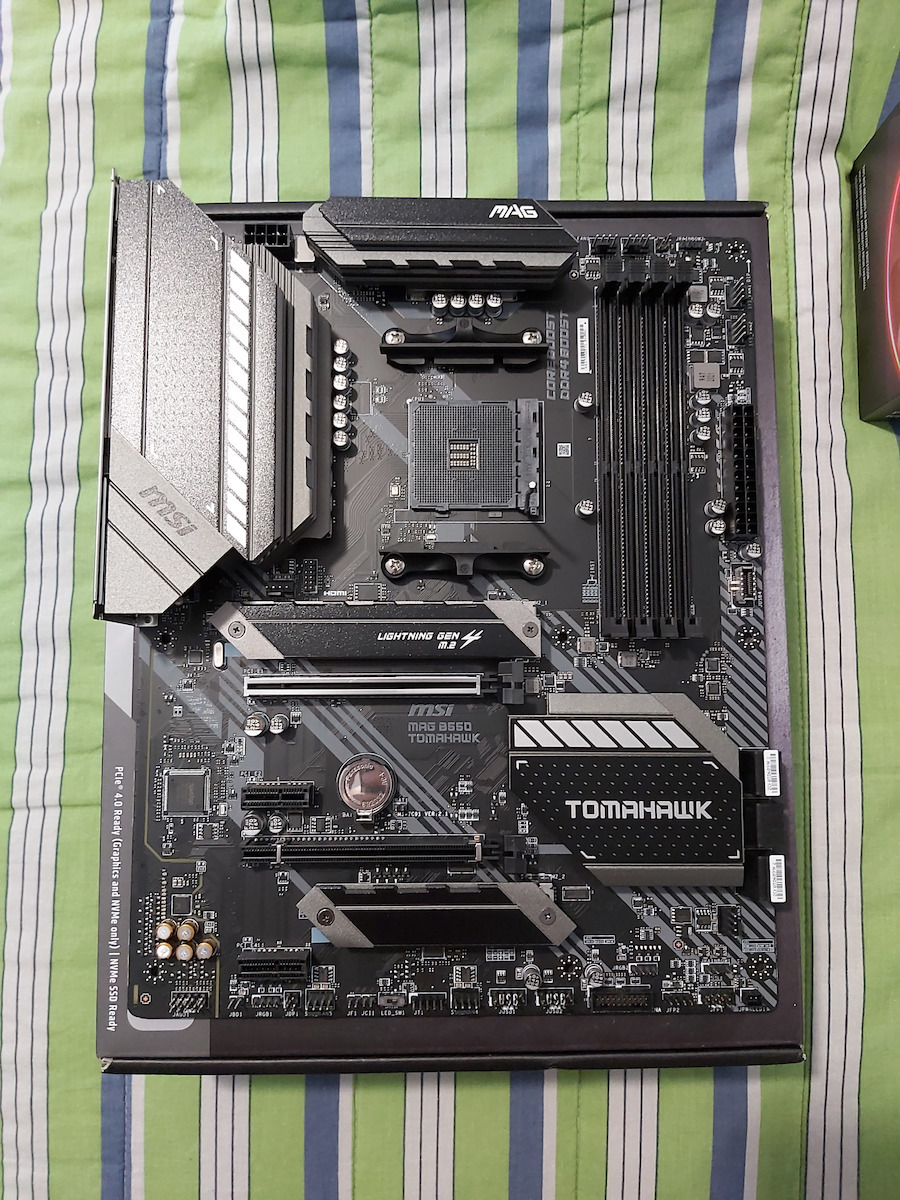
Purchase at 165 euros. Probably at the moment I am writing this review, there is no more balanced choice for the R5 5600X/5800X/5900X. I went with the 5900X which works perfectly with out of the box PBO - (power boost overdrive) and hits 4.65ghz, which from what I've seen in benchmarks, even users with the ROG STRIX X570-E GAMING struggle to achieve the same clocks (and the ROG STRIX costs 300 euros - almost double) which makes me believe that the 5950X, with or without overclock, will run just as smoothly and beautifully (good luck to those who want to cool the 5950X with a 16-core overclock...).
It has everything the average/advanced user/gamer needs. Amazing performance/VRM/user-friendly BIOS. If you want crash-free gaming with the best performance for your hardware, you can't invest anything less and you don't need to invest anything more than the 165 euros that MSI asks for this specific motherboard, which in my opinion is worth that money and more. I can't find any flaws with it, and those who say that the BIOS could be better may be used to a BIOS from another manufacturer because I found it perfectly user-friendly (and if you want to make a few extra settings, you can watch a tutorial on YouTube, and if you can't manage, you can send an email to MSI and they may guide you, it's not rocket science but it's not designed for our grandparents...).
The build quality, in my opinion, reminds me of much more expensive models that usually cost over 300 euros. If something goes wrong or your system is not stable with this motherboard, your suspicions should first go to the quality of the power supply and not the motherboard, which, I repeat, is excellent in my experience. Personally, I had a budget for a more expensive motherboard, but for me, it would be a waste of money because there is no feature that I would want and the Tomahawk doesn't have. Among other things, I consider the sound card of the MAG B550 Tomahawk perfect (ALC1200, why shouldn't it be...).
If you want to experiment and do extreme overclocking on the CPU and RAM, you could possibly go for more expensive motherboards, but it's not worth it in my opinion to spend more money and deal with manual overclocking on Ryzen - maybe some of you know better than me, of course - because they don't have a satisfactory increase in performance like the equivalent "K" series Intel CPUs. I ended up with XMP profiles for the memory and stock settings for the CPU, which, as I said, hits 4.65ghz, as much as my cooling can handle (Noctua NH-D15).
For those who are torn between this and the MPG B550 Gaming Plus, I would recommend without a second thought the MAG B550 Tomahawk because although it may be 30 euros more expensive, it has a much better sound card and the build quality is clearly superior. It has a 6-layer PCB and behaves much better thermally, not only compared to the Gaming Plus but also compared to all motherboards in the same price range and below. Thermal behavior is very important in gaming, especially for us who live in Greece, high temperatures lower clocks, reduce the lifespan of the hardware, and BSODs come much sooner and more frequently if we ignore the factor of heat.
The only real competitor in this price category is the Gigabyte B550 Aorus Pro, which has similar features (slightly better sound card - although I have read complaints about EMI noise in the output - and having heard the sound from the B550 Tomahawk, I find it hard to imagine a cleaner sound than the Aorus, more USB ports - which personally I didn't need - and possibly better overclocking for memory above 4000mhz). BUT... it has slightly worse reviews regarding DOA, and because the last thing I would want to happen in a build (purely in terms of inconvenience) is a faulty motherboard, that's why I decided to play it safe with the Tomahawk. However, it's worth checking out the Aorus as well, but I haven't tried it so I can't have an opinion. Also, to conclude the review, if you remember the comparisons between B450 and X570, the differences were significant, but now the differences between B550 and X570 are negligible for the average user/gamer. (That's why the prices of B550 are almost +50% compared to the corresponding B450).
If you want to run memory at 4000+mhz, you should know that on this motherboard, the speeds are only supported with the 1st of the 4 options below:
1DPC 1R max speed 5100 MHZ
1DPC 2R max speed 3866 MHZ
2DPC 1R max speed 4000 MHZ
2DPC 2R max speed 3600 MHZ
1DPC = 1 DIMM PER CHANNEL (meaning 2 modules-2 channel configuration)
2DPC = 2 DIMM PER CHANNEL (meaning 4 modules-2 channel configuration)
1R = 1RANK or single-ranked modules (meaning the memory has chips placed only on one side)
2R = 2RANK or dual-ranked modules (meaning the memory has chips placed on both sides)
In any case, I choose 1DPC 1R dual channel to have maximum overclocking capability.
Αγορα στα 165 ευρω. Πιθανοτατα δεν υπαρχει αυτη τη στιγμη που γραφω το review πιο ισορροπημενη επιλογη μητρικης απο αυτην για τους R5 5600X/5800x/5900x. Εγω πηγα με τον 5900X ο οποιος δουλευει α-ψ-ο-γ-α με out of the box PBO - (power boost overdrive) και χτυπαει 4.65ghz που απο οσα benchmarks ειδα ακομα και χρηστες με την ROG STRIX X570-E GAMING δυσκολευονται να πιασουν τα ιδια clocks (και η ROG STRIX κοστιζει 300 ευρω-σχεδον τα διπλα) που αυτο με κανει να πιστευω οτι και ο 5950X με ή χωρίς overclock θα τρέχει εξίσου ανετα και ομορφα (καλο κουραγιο σε οσους θελησουν να ψυξουν τον 5950Χ με 16-core overclock...)
Eχει οτι χρειαζεται ο μεσος/προχωρημενος χρηστης/gamer. Φοβερες επιδοσεις/VRM/ευχρηστο bios. Αν θελεις crash free gaming με τις καλυτερες επιδοσεις για το hardware σου δε γινεται να επενδυσεις τιποτα λιγοτερο και δε χρειαζεται να επενδυσεις τιποτα περισσότερο απο τα 165 ευρω που ζηταει η msi για τη συγκεκριμενη μητρικη η οποια κατα τη γνωμη μου αξιζει τα χρηματα αυτα και με το παραπανω. Δεν της βρισκω κανενα ψεγαδι, και οσοι λενε για το bios οτι θα μπορουσε να ειναι καλυτερο ισως να εχουν συνηθισει σε bios αλλης κατασκευαστριας εταιρειας γιατι εγω μια χαρα ευχρηστο το βρηκα (και δυο τρεις ρυθμισεις να θες να κανεις παραπανω βλεπεις ενα tutorial στο youtube, αν στη χειροτερη δεν τα καταφερεις στελνεις ενα mail στην msi και μπορει να σε καθοδηγησει, ενταξει δεν ειναι επιστημη αλλα ουτε εχει σχεδιαστει το bios για τη γιαγια μας...)
H ποιοτητα κατασκευης κατα τη γνωμη μου παραπεμπει σε πολυ ακριβοτερα μοντελα που συνηθως κοστιζουν πανω απο 300 ευρω. Αν κατι παει στραβα ή το συστημα σας με αυτη τη μητρικη δεν ειναι σταθερο οι υποψιες σας να κινηθουν πρωτα στη ποιοτητα του τροφοδοτικου και οχι της μητρικης η οποια επαναλαμβανω ειναι εξαιρετικη οσον αφορα την εμπειρια μου. Προσωπικα ειχα budget και για πιο ακριβη μητρικη αλλα για μενα θα ηταν πεταμενα χρηματα γιατι δεν υπαρχει καποιο feature που θα ηθελα και δεν το εχει η tomahawk. Μεταξυ ολων των αλλων τη καρτα ηχου της mag b550 tomahawk τη θεωρω τελεια (ALC1200 ειναι εξαλλου για ποιο λογο να μην ειναι....).
Αν θελετε να πειραματιστειτε και να κανετε extreme overclock σε CPU και RAM θα μπορουσατε ισως να πατε σε ακριβοτερες μητρικες αλλα δεν αξιζει κατα τη γνωμη μου να ξοδεψετε παραπανω χρηματα και να ασχοληθειτε με manual overclock στους ryzen - ισως καποιοι απο εσας να γνωριζετε καλυτερα απο μενα βεβαια - γιατι δεν εχουν ικανοποιητικη αυξηση σε performance οπως εχουν οι αντιστοιχοι intel σειρας "K". Εγω κατεληξα σε xmp profile για τις μνημες και stock ρυθμισεις cpu που οπως ειπα χτυπαει 4.65ghz, οσο δηλαδη τραβηξε η ψυξη μου (Noctua NH-D15)
Οσοι ειστε αναμεσα σε αυτην και την MPG B550 Gaming Plus θα σας προτεινα χωρις 2η σκεψη την MAG B550 tomahawk γιατι μπορει μεν να ειναι 30 ευρω ακριβοτερη εχει ομως απο την αλλη πολυ καλυτερη καρτα ηχου και η ποιοτητα κατασκευης ειναι σαφως ανωτερη, διαθετει 6layer PCB, και συμπεριφερεται πολυ καλυτερα θερμικα οχι μονο απο την gaming plus αλλα και απο ολες τις μητρικες απο την ιδια τιμη και κατω.
Η θερμικη συμπεριφορα εχει μεγαλη σημασια στο gaming και ειδικα για εμας που ζουμε στην ελλαδα, οι υψηλες θερμοκρασιες κατεβαζουν τα clocks, μειωνουν το χρονο ζωης του hardware και οι BSOD ερχονται πολυ πιο συντομα και με μεγαλυτερη συχνοτητα αν αψηφησουμε το παραγοντα της θερμοτητας.
Ο μονος ουσιαστικος ανταγωνιστης σε αυτη τη κατηγορια τιμης ειναι η gigabyte B550 Aorus Pro η οποια εχει παρομοια χαρακτηριστικα (λιγο καλυτερη καρτα ηχου-ωστοσο εχω διαβασει παραπονα για θορυβο emi στην εξοδο-και εχοντας ακουσει τον ηχο απο την b550 tomahawk δυσκολευομαι να φανταστω εναν πιο καθαρο ηχο απο την aorus, περισσοτερα usb ports-που προσωπικα δε τα χρειαζομουν και ισως καλυτερο overclock για μνημες ανω των 4000mhz). ΑΛΛΑ.. εχει λιγο χειροτερες κριτικες οσον αφορα DOA και επειδη το τελευταιο πραγμα που θα ηθελα να μου τυχει σε ενα build (καθαρα απο θεμα ταλαιπωριας) ειναι η ελλατωματικη motherboard, γι αυτο αποφασισα να παιξω safe με την tomahawk. Αξιζει να την τσεκαρετε ομως και αυτην αλλα δεν την εχω δοκιμασει οποτε δε μπορω να εχω γνωμη. Επισης και για να κλεισω το review αν θυμαστε συγκρισεις μεταξυ b450 και x570 οι διαφορες ηταν σημαντικες αλλα πλεον οι διαφορες μεταξυ b550 και x570 ειναι αμελητεες για τον μεσο χρηστη/gamer. (γι αυτο εξαλλου και οι τιμες των b550 ειναι σχεδον +50% απο τις αντιστοιχες b450)
Εαν θελετε να τρεξετε μνημες 4000+mhz να γνωριζετε οτι στη μητρικη αυτη υποστηριζονται οι ταχυτητες μονο με την 1η απο τις 4παρακατω επιλογες:
1DPC 1R max speed 5100 MHZ
1DPC 2R max speed 3866 MHZ
2DPC 1R max speed 4000 MHZ
2DPC 2R max speed 3600 MHZ
1DPC = 1 DIMM PER CHANNEL (δηλαδη 2modules-2channel configuration)
2DPC = 2 DIMM PER CHANNEL (δηλαδη 4modules-2channel configuration)
1R = 1RANK ή single ranked modules ( Η μνημη δηλαδη να εχει τοποθετημενα τα chips μονο απο τη μια μερια)
2R = 2RANK ή dual ranked modules ( Η μνημη δηλαδη να εχει τοποθετημενα τα chips και απο τις δυο μεριες)
Εγω σε καθε περιπτωση επιλεγω 1DPC 1R dual channel για να εχω maximum overclocking capability.