


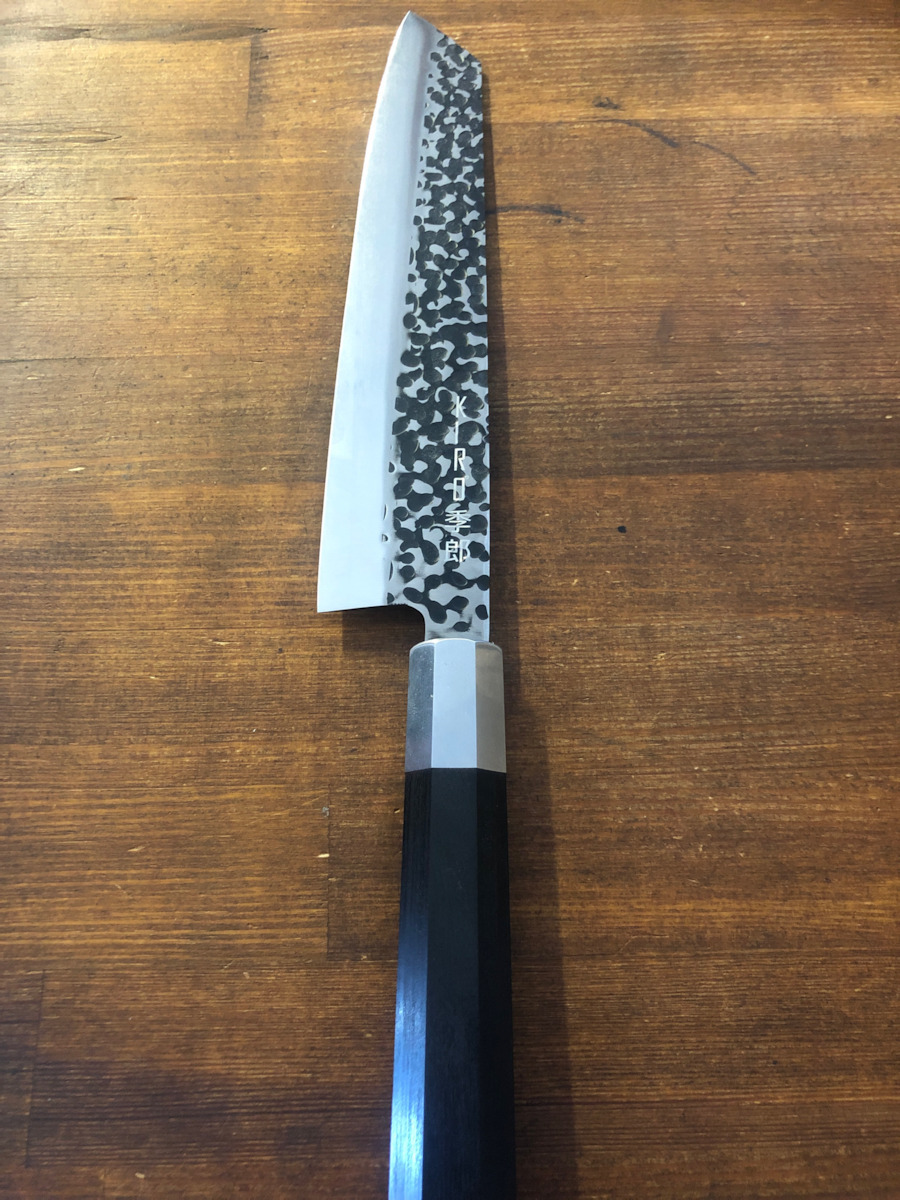


The Kiritsuke knife is one of the few versatile (general-purpose) knives in Japan. It is primarily designed for filleting fish and cutting vegetables, but its shape makes it suitable for many different uses.
Description
Specifications
Kiritsuke Knife

Blade Material
The blade is made of X50 Cr MoV 15, a widely used steel that is used in many kitchen knives. Its composition includes about 0.5% carbon (X50), which provides hardness to the knife's edge, and about 15% chromium (Cr), which provides resistance to corrosion.
In addition, it contains a small percentage of molybdenum (Mo) and vanadium (V), which provide improved wear resistance and edge retention.
Overall, this steel composition provides a knife with a hard but flexible blade, resistant to corrosion and capable of maintaining a sharp and durable edge for a long period of time.
Handle
The handle is made of high-pressure fiberglass, G-10 and is a material with high strength, corrosion resistance, non-slip and heat resistance. It also provides good shock absorption, helping to reduce user fatigue when using the knife. G-10 knife handles are also lightweight and easy to process.
Cutting Surface
Cuts are recommended to be made on wooden or plastic cutting surfaces. Glass, stone, and marble cutting surfaces are unsuitable as they can cause permanent damage to the knife blades.
Cleaning
Wash the knife with warm water before using it for the first time. After each use, make sure to wash the knife immediately (with a mild detergent) and dry it with a soft cloth. Especially if you have cut acidic foods, you should wash the knife immediately after use.
For your own safety, you should always wipe the knife away from your body and away from its edge, using a cloth or towel.
It is not recommended to wash it in the dishwasher but by hand, in order to protect its material and maintain its sharpness for a long time.
Sharpening
No matter how sharp a knife is at first, after some use it needs sharpening, something that you can achieve with a sharpener, sharpening stone, or strop.
You can tell if your knife cuts well with an easy test using the knife and a piece of paper. A sharp knife can easily and cleanly cut through a piece of paper. On the other hand, a knife that needs sharpening will struggle and its cutting will be rough.
It is also advisable to sharpen your knives with a professional occasionally, to fix any damage to the blade's edge and to maintain sharpness.
- Product Number
- 17-502118W
- Type
- Kiritsuke
- Material
- Stainless Steel
- Japanese
- No
- Professional Series
- No
- Household Use
- Yes
- Pieces
- 1 pcs
- Blade Length
- 20 cm
- with Non-Stick Coating
- No
- Dishwasher safe
- No
- For Left-Handed Players
- -
Important information
Specifications are collected from official manufacturer websites. Please verify the specifications before proceeding with your final purchase. If you notice any problem you can report it here.