This is a particularly timely and significant collection of essays, intervening at a critical crossroads in relations across Eurasia. The three powers - the USA, Russia, and the EU - lack a common...

This is a particularly timely and significant collection of essays, intervening at a critical crossroads in relations across Eurasia. The three powers - the USA, Russia, and the EU - lack a common geopolitical vision that can transform the shared ambition for a 'strategic partnership' into effective strategies for engagement and cooperation. Instead, what we...

See full description See full description
  • Language English
  • Number of pages Number of pages 211
  • Cover Cover Soft
  • Year of publication Year of publication 2011
  • Publisher Publisher Eyrasia
  • See all
13 07
Delivery Thu, 06 Aug - Mon, 10 Aug
14,00 €   shipping cost
Sent from Greece
From Ebooks 5.0 (26)
Greece
See Books on the page of Ebooks

Description

Description

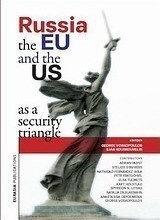
This is a particularly timely and significant collection of essays, intervening at a critical crossroads in relations across Eurasia. The three powers - the USA, Russia, and the EU - lack a common geopolitical vision that can transform the shared ambition for a 'strategic partnership' into effective strategies for engagement and cooperation. Instead, what we are witnessing is an increasing divergence - with the EU becoming increasingly insular, the USA shifting its focus to the Pacific and Asia, and Russia turning towards Central Eurasia and the Far East.

While it is still early to speak of a decisive and irreversible shift in the global distribution of power from West to East, it is nevertheless clear that the former is experiencing a period of relative decline compared to the emerging empires of China and India or the favorable markets in Latin America and Asia. Having become deeply divided and lacking common ideas, the wider West - of which Russia has always been an integral part - seems to be slowly unraveling.

Of course, the issue of 'decline' is as old as Western civilization itself, traceable back to Hesiod's Works and Days and characteristic of the intellectual and political history of the West. Twenty years ago, transatlantic West reacted to Mikhail Gorbachev's behavior by signing the 1990 Paris Charter of the OECD aimed at creating a common security framework. President Medvedev's proposals for a new security treaty perhaps represent the last chance for a peaceful integration of Russia into a pan-Eurasian framework from Vancouver to Vladivostok. Including Russia and agreeing on a new set of rules and principles, such a Eurasian-Atlantic framework could solidify the 'reset' in US-Russia relations and offer greater global geopolitical power to wider Europe.

(Adrian Pabst) [Excerpt from a text by the publisher]
Manufacturer

See full description

Specifications

Specifications

Authors
Stelios Stayridis, Natividad Fernández Sola, Petr Kratochvíl, Elsa Tulmets, Aart Holstlag, Spyridon N. Litsas, Natalia Zaslavskaya, Anastassia Obydenkova, Giorgos Voskopoulos
Publisher
Eyrasia
Subtitle
Action, interaction and challenges ahead
Number of Pages
211
Release Date
5/2011
Publication Date
2011
Dimensions
17x24 cm
Language
English
Cover
Soft
Geopolitical Region
Europe, USA, Russia
ISBN-13
9789608187597

Important information

Specifications are collected from official manufacturer websites. Please verify the specifications before proceeding with your final purchase. If you notice any problem you can report it here.

See all specifications

Description & Specifications

This is a particularly timely and significant collection of essays, intervening at a critical crossroads in relations across Eurasia. The three powers - the USA, Russia, and the EU - lack a common geopolitical vision that can transform the shared ambition for a 'strategic partnership' into effective strategies for engagement and cooperation. Instead, what we are witnessing is an increasing divergence - with the EU becoming increasingly insular, the USA shifting its focus to the Pacific and Asia, and Russia turning towards Central Eurasia and the Far East.

While it is still early to speak of a decisive and irreversible shift in the global distribution of power from West to East, it is nevertheless clear that the former is experiencing a period of relative decline compared to the emerging empires of China and India or the favorable markets in Latin America and Asia. Having become deeply divided and lacking common ideas, the wider West - of which Russia has always been an integral part - seems to be slowly unraveling.

Of course, the issue of 'decline' is as old as Western civilization itself, traceable back to Hesiod's Works and Days and characteristic of the intellectual and political history of the West. Twenty years ago, transatlantic West reacted to Mikhail Gorbachev's behavior by signing the 1990 Paris Charter of the OECD aimed at creating a common security framework. President Medvedev's proposals for a new security treaty perhaps represent the last chance for a peaceful integration of Russia into a pan-Eurasian framework from Vancouver to Vladivostok. Including Russia and agreeing on a new set of rules and principles, such a Eurasian-Atlantic framework could solidify the 'reset' in US-Russia relations and offer greater global geopolitical power to wider Europe.

(Adrian Pabst) [Excerpt from a text by the publisher]

Manufacturer

Authors
Stelios Stayridis, Natividad Fernández Sola, Petr Kratochvíl, Elsa Tulmets, Aart Holstlag, Spyridon N. Litsas, Natalia Zaslavskaya, Anastassia Obydenkova, Giorgos Voskopoulos
Publisher
Eyrasia
Subtitle
Action, interaction and challenges ahead
Number of Pages
211
Release Date
5/2011
Publication Date
2011
Dimensions
17x24 cm
Language
English
Cover
Soft
Geopolitical Region
Europe, USA, Russia
ISBN-13
9789608187597

Important information

Specifications are collected from official manufacturer websites. Please verify the specifications before proceeding with your final purchase. If you notice any problem you can report it here.

13,07 €
14,00 €   shipping cost