Microphones

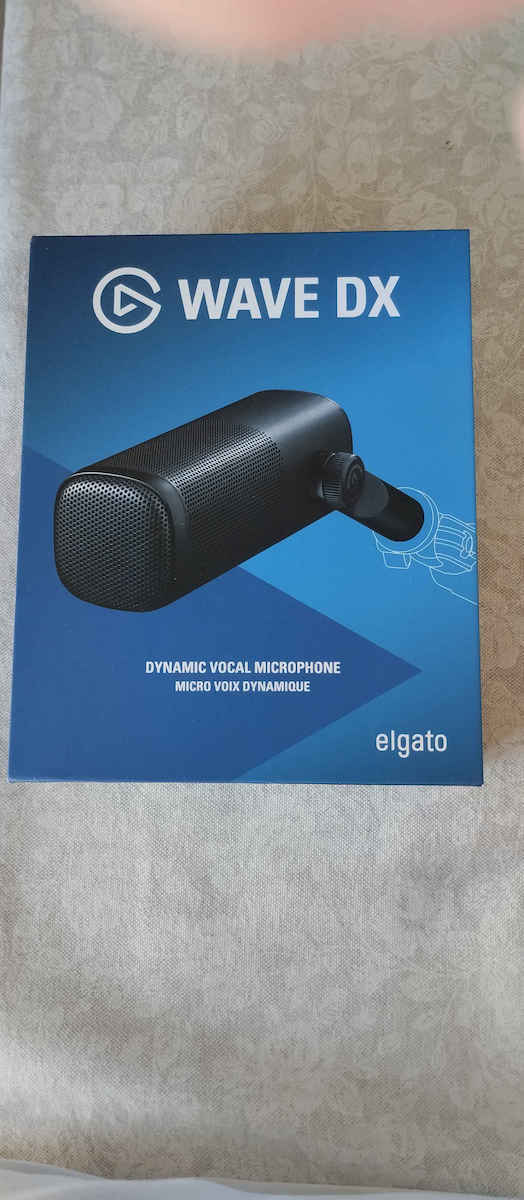
Elgato Wave DX Dynamic Δυναμικό Microphone XLR Tabletop for Vocals

The Elgato Wave DX is made for Broadcasters, Podcasters, Commentators, and Creators.

Features:

  • Warm, true tone for professional audio production
  • Detail and clarity without unwanted ambient noise
  • ...

The Elgato Wave DX is made for Broadcasters, Podcasters, Commentators, and Creators.

Features:

  • Warm, true tone for professional audio production
  • Detail and clarity without unwanted ambient noise
  • Forgiving Cardioid Polar Pattern, so you still sound good even if slightly off-axis
  • Works with any XLR Interface, no amplifier required
  • Ready for livestreams
  • ...
See full description See full description

Top specs

  • Usage Voice, Computer (Gaming & Streaming), Studio
  • Placement Tabletop
  • Connectivity XLR
  • See all
124 53 €
Delivery Wed, 14 Oct - Tue, 20 Oct
14,00 €   shipping cost
Sent from Greece
From Globi 5.0 (14)
Greece
5+ pieces
See Audio on the page of Globi

Learn more about invoicing

Description

Description

The Elgato Wave DX is made for Broadcasters, Podcasters, Commentators, and Creators.

Features:

  • Warm, true tone for professional audio production
  • Detail and clarity without unwanted ambient noise
  • Forgiving Cardioid Polar Pattern, so you still sound good even if slightly off-axis
  • Works with any XLR Interface, no amplifier required
  • Ready for livestreams
  • Frequency response range that reproduces the human voice without coloration
  • In collaboration with Lewitt Audio, the dynamic capsule is a remarkable feat of audio engineering
  • Optimized proximity effect that allows you to shape your voice naturally
  • Constructed with nylon fibers and internal pop shield for breath sounds
  • Dynamic microphone that captures detail in low and dynamic high frequencies
  • Monophonic swivel mount, compatible with all microphone arms
  • XLR connection, compatible with any XLR Interface and ideally with the Wave XLR

Technical details:

  • Dimensions: 53 x 53 x 146 mm
  • Weight: 440 g
  • Polar pattern: Cardioid
  • Capsule: Dynamic
  • Frequency: 50 - 15000 Hz
  • Sensitivity: 2.5 mV/Pa, -52 dBV/Pa
  • Impedance: 600 Ohm

Works with any XLR interface

The Wave DX works seamlessly with the Wave XLR, a compact USB interface with features you won't find in conventional audio interfaces. Like proprietary anti-distortion technology, a capacitive mute button, direct integration with Wave Link mixing software, and an interchangeable front panel.

Thousands of Effects from the Marketplace

Add audio effects from the Marketplace or third-party VST plugins directly to the Wave Link mixer, without requiring manual installation. Apply them to any input channel - like your microphone, game, or voice chat - and then adjust the settings to create a sound that's entirely your own.

Ready for livestreams

The well-tuned frequency response range accurately reproduces the human voice without timbre, ideal for shaping your characteristic sound with effects and additional settings.

Magic Capsule

In collaboration with Lewitt Audio, the dynamic capsule inside the Wave DX is a remarkable feat of audio engineering.

True Performer

An optimized proximity effect allows you to shape your voice naturally. The closer you get, the greater the bass, allowing you to emphasize whatever you want.

Clearer than ever

A dynamic microphone with details like a condenser? Exactly. The Wave DX captures detail in the low frequency and dynamic high frequencies, while rejecting background noise. It's hard to find a microphone that can do both.

Manufacturer

See full description

Specifications

Specifications

Dimensions

Mode of Operation
Dynamic
Directivity
Unidirectional (Cardioid)
Sensitivity
2.5 mV/Pa
Max SPL
52 dB
Signal-to-Noise Ratio (SNR)
52 dB
Connectivity
XLR

General Characteristics

Device Group
Voice, Computer (Gaming & Streaming), Studio
Placement
Tabletop
Vintage
No
Set
No
Color
Black

Important information

Specifications are collected from official manufacturer websites. Please verify the specifications before proceeding with your final purchase. If you notice any problem you can report it here.

See all specifications

Reviews (3)

Reviews

  1. 3
  2. 4 stars
    0
  3. 3 stars
    0
  4. 2 stars
    0
  5. 1 star
    0
Review this product
  • Sound quality
  • Construction quality
  • Durability
  • Value for money

Reviews by our members

  • The Wave DX is one of those microphones that made me say, “okay, Elgato really nailed it here.” It’s a dynamic XLR mic, with a clean and fairly detailed voice, but at the same time it keeps that controlled, broadcast character we want for podcasting, voice-over, and streaming. Elgato itself designs it to work with any XLR interface, without a booster.

    Compared to the Rode PodMic, I wouldn’t say there is a “better and worse.” It’s more a matter of character. The Wave DX is cleaner and brighter, with a greater sense of detail in the voice, while the PodMic has a thicker, fuller, and more distinctly “radio-like” sound. In comparative tests, in fact, the Wave DX has been described as very close to the PodMic, with a bit more clarity and less “crunch.”

    But here there is something I really like: you don’t need to buy a booster/lifter just because you bought the microphone. With 600Ω and a sensitivity of -52 dBV/Pa, it naturally needs a proper XLR preamp/interface, but Elgato has designed it so it can be driven normally by a standard XLR interface.

    And compared to a €30 microphone, this is where the difference starts to show—not so much in “how it sounds,” but in how it sounds. More controlled voice, better room rejection, and an easier foundation for EQ/compression. It’s not a magic filter, though; if the room is terrible or the gain staging is wrong, you’ll hear that here too.

    On the downside, I’d keep two things in mind. The built-in pop filter is good, but it’s not a reason to throw away the external Gravity we saw earlier, while the body, although metal, doesn’t have the “tank” feel of the PodMic. The Wave DX is about 440 g, while the PodMic is noticeably heavier.

    My verdict: a very strong microphone for the money, and if someone wants a clean voice for podcasting/streaming without jumping straight into an expensive broadcast setup, it’s one of the options I would seriously consider. But as with the PodMic, the microphone is only half the story; the interface, the preamp, the distance from the mouth, and the correct gain make the difference.

    Translated from Greek ·
    Did you find this review helpful?
  • Fotis_Pantos7216
    5
    1 out of 3 members found this review helpful

    Verified purchase

    The best purchase of a microphone

    Translated from Greek ·
    • Sound quality
    • Construction quality
    • Durability
    • Value for money
    Did you find this review helpful?
  • 5
    1 out of 1 members found this review helpful

    Verified purchase

    Very good and stylish microphone. Affordable for its category. Does not come with an XLR cable.

    Translated from Greek ·
    • Sound quality
    • Construction quality
    • Durability
    • Value for money
    Did you find this review helpful?
  • The Wave DX is one of those microphones that made me say, “okay, Elgato really nailed it here.” It’s a dynamic XLR mic, with a clean and fairly detailed voice, but at the same time it keeps that controlled, broadcast character we want for podcasting, voice-over, and streaming. Elgato itself designs it to work with any XLR interface, without a booster.

    Compared to the Rode PodMic, I wouldn’t say there is a “better and worse.” It’s more a matter of character. The Wave DX is cleaner and brighter, with a greater sense of detail in the voice, while the PodMic has a thicker, fuller, and more distinctly “radio-like” sound. In comparative tests, in fact, the Wave DX has been described as very close to the PodMic, with a bit more clarity and less “crunch.”

    But here there is something I really like: you don’t need to buy a booster/lifter just because you bought the microphone. With 600Ω and a sensitivity of -52 dBV/Pa, it naturally needs a proper XLR preamp/interface, but Elgato has designed it so it can be driven normally by a standard XLR interface.

    And compared to a €30 microphone, this is where the difference starts to show—not so much in “how it sounds,” but in how it sounds. More controlled voice, better room rejection, and an easier foundation for EQ/compression. It’s not a magic filter, though; if the room is terrible or the gain staging is wrong, you’ll hear that here too.

    On the downside, I’d keep two things in mind. The built-in pop filter is good, but it’s not a reason to throw away the external Gravity we saw earlier, while the body, although metal, doesn’t have the “tank” feel of the PodMic. The Wave DX is about 440 g, while the PodMic is noticeably heavier.

    My verdict: a very strong microphone for the money, and if someone wants a clean voice for podcasting/streaming without jumping straight into an expensive broadcast setup, it’s one of the options I would seriously consider. But as with the PodMic, the microphone is only half the story; the interface, the preamp, the distance from the mouth, and the correct gain make the difference.

    Translated from Greek ·
    0
  • The best purchase of a microphone

    Translated from Greek ·
    1
  • Very good and stylish microphone. Affordable for its category. Does not come with an XLR cable.

    Translated from Greek ·
    1
  • See all

Description & Specifications

The Elgato Wave DX is made for Broadcasters, Podcasters, Commentators, and Creators.

Features:

  • Warm, true tone for professional audio production
  • Detail and clarity without unwanted ambient noise
  • Forgiving Cardioid Polar Pattern, so you still sound good even if slightly off-axis
  • Works with any XLR Interface, no amplifier required
  • Ready for livestreams
  • Frequency response range that reproduces the human voice without coloration
  • In collaboration with Lewitt Audio, the dynamic capsule is a remarkable feat of audio engineering
  • Optimized proximity effect that allows you to shape your voice naturally
  • Constructed with nylon fibers and internal pop shield for breath sounds
  • Dynamic microphone that captures detail in low and dynamic high frequencies
  • Monophonic swivel mount, compatible with all microphone arms
  • XLR connection, compatible with any XLR Interface and ideally with the Wave XLR

Technical details:

  • Dimensions: 53 x 53 x 146 mm
  • Weight: 440 g
  • Polar pattern: Cardioid
  • Capsule: Dynamic
  • Frequency: 50 - 15000 Hz
  • Sensitivity: 2.5 mV/Pa, -52 dBV/Pa
  • Impedance: 600 Ohm

Works with any XLR interface

The Wave DX works seamlessly with the Wave XLR, a compact USB interface with features you won't find in conventional audio interfaces. Like proprietary anti-distortion technology, a capacitive mute button, direct integration with Wave Link mixing software, and an interchangeable front panel.

Thousands of Effects from the Marketplace

Add audio effects from the Marketplace or third-party VST plugins directly to the Wave Link mixer, without requiring manual installation. Apply them to any input channel - like your microphone, game, or voice chat - and then adjust the settings to create a sound that's entirely your own.

Ready for livestreams

The well-tuned frequency response range accurately reproduces the human voice without timbre, ideal for shaping your characteristic sound with effects and additional settings.

Magic Capsule

In collaboration with Lewitt Audio, the dynamic capsule inside the Wave DX is a remarkable feat of audio engineering.

True Performer

An optimized proximity effect allows you to shape your voice naturally. The closer you get, the greater the bass, allowing you to emphasize whatever you want.

Clearer than ever

A dynamic microphone with details like a condenser? Exactly. The Wave DX captures detail in the low frequency and dynamic high frequencies, while rejecting background noise. It's hard to find a microphone that can do both.

Manufacturer

Dimensions

Mode of Operation
Dynamic
Directivity
Unidirectional (Cardioid)
Sensitivity
2.5 mV/Pa
Max SPL
52 dB
Signal-to-Noise Ratio (SNR)
52 dB
Connectivity
XLR

General Characteristics

Device Group
Voice, Computer (Gaming & Streaming), Studio
Placement
Tabletop
Vintage
No
Set
No
Color
Black

Important information

Specifications are collected from official manufacturer websites. Please verify the specifications before proceeding with your final purchase. If you notice any problem you can report it here.

Reviews (3)

  1. 3
  2. 4 stars
    0
  3. 3 stars
    0
  4. 2 stars
    0
  5. 1 star
    0
Review this product
  • Sound quality
  • Construction quality
  • Durability
  • Value for money

Reviews by our members

  • The Wave DX is one of those microphones that made me say, “okay, Elgato really nailed it here.” It’s a dynamic XLR mic, with a clean and fairly detailed voice, but at the same time it keeps that controlled, broadcast character we want for podcasting, voice-over, and streaming. Elgato itself designs it to work with any XLR interface, without a booster.

    Compared to the Rode PodMic, I wouldn’t say there is a “better and worse.” It’s more a matter of character. The Wave DX is cleaner and brighter, with a greater sense of detail in the voice, while the PodMic has a thicker, fuller, and more distinctly “radio-like” sound. In comparative tests, in fact, the Wave DX has been described as very close to the PodMic, with a bit more clarity and less “crunch.”

    But here there is something I really like: you don’t need to buy a booster/lifter just because you bought the microphone. With 600Ω and a sensitivity of -52 dBV/Pa, it naturally needs a proper XLR preamp/interface, but Elgato has designed it so it can be driven normally by a standard XLR interface.

    And compared to a €30 microphone, this is where the difference starts to show—not so much in “how it sounds,” but in how it sounds. More controlled voice, better room rejection, and an easier foundation for EQ/compression. It’s not a magic filter, though; if the room is terrible or the gain staging is wrong, you’ll hear that here too.

    On the downside, I’d keep two things in mind. The built-in pop filter is good, but it’s not a reason to throw away the external Gravity we saw earlier, while the body, although metal, doesn’t have the “tank” feel of the PodMic. The Wave DX is about 440 g, while the PodMic is noticeably heavier.

    My verdict: a very strong microphone for the money, and if someone wants a clean voice for podcasting/streaming without jumping straight into an expensive broadcast setup, it’s one of the options I would seriously consider. But as with the PodMic, the microphone is only half the story; the interface, the preamp, the distance from the mouth, and the correct gain make the difference.

    Translated from Greek ·
    Did you find this review helpful?
  • Fotis_Pantos7216
    5
    1 out of 3 members found this review helpful

    Verified purchase

    The best purchase of a microphone

    Translated from Greek ·
    • Sound quality
    • Construction quality
    • Durability
    • Value for money
    Did you find this review helpful?
  • 5
    1 out of 1 members found this review helpful

    Verified purchase

    Very good and stylish microphone. Affordable for its category. Does not come with an XLR cable.

    Translated from Greek ·
    • Sound quality
    • Construction quality
    • Durability
    • Value for money
    Did you find this review helpful?
  • The Wave DX is one of those microphones that made me say, “okay, Elgato really nailed it here.” It’s a dynamic XLR mic, with a clean and fairly detailed voice, but at the same time it keeps that controlled, broadcast character we want for podcasting, voice-over, and streaming. Elgato itself designs it to work with any XLR interface, without a booster.

    Compared to the Rode PodMic, I wouldn’t say there is a “better and worse.” It’s more a matter of character. The Wave DX is cleaner and brighter, with a greater sense of detail in the voice, while the PodMic has a thicker, fuller, and more distinctly “radio-like” sound. In comparative tests, in fact, the Wave DX has been described as very close to the PodMic, with a bit more clarity and less “crunch.”

    But here there is something I really like: you don’t need to buy a booster/lifter just because you bought the microphone. With 600Ω and a sensitivity of -52 dBV/Pa, it naturally needs a proper XLR preamp/interface, but Elgato has designed it so it can be driven normally by a standard XLR interface.

    And compared to a €30 microphone, this is where the difference starts to show—not so much in “how it sounds,” but in how it sounds. More controlled voice, better room rejection, and an easier foundation for EQ/compression. It’s not a magic filter, though; if the room is terrible or the gain staging is wrong, you’ll hear that here too.

    On the downside, I’d keep two things in mind. The built-in pop filter is good, but it’s not a reason to throw away the external Gravity we saw earlier, while the body, although metal, doesn’t have the “tank” feel of the PodMic. The Wave DX is about 440 g, while the PodMic is noticeably heavier.

    My verdict: a very strong microphone for the money, and if someone wants a clean voice for podcasting/streaming without jumping straight into an expensive broadcast setup, it’s one of the options I would seriously consider. But as with the PodMic, the microphone is only half the story; the interface, the preamp, the distance from the mouth, and the correct gain make the difference.

    Translated from Greek ·
    0
  • The best purchase of a microphone

    Translated from Greek ·
    1
  • Very good and stylish microphone. Affordable for its category. Does not come with an XLR cable.

    Translated from Greek ·
    1
  • See all
124,53 €
14,00 €   shipping cost