Headphones

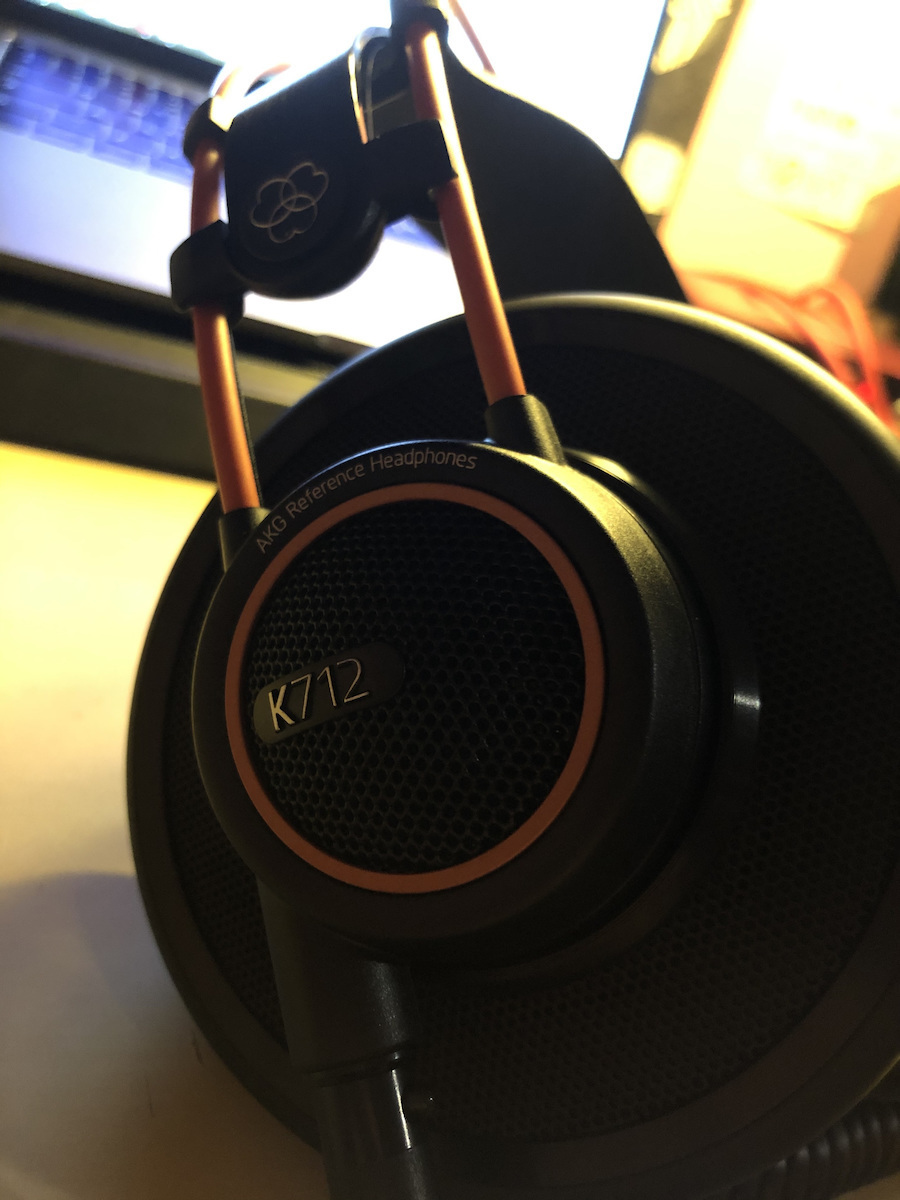
AKG K712 PRO Wired Over Ear Headphones Black

The K712 PRO are reference, open, over-ear headphones for precise listening, mixing, and mastering. Their design fully covers the ear, ensuring maximum comfort during mixing and mastering, while also...

The K712 PRO are reference, open, over-ear headphones for precise listening, mixing, and mastering. Their design fully covers the ear, ensuring maximum comfort during mixing and mastering, while also offering spacious sound without compromises. Their precise and dynamic sound comes from the improved low-frequency performance by 3dB. These headphones feature...

See full description See full description
  • Usage Studio
  • Connectivity 3.5mm
  • See all
270 00
Delivery by Fri, 26 Jun
14,00 €   shipping cost
Sent from Greece
From MusicAccessories
Greece
5+ pieces
See Earphones on the page of MusicAccessories

Description

Description

The K712 PRO are reference, open, over-ear headphones for precise listening, mixing, and mastering. Their design fully covers the ear, ensuring maximum comfort during mixing and mastering, while also offering spacious sound without compromises. Their precise and dynamic sound comes from the improved low-frequency performance by 3dB. These headphones feature a genuine soft leather headband for a lightweight and comfortable fit. Their carefully selected transducers provide consistency and accurate positioning. The K712 PRO comes with a professional mini XLR connector for quick cable replacement. An additional coiled cable and a premium carrying bag are also included.

Manufacturer

See full description

Specifications

Specifications

Product Details

Type
Over Ear
Frequency Response
10 - 39800 Hz
Impendance
62 ohm
Sensitivity
105 dB
Use
Studio
Colour
Black

Connectivity

Wired Connections
3.5mm
Connection
Wired

Features & Functions

Microphone
Yes
Volume Control
No
Detachable Cable
Yes
Foldable Drivers
No
Rotating Capsules
No
Card Reader
No
Radio
No
Fast Charging
No
High-Resolution Audio
Yes
Connection with 2 Devices
No
Noise Cancellation
Without

Top Specs

Connectivity
3.5mm
Noise Cancellation
-

Important information

Specifications are collected from official manufacturer websites. Please verify the specifications before proceeding with your final purchase. If you notice any problem you can report it here.

See all specifications

Reviews (6)

Reviews

  1. 4
  2. 1
  3. 3 stars
    0
  4. 2 stars
    0
  5. 1
Review this product
  • Bass
  • Weight
  • Comfort
  • Sound quality
  • Value for money
  • Construction quality
  • Noise isolation

Reviews by our members

  • Alex_Troh
    5
    8 out of 14 members found this review helpful

    Verified purchase

    Let me start by saying that I have only had them for a week, so I will come back in a few months to give you a more comprehensive opinion.
    I want to clarify some things because I have seen quite a few negative comments about the sound isolation: they do not isolate the sound as much as one might want, and that's because it's not their job. They are open. Which means that sound can pass through and sound can also escape. This makes them very good for mixing in a relatively quiet environment without a lot of external noise, as they don't "clog" up. If you are mixing in a noisy space, prefer closed or at least semi-open headphones and you will definitely have better sound isolation.
    They are not suitable for recording, as, being open, there is a leak from the headphones and if you record, for example, vocals, the leak from the other instruments will also be recorded. So, in this case, prefer closed.
    The build quality is quite good. Okay, yes, it could be better considering the price, but overall, they feel very premium.
    They are comfortable even after several hours of use and do not tire you.
    The pads are amazing, comfortable, very soft, and have a memory foam feel that adapts to the shape of every head. They are much better and more comfortable than the leather pads that other headphones have.
    What made me ultimately choose these headphones is the detachable cable (and the fact that it comes with a second coiled cable). So, if something happens to the cable, you don't need to buy new headphones, you just get a new cable.
    It also comes with a very nice velvet pouch for carrying them, and even that feels premium.
    That's all I have to say for now, I will come back to complete my evaluation after a few months, or even after some more time of use to make it more comprehensive.
    Thank you.

    Translated from Greek ·
    • Sound quality
    • Bass
    • Noise isolation
    • Comfort
    • Weight
    • Construction quality
    • Value for money
    Did you find this review helpful?
  • lightningboy91
    4
    32 out of 35 members found this review helpful

    After 1 year of owning these headphones, I believe I can express my opinion. Regarding frequencies and frequency response, the following information is based on reliable data and graphs from innerfidelity.com and rtings.com, as well as the established HARMAN curve, which you can find on your own.

    Starting with the bass (0 - 200 Hz), the extension of these open dynamic headphones is very good, with the expected drop in the sub-bass region being smaller than the majority of open dynamic headphones of the same, or even higher, price range. They compete well in bass extension with more expensive open dynamic headphones (HD800s, Focal Elear, Clear, etc.), although they do not reach the levels of closed-back or high-end planar magnetic headphones (Mr. Speakers, Audeze, Hifiman, etc.).

    Moving on to the mid bass-high bass (100-200 Hz) and low mids, the curve goes above the reference point by 2 decibels (at least up to 600 Hz), which makes the low mids a bit thicker and the vocals a bit more breathy. In terms of tonality, I don't consider this to be a significant issue, as many expensive open dynamic reference headphones show similar results in this specific range.

    When it comes to mids and high mids, we may find the only potential problem that could be considered significant for these headphones. The transition through the presence region (800 Hz - 3.5 kHz), which is crucial for defining presence, tonality, distance of vocals, and overtones of vocals and instruments, is not as smooth and linear as it should be. Specifically, there is the well-known AKG 2 kHz peak (4-5 decibels above the reference point), which AKG has never eliminated from the K7XX series. This peak, although more refined compared to other models in the series, adds extra energy to vocals and electric guitars, making them slightly shouty compared to normal. The 2 kHz peak dominates in intensity over the 2.7-3.5 kHz range, which, although close to the reference point, is not smooth enough, resulting in overshadowed overtones and potentially misleadingly characterizing them as veiled or covered.

    Finally, the treble in general, from 3.6 kHz and above, is clearly better and more refined than the entire K7XX series, as well as the well-known Beyerdynamic treble in the DT series, which can be overwhelming with its 10 decibel peaks. It is a typical treble with peaks at 7 and 8.5 kHz, reaching 4-5 decibels, based on what I consider to be the outdated Diffuse Field target. In well-mastered tracks, these headphones can be characterized as neutral to slightly bright. However, in poorly-mastered tracks (e.g. "Lovesong" by The Cure on the album "Greatest Hits"), with weakened mids and boosted treble, these headphones are unforgiving and will overwhelm you.

    I shouldn't forget to mention the historical and strongest aspect of these headphones, and AKG in general, in the K7XX series, which is the exceptionally wide and satisfyingly deep soundstage. It gives you the impression of being in a large room surrounded by music in a surround sound style. You will find superior quality soundstage in open headphones such as Sennheiser HD800(s), Hifiman Ananda, Hifiman Edition X, Hifiman Arya, Hifiman HE1000v2, Audeze LCD series, etc. with prices above 1000.

    Translated from Greek ·
    • Sound quality
    • Bass
    • Comfort
    • Weight
    • Value for money
    • Construction quality
    • Noise isolation
    Did you find this review helpful?
  • conditor.libertus
    1
    13 out of 30 members found this review helpful

    I do not recommend them at all. They have a VERY serious tonal problem in the mid-high frequency range of orchestral strings and brass instruments. These frequencies play very low, resulting in these instruments and others with critical frequency content in this range sounding like they are playing behind a wall. The French Horns sound like they are playing with a mute on the bell. I couldn't stand to listen to soundtracks and classical music with them for even a minute. Two days after buying them, I tried in vain to sell them. The only way to make them usable was to spend another 100 euros on the Sonarworks Reference 4 program, which compensates for the frequency problems of all known headphones by providing a flat sound, with the ability to further customize the low and high frequencies. Until I save up money for the BeyerDynamic DT 1990 PRO, which I believe will ultimately give me what I want, at least I can use them normally.

    In music genres where the realism is not at stake from these frequencies, such as jazz, blues, and rock, it will simply give the feeling that the sound is warm with strong low-mid frequencies and deceive the ear. The problem will not be noticeable.

    As for those who praise them for classical music, there are three possibilities: either they all use equalizers, or they have no idea how a symphony orchestra sounds, or they are all crazy. If you enjoy symphony orchestras, stay away.

    PS. I tried them with two different DAC/amplifiers to see if that was the problem, and the result was the same. One of them was the famous RME Fireface 800 that I use daily.

    Translated from Greek ·
    • Bass
    • Weight
    • Comfort
    • Construction quality
    • Sound quality
    • Noise isolation
    • Value for money
    Did you find this review helpful?
  • billy.the.one
    5
    6 out of 8 members found this review helpful

    By far the best for musicians, producers, and lovers of good sound. They remind me of the Sennheiser HD700 and cost half the price. Only better in the HD700 and somewhat better in stereo. K712 the best

    Translated from Greek ·
    Did you find this review helpful?
    • Sound quality
    • Bass
    • Comfort
    • Weight
    • Construction quality
    • Value for money
    • Noise isolation
    • Sound quality
    • Bass
    • Weight
    • Construction quality
    • Value for money
    • Comfort
    • Noise isolation
  • Let me start by saying that I have only had them for a week, so I will come back in a few months to give you a more comprehensive opinion.
    I want to clarify some things because I have seen quite a few negative comments about the sound isolation: they do not isolate the sound as much as one might want, and that's because it's not their job. They are open. Which means that sound can pass through and sound can also escape. This makes them very good for mixing in a relatively quiet environment without a lot of external noise, as they don't "clog" up. If you are mixing in a noisy space, prefer closed or at least semi-open headphones and you will definitely have better sound isolation.
    They are not suitable for recording, as, being open, there is a leak from the headphones and if you record, for example, vocals, the leak from the other instruments will also be recorded. So, in this case, prefer closed.
    The build quality is quite good. Okay, yes, it could be better considering the price, but overall, they feel very premium.
    They are comfortable even after several hours of use and do not tire you.
    The pads are amazing, comfortable, very soft, and have a memory foam feel that adapts to the shape of every head. They are much better and more comfortable than the leather pads that other headphones have.
    What made me ultimately choose these headphones is the detachable cable (and the fact that it comes with a second coiled cable). So, if something happens to the cable, you don't need to buy new headphones, you just get a new cable.
    It also comes with a very nice velvet pouch for carrying them, and even that feels premium.
    That's all I have to say for now, I will come back to complete my evaluation after a few months, or even after some more time of use to make it more comprehensive.
    Thank you.

    Translated from Greek ·
    8
  • After 1 year of owning these headphones, I believe I can express my opinion. Regarding frequencies and frequency response, the following information is based on reliable data and graphs from innerfidelity.com and rtings.com, as well as the established HARMAN curve, which you can find on your own.

    Starting with the bass (0 - 200 Hz), the extension of these open dynamic headphones is very good, with the expected drop in the sub-bass region being smaller than the majority of open dynamic headphones of the same, or even higher, price range. They compete well in bass extension with more expensive open dynamic headphones (HD800s, Focal Elear, Clear, etc.), although they do not reach the levels of closed-back or high-end planar magnetic headphones (Mr. Speakers, Audeze, Hifiman, etc.).

    Moving on to the mid bass-high bass (100-200 Hz) and low mids, the curve goes above the reference point by 2 decibels (at least up to 600 Hz), which makes the low mids a bit thicker and the vocals a bit more breathy. In terms of tonality, I don't consider this to be a significant issue, as many expensive open dynamic reference headphones show similar results in this specific range.

    When it comes to mids and high mids, we may find the only potential problem that could be considered significant for these headphones. The transition through the presence region (800 Hz - 3.5 kHz), which is crucial for defining presence, tonality, distance of vocals, and overtones of vocals and instruments, is not as smooth and linear as it should be. Specifically, there is the well-known AKG 2 kHz peak (4-5 decibels above the reference point), which AKG has never eliminated from the K7XX series. This peak, although more refined compared to other models in the series, adds extra energy to vocals and electric guitars, making them slightly shouty compared to normal. The 2 kHz peak dominates in intensity over the 2.7-3.5 kHz range, which, although close to the reference point, is not smooth enough, resulting in overshadowed overtones and potentially misleadingly characterizing them as veiled or covered.

    Finally, the treble in general, from 3.6 kHz and above, is clearly better and more refined than the entire K7XX series, as well as the well-known Beyerdynamic treble in the DT series, which can be overwhelming with its 10 decibel peaks. It is a typical treble with peaks at 7 and 8.5 kHz, reaching 4-5 decibels, based on what I consider to be the outdated Diffuse Field target. In well-mastered tracks, these headphones can be characterized as neutral to slightly bright. However, in poorly-mastered tracks (e.g. "Lovesong" by The Cure on the album "Greatest Hits"), with weakened mids and boosted treble, these headphones are unforgiving and will overwhelm you.

    I shouldn't forget to mention the historical and strongest aspect of these headphones, and AKG in general, in the K7XX series, which is the exceptionally wide and satisfyingly deep soundstage. It gives you the impression of being in a large room surrounded by music in a surround sound style. You will find superior quality soundstage in open headphones such as Sennheiser HD800(s), Hifiman Ananda, Hifiman Edition X, Hifiman Arya, Hifiman HE1000v2, Audeze LCD series, etc. with prices above 1000.

    Translated from Greek ·
    32
  • I do not recommend them at all. They have a VERY serious tonal problem in the mid-high frequency range of orchestral strings and brass instruments. These frequencies play very low, resulting in these instruments and others with critical frequency content in this range sounding like they are playing behind a wall. The French Horns sound like they are playing with a mute on the bell. I couldn't stand to listen to soundtracks and classical music with them for even a minute. Two days after buying them, I tried in vain to sell them. The only way to make them usable was to spend another 100 euros on the Sonarworks Reference 4 program, which compensates for the frequency problems of all known headphones by providing a flat sound, with the ability to further customize the low and high frequencies. Until I save up money for the BeyerDynamic DT 1990 PRO, which I believe will ultimately give me what I want, at least I can use them normally.

    In music genres where the realism is not at stake from these frequencies, such as jazz, blues, and rock, it will simply give the feeling that the sound is warm with strong low-mid frequencies and deceive the ear. The problem will not be noticeable.

    As for those who praise them for classical music, there are three possibilities: either they all use equalizers, or they have no idea how a symphony orchestra sounds, or they are all crazy. If you enjoy symphony orchestras, stay away.

    PS. I tried them with two different DAC/amplifiers to see if that was the problem, and the result was the same. One of them was the famous RME Fireface 800 that I use daily.

    Translated from Greek ·
    13
  • By far the best for musicians, producers, and lovers of good sound. They remind me of the Sennheiser HD700 and cost half the price. Only better in the HD700 and somewhat better in stereo. K712 the best

    Translated from Greek ·
    6
  • 0
  • See all

Description & Specifications

The K712 PRO are reference, open, over-ear headphones for precise listening, mixing, and mastering. Their design fully covers the ear, ensuring maximum comfort during mixing and mastering, while also offering spacious sound without compromises. Their precise and dynamic sound comes from the improved low-frequency performance by 3dB. These headphones feature a genuine soft leather headband for a lightweight and comfortable fit. Their carefully selected transducers provide consistency and accurate positioning. The K712 PRO comes with a professional mini XLR connector for quick cable replacement. An additional coiled cable and a premium carrying bag are also included.

Manufacturer

Product Details

Type
Over Ear
Frequency Response
10 - 39800 Hz
Impendance
62 ohm
Sensitivity
105 dB
Use
Studio
Colour
Black

Connectivity

Wired Connections
3.5mm
Connection
Wired

Features & Functions

Microphone
Yes
Volume Control
No
Detachable Cable
Yes
Foldable Drivers
No
Rotating Capsules
No
Card Reader
No
Radio
No
Fast Charging
No
High-Resolution Audio
Yes
Connection with 2 Devices
No
Noise Cancellation
Without

Top Specs

Connectivity
3.5mm
Noise Cancellation
-

Important information

Specifications are collected from official manufacturer websites. Please verify the specifications before proceeding with your final purchase. If you notice any problem you can report it here.

Reviews (6)

  1. 4
  2. 1
  3. 3 stars
    0
  4. 2 stars
    0
  5. 1
Review this product
  • Bass
  • Weight
  • Comfort
  • Sound quality
  • Value for money
  • Construction quality
  • Noise isolation

Reviews by our members

  • Alex_Troh
    5
    8 out of 14 members found this review helpful

    Verified purchase

    Let me start by saying that I have only had them for a week, so I will come back in a few months to give you a more comprehensive opinion.
    I want to clarify some things because I have seen quite a few negative comments about the sound isolation: they do not isolate the sound as much as one might want, and that's because it's not their job. They are open. Which means that sound can pass through and sound can also escape. This makes them very good for mixing in a relatively quiet environment without a lot of external noise, as they don't "clog" up. If you are mixing in a noisy space, prefer closed or at least semi-open headphones and you will definitely have better sound isolation.
    They are not suitable for recording, as, being open, there is a leak from the headphones and if you record, for example, vocals, the leak from the other instruments will also be recorded. So, in this case, prefer closed.
    The build quality is quite good. Okay, yes, it could be better considering the price, but overall, they feel very premium.
    They are comfortable even after several hours of use and do not tire you.
    The pads are amazing, comfortable, very soft, and have a memory foam feel that adapts to the shape of every head. They are much better and more comfortable than the leather pads that other headphones have.
    What made me ultimately choose these headphones is the detachable cable (and the fact that it comes with a second coiled cable). So, if something happens to the cable, you don't need to buy new headphones, you just get a new cable.
    It also comes with a very nice velvet pouch for carrying them, and even that feels premium.
    That's all I have to say for now, I will come back to complete my evaluation after a few months, or even after some more time of use to make it more comprehensive.
    Thank you.

    Translated from Greek ·
    • Sound quality
    • Bass
    • Noise isolation
    • Comfort
    • Weight
    • Construction quality
    • Value for money
    Did you find this review helpful?
  • lightningboy91
    4
    32 out of 35 members found this review helpful

    After 1 year of owning these headphones, I believe I can express my opinion. Regarding frequencies and frequency response, the following information is based on reliable data and graphs from innerfidelity.com and rtings.com, as well as the established HARMAN curve, which you can find on your own.

    Starting with the bass (0 - 200 Hz), the extension of these open dynamic headphones is very good, with the expected drop in the sub-bass region being smaller than the majority of open dynamic headphones of the same, or even higher, price range. They compete well in bass extension with more expensive open dynamic headphones (HD800s, Focal Elear, Clear, etc.), although they do not reach the levels of closed-back or high-end planar magnetic headphones (Mr. Speakers, Audeze, Hifiman, etc.).

    Moving on to the mid bass-high bass (100-200 Hz) and low mids, the curve goes above the reference point by 2 decibels (at least up to 600 Hz), which makes the low mids a bit thicker and the vocals a bit more breathy. In terms of tonality, I don't consider this to be a significant issue, as many expensive open dynamic reference headphones show similar results in this specific range.

    When it comes to mids and high mids, we may find the only potential problem that could be considered significant for these headphones. The transition through the presence region (800 Hz - 3.5 kHz), which is crucial for defining presence, tonality, distance of vocals, and overtones of vocals and instruments, is not as smooth and linear as it should be. Specifically, there is the well-known AKG 2 kHz peak (4-5 decibels above the reference point), which AKG has never eliminated from the K7XX series. This peak, although more refined compared to other models in the series, adds extra energy to vocals and electric guitars, making them slightly shouty compared to normal. The 2 kHz peak dominates in intensity over the 2.7-3.5 kHz range, which, although close to the reference point, is not smooth enough, resulting in overshadowed overtones and potentially misleadingly characterizing them as veiled or covered.

    Finally, the treble in general, from 3.6 kHz and above, is clearly better and more refined than the entire K7XX series, as well as the well-known Beyerdynamic treble in the DT series, which can be overwhelming with its 10 decibel peaks. It is a typical treble with peaks at 7 and 8.5 kHz, reaching 4-5 decibels, based on what I consider to be the outdated Diffuse Field target. In well-mastered tracks, these headphones can be characterized as neutral to slightly bright. However, in poorly-mastered tracks (e.g. "Lovesong" by The Cure on the album "Greatest Hits"), with weakened mids and boosted treble, these headphones are unforgiving and will overwhelm you.

    I shouldn't forget to mention the historical and strongest aspect of these headphones, and AKG in general, in the K7XX series, which is the exceptionally wide and satisfyingly deep soundstage. It gives you the impression of being in a large room surrounded by music in a surround sound style. You will find superior quality soundstage in open headphones such as Sennheiser HD800(s), Hifiman Ananda, Hifiman Edition X, Hifiman Arya, Hifiman HE1000v2, Audeze LCD series, etc. with prices above 1000.

    Translated from Greek ·
    • Sound quality
    • Bass
    • Comfort
    • Weight
    • Value for money
    • Construction quality
    • Noise isolation
    Did you find this review helpful?
  • conditor.libertus
    1
    13 out of 30 members found this review helpful

    I do not recommend them at all. They have a VERY serious tonal problem in the mid-high frequency range of orchestral strings and brass instruments. These frequencies play very low, resulting in these instruments and others with critical frequency content in this range sounding like they are playing behind a wall. The French Horns sound like they are playing with a mute on the bell. I couldn't stand to listen to soundtracks and classical music with them for even a minute. Two days after buying them, I tried in vain to sell them. The only way to make them usable was to spend another 100 euros on the Sonarworks Reference 4 program, which compensates for the frequency problems of all known headphones by providing a flat sound, with the ability to further customize the low and high frequencies. Until I save up money for the BeyerDynamic DT 1990 PRO, which I believe will ultimately give me what I want, at least I can use them normally.

    In music genres where the realism is not at stake from these frequencies, such as jazz, blues, and rock, it will simply give the feeling that the sound is warm with strong low-mid frequencies and deceive the ear. The problem will not be noticeable.

    As for those who praise them for classical music, there are three possibilities: either they all use equalizers, or they have no idea how a symphony orchestra sounds, or they are all crazy. If you enjoy symphony orchestras, stay away.

    PS. I tried them with two different DAC/amplifiers to see if that was the problem, and the result was the same. One of them was the famous RME Fireface 800 that I use daily.

    Translated from Greek ·
    • Bass
    • Weight
    • Comfort
    • Construction quality
    • Sound quality
    • Noise isolation
    • Value for money
    Did you find this review helpful?
  • billy.the.one
    5
    6 out of 8 members found this review helpful

    By far the best for musicians, producers, and lovers of good sound. They remind me of the Sennheiser HD700 and cost half the price. Only better in the HD700 and somewhat better in stereo. K712 the best

    Translated from Greek ·
    Did you find this review helpful?
    • Sound quality
    • Bass
    • Comfort
    • Weight
    • Construction quality
    • Value for money
    • Noise isolation
    • Sound quality
    • Bass
    • Weight
    • Construction quality
    • Value for money
    • Comfort
    • Noise isolation
  • Let me start by saying that I have only had them for a week, so I will come back in a few months to give you a more comprehensive opinion.
    I want to clarify some things because I have seen quite a few negative comments about the sound isolation: they do not isolate the sound as much as one might want, and that's because it's not their job. They are open. Which means that sound can pass through and sound can also escape. This makes them very good for mixing in a relatively quiet environment without a lot of external noise, as they don't "clog" up. If you are mixing in a noisy space, prefer closed or at least semi-open headphones and you will definitely have better sound isolation.
    They are not suitable for recording, as, being open, there is a leak from the headphones and if you record, for example, vocals, the leak from the other instruments will also be recorded. So, in this case, prefer closed.
    The build quality is quite good. Okay, yes, it could be better considering the price, but overall, they feel very premium.
    They are comfortable even after several hours of use and do not tire you.
    The pads are amazing, comfortable, very soft, and have a memory foam feel that adapts to the shape of every head. They are much better and more comfortable than the leather pads that other headphones have.
    What made me ultimately choose these headphones is the detachable cable (and the fact that it comes with a second coiled cable). So, if something happens to the cable, you don't need to buy new headphones, you just get a new cable.
    It also comes with a very nice velvet pouch for carrying them, and even that feels premium.
    That's all I have to say for now, I will come back to complete my evaluation after a few months, or even after some more time of use to make it more comprehensive.
    Thank you.

    Translated from Greek ·
    8
  • After 1 year of owning these headphones, I believe I can express my opinion. Regarding frequencies and frequency response, the following information is based on reliable data and graphs from innerfidelity.com and rtings.com, as well as the established HARMAN curve, which you can find on your own.

    Starting with the bass (0 - 200 Hz), the extension of these open dynamic headphones is very good, with the expected drop in the sub-bass region being smaller than the majority of open dynamic headphones of the same, or even higher, price range. They compete well in bass extension with more expensive open dynamic headphones (HD800s, Focal Elear, Clear, etc.), although they do not reach the levels of closed-back or high-end planar magnetic headphones (Mr. Speakers, Audeze, Hifiman, etc.).

    Moving on to the mid bass-high bass (100-200 Hz) and low mids, the curve goes above the reference point by 2 decibels (at least up to 600 Hz), which makes the low mids a bit thicker and the vocals a bit more breathy. In terms of tonality, I don't consider this to be a significant issue, as many expensive open dynamic reference headphones show similar results in this specific range.

    When it comes to mids and high mids, we may find the only potential problem that could be considered significant for these headphones. The transition through the presence region (800 Hz - 3.5 kHz), which is crucial for defining presence, tonality, distance of vocals, and overtones of vocals and instruments, is not as smooth and linear as it should be. Specifically, there is the well-known AKG 2 kHz peak (4-5 decibels above the reference point), which AKG has never eliminated from the K7XX series. This peak, although more refined compared to other models in the series, adds extra energy to vocals and electric guitars, making them slightly shouty compared to normal. The 2 kHz peak dominates in intensity over the 2.7-3.5 kHz range, which, although close to the reference point, is not smooth enough, resulting in overshadowed overtones and potentially misleadingly characterizing them as veiled or covered.

    Finally, the treble in general, from 3.6 kHz and above, is clearly better and more refined than the entire K7XX series, as well as the well-known Beyerdynamic treble in the DT series, which can be overwhelming with its 10 decibel peaks. It is a typical treble with peaks at 7 and 8.5 kHz, reaching 4-5 decibels, based on what I consider to be the outdated Diffuse Field target. In well-mastered tracks, these headphones can be characterized as neutral to slightly bright. However, in poorly-mastered tracks (e.g. "Lovesong" by The Cure on the album "Greatest Hits"), with weakened mids and boosted treble, these headphones are unforgiving and will overwhelm you.

    I shouldn't forget to mention the historical and strongest aspect of these headphones, and AKG in general, in the K7XX series, which is the exceptionally wide and satisfyingly deep soundstage. It gives you the impression of being in a large room surrounded by music in a surround sound style. You will find superior quality soundstage in open headphones such as Sennheiser HD800(s), Hifiman Ananda, Hifiman Edition X, Hifiman Arya, Hifiman HE1000v2, Audeze LCD series, etc. with prices above 1000.

    Translated from Greek ·
    32
  • I do not recommend them at all. They have a VERY serious tonal problem in the mid-high frequency range of orchestral strings and brass instruments. These frequencies play very low, resulting in these instruments and others with critical frequency content in this range sounding like they are playing behind a wall. The French Horns sound like they are playing with a mute on the bell. I couldn't stand to listen to soundtracks and classical music with them for even a minute. Two days after buying them, I tried in vain to sell them. The only way to make them usable was to spend another 100 euros on the Sonarworks Reference 4 program, which compensates for the frequency problems of all known headphones by providing a flat sound, with the ability to further customize the low and high frequencies. Until I save up money for the BeyerDynamic DT 1990 PRO, which I believe will ultimately give me what I want, at least I can use them normally.

    In music genres where the realism is not at stake from these frequencies, such as jazz, blues, and rock, it will simply give the feeling that the sound is warm with strong low-mid frequencies and deceive the ear. The problem will not be noticeable.

    As for those who praise them for classical music, there are three possibilities: either they all use equalizers, or they have no idea how a symphony orchestra sounds, or they are all crazy. If you enjoy symphony orchestras, stay away.

    PS. I tried them with two different DAC/amplifiers to see if that was the problem, and the result was the same. One of them was the famous RME Fireface 800 that I use daily.

    Translated from Greek ·
    13
  • By far the best for musicians, producers, and lovers of good sound. They remind me of the Sennheiser HD700 and cost half the price. Only better in the HD700 and somewhat better in stereo. K712 the best

    Translated from Greek ·
    6
  • 0
  • See all
270,00 €
14,00 €   shipping cost