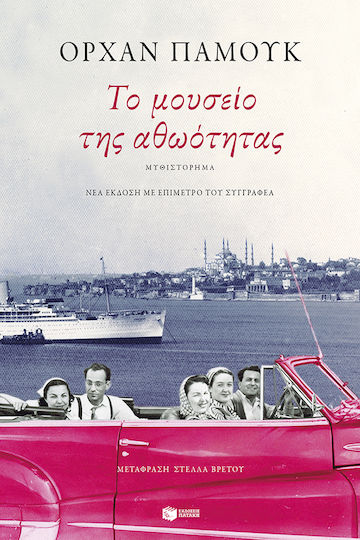
Istanbul, spring 1975. Kemal and Simbel, children of two well-known families in the city, are preparing to get engaged. However, when Kemal meets Füsun, his distant cousin and a saleswoman in a boutique, he is enchanted. Since then, he constantly imagines his shared future with Füsun – and his life changes.
His passionate love creates an unbridgeable rift that separates him from the bourgeoisie of Istanbul. For many years, Kemal obsessively collects all the things that his beloved has touched, so that by looking at them, he always feels her close to him. When Füsun dies, after many years, Kemal buys her house to turn it into a museum, a tribute to her and to the life he himself did not live. A museum that will simultaneously be a map of a society and of his heart.
“A book about unfulfilled love, worthy of standing alongside Lolita, Madame Bovary, and Anna Karenina… Kemal's first-person narrative spans decades, presenting a captivating palimpsest of relatives and friends, the life and morals of the bourgeoisie in Istanbul.” Financial Times
“The Museum of Innocence grabs us and holds us, deliberately, intentionally, purposefully… Perhaps its secret heart beats in the story of Füsun: in the calm indictment of a culture trapped in ancient customs that suffocate women to death.” San Francisco Chronicle
“The most important novel of the 21st century… It recalls the great novels of romantic obsession by Balzac, Stendhal, Flaubert, Dostoevsky, Tolstoy, and Thomas Mann.” The New Leader
“Pamuk's most accessible novel and the deepest…” The Economist