Religion & Metaphysics Books

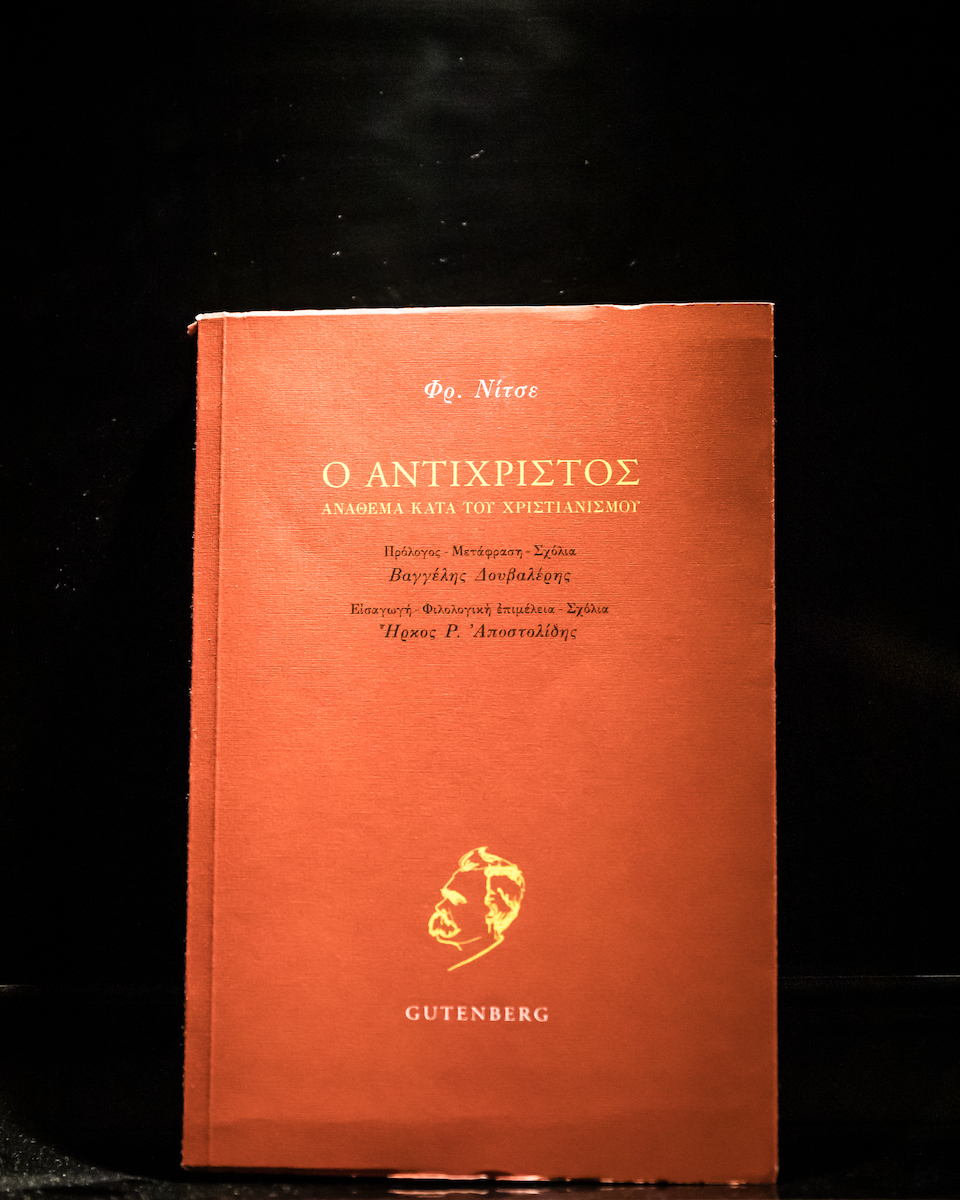
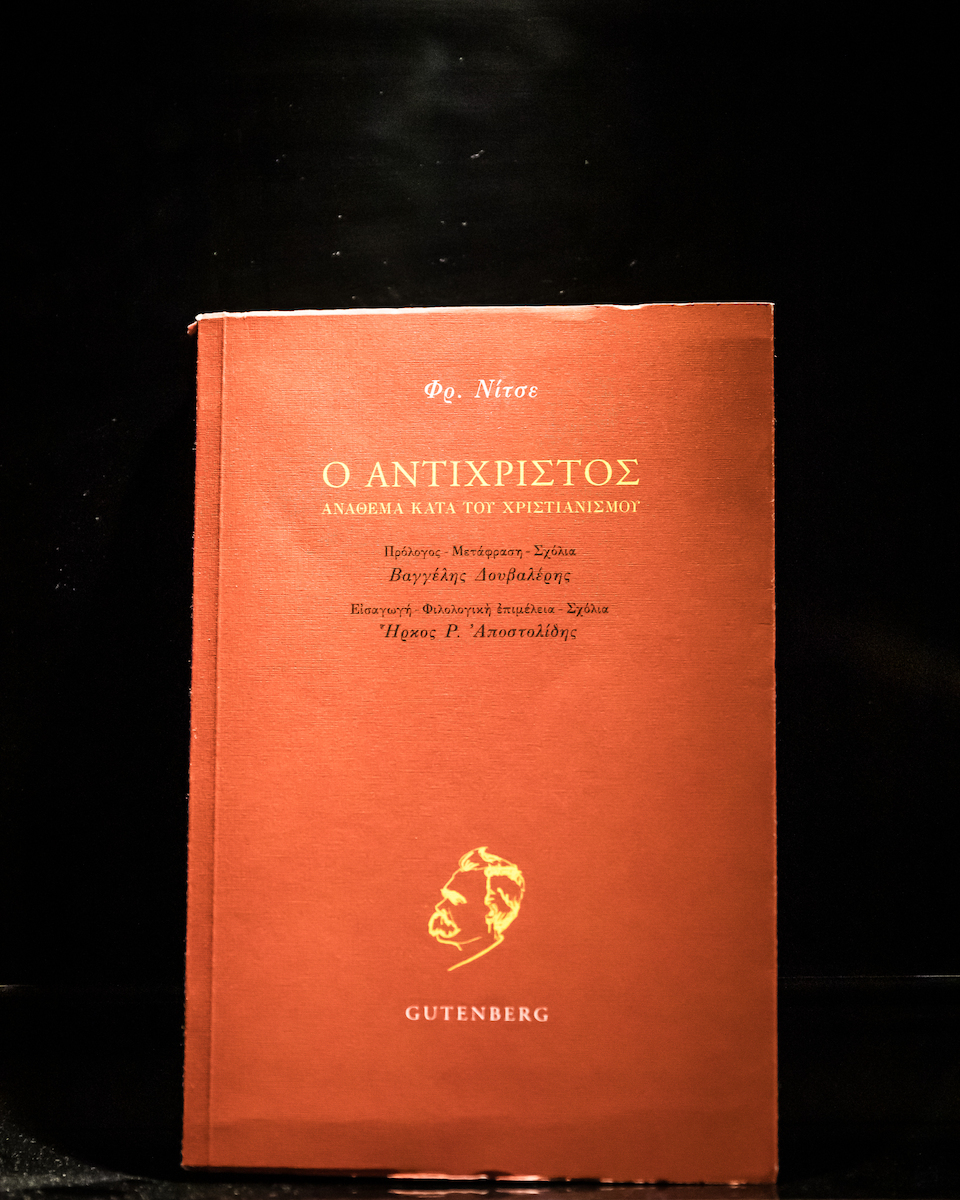
Ο Αντίχριστος, Damnation against Christianity

Author: Friedrich Wilhelm Nietzsche

The Christian concept of God - God as the comforter of the sick, God as a spider, God as spirit - is one of the most degenerate concepts of the divine that has ever been articulated on earth.

It...

The Christian concept of God - God as the comforter of the sick, God as a spider, God as spirit - is one of the most degenerate concepts of the divine that has ever been articulated on earth.

It perhaps describes the final stage in the downward evolution of types of the divine. God has ended up being the opposite of life, instead of its transformation, its...

See full description See full description
  • Number of pages Number of pages 288
  • Translation Translation Vangelis Douvaleris
  • Cover Cover Soft
  • Year of publication Year of publication 2014
  • Dimensions Dimensions 17x24 cm
  • Publisher Publisher Gutenberg
  • See all
10 50
Delivery by Wed, 24 Jun
14,00 €   shipping cost
Sent from Greece
From Bookliberty 4.9 (1.9K Skroutz Hub reviews)

Description

Description

The Christian concept of God - God as the comforter of the sick, God as a spider, God as spirit - is one of the most degenerate concepts of the divine that has ever been articulated on earth.

It perhaps describes the final stage in the downward evolution of types of the divine. God has ended up being the opposite of life, instead of its transformation, its eternal Yes!

God: a declaration of war against life, Nature, the will to live! God: the infallible recipe for every slander of the "hereafter," every lie of the "beyond"!

God: the nothing that has been deified, the will for annihilation that has been proclaimed "holy"!

Manufacturer

See full description

Specifications

Specifications

Author
Friedrich Wilhelm Nietzsche
Publisher
Gutenberg
Original Title
Der Antichrist
Translation
Vangelis Douvaleris
Subtitle
Damnation against Christianity
Theme
Theology & Doctrine
Cover
Soft
Number of Pages
288
Language
Greek
Release Date
7/2014
Publication Date
2014
Dimensions
17x24 cm
Pocket Size
No
ISBN-13
9789600116489

Important information

Specifications are collected from official manufacturer websites. Please verify the specifications before proceeding with your final purchase. If you notice any problem you can report it here.

See all specifications

Reviews (8)

Reviews

  1. 7
  2. 4 stars
    0
  3. 1
  4. 2 stars
    0
  5. 1 star
    0
Review this product
  • Paper quality
  • Was it easy to read?
  • Was it interesting enough?
  • I liked the writing style
  • I would recommend it for reading

Reviews by our members

  • Giorgos_Sardelis.
    5
    7 out of 7 members found this review helpful

    Verified purchase

    A work that could be read in many ways. The first and perhaps most obvious conclusion is that the Antichrist for Nietzsche is Christianity itself, and specifically the Christianity of Paul and, by extension, the priests, who, according to Nietzsche, corrupted the message of Jesus with humble, earthly, and political motives.

    In the broader spirit of the tremors brought about by Darwin's theory, Nietzsche was influenced by the theories of Wilhelm Roux, William Henry Rolph, Léon Dumont, and Karl Wilhelm von Negeli. Together with other influences such as those of the pre-Socratic Greek philosophers, Nietzsche identified the will to power as the main driving force of humanity. However, he never defined or systematized what he exactly meant, resulting in various interpretations and misinterpretations.

    Thus, it requires some caution. For Nietzsche, with the will to power, does not say what man should do; he simply observes human nature. Consequently, the German philosopher sees Christianity's "but whoever strikes you on the right cheek, turn to him the other also" as a religion of defeatism and thus a promoter of a human attitude that corrupts the true nature of man. He believes that this corruption is deliberately created by the ecclesiastical hierarchy to hinder man in his search for free thought and (therefore) the conquest of power, obviously serving the established order (political and ecclesiastical authority).

    Regarding the defeatism of Christianity, Nietzsche is not particularly original. Today's readers may have seen this specific idea in works clearly influenced by the ambiguous position of the historian Edward Gibbon (Gibbon, 1737 - 1794) regarding the role of the new religion in the collapse of the Western Roman Empire.

    Nietzsche, therefore, attributes to Christianity (emphatically not to Jesus) and specifically to Protestantism and its clergy, the cause of the decline of European (and German) spirit and values. For Nietzsche, even those who declare themselves atheists are in reality Christians in a latent state, carrying in their minds the "original sin" of Christianity, seeking not the liberation and empowerment of man, but the sheepification and herd mentality.

    The truth is that "The Antichrist" for us today is rather a youthful, full of vigor and anger, often-repeated critique of the church, which we often make in Greece by imitating the "Westerners," using arguments that the "Westerners" use against their own realities, losing our own meaning for a pertinent critique of our own reality and church.

    Nietzsche at some points is contradictory, while elsewhere he seems to overlook many philosophical (especially those stemming from the fusion with classical Greek education), social, political, and historical dimensions of Christianity. Primarily, he rejects the message of the Resurrection and does not appreciate how Christianity ideologically functioned in the progress of Western Europe and in the further enrichment of classical Greek education that occurred in the Greek-Byzantine East and served as a foundation for the former. Especially the approximately eleven Byzantine centuries, following the spirit of his time, he does not take seriously at all. Ultimately, he does not escape the condition of the latent Christian himself and preaches his own deification.

    Will for power or power of will? Selfishness or brotherly love? Is nature the path that man must follow? You either love Nietzsche or you hate him. And this has nothing to do with his observations, but with the provocative questions he raises; questions that are impossible to pass indifferently even today.

    Translated from Greek ·
    Did you find this review helpful?
    • Was it easy to read?
    • Was it interesting enough?
    • I liked the writing style
    • I would recommend it for reading
  • Verified purchase

    • Was it easy to read?
    • Was it interesting enough?
    • I liked the writing style
    • I would recommend it for reading
  • Verified purchase

  • Verified purchase

  • Verified purchase

    • Paper quality
    • Was it easy to read?
    • Was it relatively interesting?
    • I liked the writing style in some parts
    • I would not recommend it for reading
  • A work that could be read in many ways. The first and perhaps most obvious conclusion is that the Antichrist for Nietzsche is Christianity itself, and specifically the Christianity of Paul and, by extension, the priests, who, according to Nietzsche, corrupted the message of Jesus with humble, earthly, and political motives.

    In the broader spirit of the tremors brought about by Darwin's theory, Nietzsche was influenced by the theories of Wilhelm Roux, William Henry Rolph, Léon Dumont, and Karl Wilhelm von Negeli. Together with other influences such as those of the pre-Socratic Greek philosophers, Nietzsche identified the will to power as the main driving force of humanity. However, he never defined or systematized what he exactly meant, resulting in various interpretations and misinterpretations.

    Thus, it requires some caution. For Nietzsche, with the will to power, does not say what man should do; he simply observes human nature. Consequently, the German philosopher sees Christianity's "but whoever strikes you on the right cheek, turn to him the other also" as a religion of defeatism and thus a promoter of a human attitude that corrupts the true nature of man. He believes that this corruption is deliberately created by the ecclesiastical hierarchy to hinder man in his search for free thought and (therefore) the conquest of power, obviously serving the established order (political and ecclesiastical authority).

    Regarding the defeatism of Christianity, Nietzsche is not particularly original. Today's readers may have seen this specific idea in works clearly influenced by the ambiguous position of the historian Edward Gibbon (Gibbon, 1737 - 1794) regarding the role of the new religion in the collapse of the Western Roman Empire.

    Nietzsche, therefore, attributes to Christianity (emphatically not to Jesus) and specifically to Protestantism and its clergy, the cause of the decline of European (and German) spirit and values. For Nietzsche, even those who declare themselves atheists are in reality Christians in a latent state, carrying in their minds the "original sin" of Christianity, seeking not the liberation and empowerment of man, but the sheepification and herd mentality.

    The truth is that "The Antichrist" for us today is rather a youthful, full of vigor and anger, often-repeated critique of the church, which we often make in Greece by imitating the "Westerners," using arguments that the "Westerners" use against their own realities, losing our own meaning for a pertinent critique of our own reality and church.

    Nietzsche at some points is contradictory, while elsewhere he seems to overlook many philosophical (especially those stemming from the fusion with classical Greek education), social, political, and historical dimensions of Christianity. Primarily, he rejects the message of the Resurrection and does not appreciate how Christianity ideologically functioned in the progress of Western Europe and in the further enrichment of classical Greek education that occurred in the Greek-Byzantine East and served as a foundation for the former. Especially the approximately eleven Byzantine centuries, following the spirit of his time, he does not take seriously at all. Ultimately, he does not escape the condition of the latent Christian himself and preaches his own deification.

    Will for power or power of will? Selfishness or brotherly love? Is nature the path that man must follow? You either love Nietzsche or you hate him. And this has nothing to do with his observations, but with the provocative questions he raises; questions that are impossible to pass indifferently even today.

    Translated from Greek ·
    7
  • 0
  • 0
  • 0
  • 0
  • See all

Description & Specifications

The Christian concept of God - God as the comforter of the sick, God as a spider, God as spirit - is one of the most degenerate concepts of the divine that has ever been articulated on earth.

It perhaps describes the final stage in the downward evolution of types of the divine. God has ended up being the opposite of life, instead of its transformation, its eternal Yes!

God: a declaration of war against life, Nature, the will to live! God: the infallible recipe for every slander of the "hereafter," every lie of the "beyond"!

God: the nothing that has been deified, the will for annihilation that has been proclaimed "holy"!

Manufacturer

Author
Friedrich Wilhelm Nietzsche
Publisher
Gutenberg
Original Title
Der Antichrist
Translation
Vangelis Douvaleris
Subtitle
Damnation against Christianity
Theme
Theology & Doctrine
Cover
Soft
Number of Pages
288
Language
Greek
Release Date
7/2014
Publication Date
2014
Dimensions
17x24 cm
Pocket Size
No
ISBN-13
9789600116489

Important information

Specifications are collected from official manufacturer websites. Please verify the specifications before proceeding with your final purchase. If you notice any problem you can report it here.

Reviews (8)

  1. 7
  2. 4 stars
    0
  3. 1
  4. 2 stars
    0
  5. 1 star
    0
Review this product
  • Paper quality
  • Was it easy to read?
  • Was it interesting enough?
  • I liked the writing style
  • I would recommend it for reading

Reviews by our members

  • Giorgos_Sardelis.
    5
    7 out of 7 members found this review helpful

    Verified purchase

    A work that could be read in many ways. The first and perhaps most obvious conclusion is that the Antichrist for Nietzsche is Christianity itself, and specifically the Christianity of Paul and, by extension, the priests, who, according to Nietzsche, corrupted the message of Jesus with humble, earthly, and political motives.

    In the broader spirit of the tremors brought about by Darwin's theory, Nietzsche was influenced by the theories of Wilhelm Roux, William Henry Rolph, Léon Dumont, and Karl Wilhelm von Negeli. Together with other influences such as those of the pre-Socratic Greek philosophers, Nietzsche identified the will to power as the main driving force of humanity. However, he never defined or systematized what he exactly meant, resulting in various interpretations and misinterpretations.

    Thus, it requires some caution. For Nietzsche, with the will to power, does not say what man should do; he simply observes human nature. Consequently, the German philosopher sees Christianity's "but whoever strikes you on the right cheek, turn to him the other also" as a religion of defeatism and thus a promoter of a human attitude that corrupts the true nature of man. He believes that this corruption is deliberately created by the ecclesiastical hierarchy to hinder man in his search for free thought and (therefore) the conquest of power, obviously serving the established order (political and ecclesiastical authority).

    Regarding the defeatism of Christianity, Nietzsche is not particularly original. Today's readers may have seen this specific idea in works clearly influenced by the ambiguous position of the historian Edward Gibbon (Gibbon, 1737 - 1794) regarding the role of the new religion in the collapse of the Western Roman Empire.

    Nietzsche, therefore, attributes to Christianity (emphatically not to Jesus) and specifically to Protestantism and its clergy, the cause of the decline of European (and German) spirit and values. For Nietzsche, even those who declare themselves atheists are in reality Christians in a latent state, carrying in their minds the "original sin" of Christianity, seeking not the liberation and empowerment of man, but the sheepification and herd mentality.

    The truth is that "The Antichrist" for us today is rather a youthful, full of vigor and anger, often-repeated critique of the church, which we often make in Greece by imitating the "Westerners," using arguments that the "Westerners" use against their own realities, losing our own meaning for a pertinent critique of our own reality and church.

    Nietzsche at some points is contradictory, while elsewhere he seems to overlook many philosophical (especially those stemming from the fusion with classical Greek education), social, political, and historical dimensions of Christianity. Primarily, he rejects the message of the Resurrection and does not appreciate how Christianity ideologically functioned in the progress of Western Europe and in the further enrichment of classical Greek education that occurred in the Greek-Byzantine East and served as a foundation for the former. Especially the approximately eleven Byzantine centuries, following the spirit of his time, he does not take seriously at all. Ultimately, he does not escape the condition of the latent Christian himself and preaches his own deification.

    Will for power or power of will? Selfishness or brotherly love? Is nature the path that man must follow? You either love Nietzsche or you hate him. And this has nothing to do with his observations, but with the provocative questions he raises; questions that are impossible to pass indifferently even today.

    Translated from Greek ·
    Did you find this review helpful?
    • Was it easy to read?
    • Was it interesting enough?
    • I liked the writing style
    • I would recommend it for reading
  • Verified purchase

    • Was it easy to read?
    • Was it interesting enough?
    • I liked the writing style
    • I would recommend it for reading
  • Verified purchase

  • Verified purchase

  • Verified purchase

    • Paper quality
    • Was it easy to read?
    • Was it relatively interesting?
    • I liked the writing style in some parts
    • I would not recommend it for reading
  • A work that could be read in many ways. The first and perhaps most obvious conclusion is that the Antichrist for Nietzsche is Christianity itself, and specifically the Christianity of Paul and, by extension, the priests, who, according to Nietzsche, corrupted the message of Jesus with humble, earthly, and political motives.

    In the broader spirit of the tremors brought about by Darwin's theory, Nietzsche was influenced by the theories of Wilhelm Roux, William Henry Rolph, Léon Dumont, and Karl Wilhelm von Negeli. Together with other influences such as those of the pre-Socratic Greek philosophers, Nietzsche identified the will to power as the main driving force of humanity. However, he never defined or systematized what he exactly meant, resulting in various interpretations and misinterpretations.

    Thus, it requires some caution. For Nietzsche, with the will to power, does not say what man should do; he simply observes human nature. Consequently, the German philosopher sees Christianity's "but whoever strikes you on the right cheek, turn to him the other also" as a religion of defeatism and thus a promoter of a human attitude that corrupts the true nature of man. He believes that this corruption is deliberately created by the ecclesiastical hierarchy to hinder man in his search for free thought and (therefore) the conquest of power, obviously serving the established order (political and ecclesiastical authority).

    Regarding the defeatism of Christianity, Nietzsche is not particularly original. Today's readers may have seen this specific idea in works clearly influenced by the ambiguous position of the historian Edward Gibbon (Gibbon, 1737 - 1794) regarding the role of the new religion in the collapse of the Western Roman Empire.

    Nietzsche, therefore, attributes to Christianity (emphatically not to Jesus) and specifically to Protestantism and its clergy, the cause of the decline of European (and German) spirit and values. For Nietzsche, even those who declare themselves atheists are in reality Christians in a latent state, carrying in their minds the "original sin" of Christianity, seeking not the liberation and empowerment of man, but the sheepification and herd mentality.

    The truth is that "The Antichrist" for us today is rather a youthful, full of vigor and anger, often-repeated critique of the church, which we often make in Greece by imitating the "Westerners," using arguments that the "Westerners" use against their own realities, losing our own meaning for a pertinent critique of our own reality and church.

    Nietzsche at some points is contradictory, while elsewhere he seems to overlook many philosophical (especially those stemming from the fusion with classical Greek education), social, political, and historical dimensions of Christianity. Primarily, he rejects the message of the Resurrection and does not appreciate how Christianity ideologically functioned in the progress of Western Europe and in the further enrichment of classical Greek education that occurred in the Greek-Byzantine East and served as a foundation for the former. Especially the approximately eleven Byzantine centuries, following the spirit of his time, he does not take seriously at all. Ultimately, he does not escape the condition of the latent Christian himself and preaches his own deification.

    Will for power or power of will? Selfishness or brotherly love? Is nature the path that man must follow? You either love Nietzsche or you hate him. And this has nothing to do with his observations, but with the provocative questions he raises; questions that are impossible to pass indifferently even today.

    Translated from Greek ·
    7
  • 0
  • 0
  • 0
  • 0
  • See all
10,50 €
14,00 €   shipping cost