


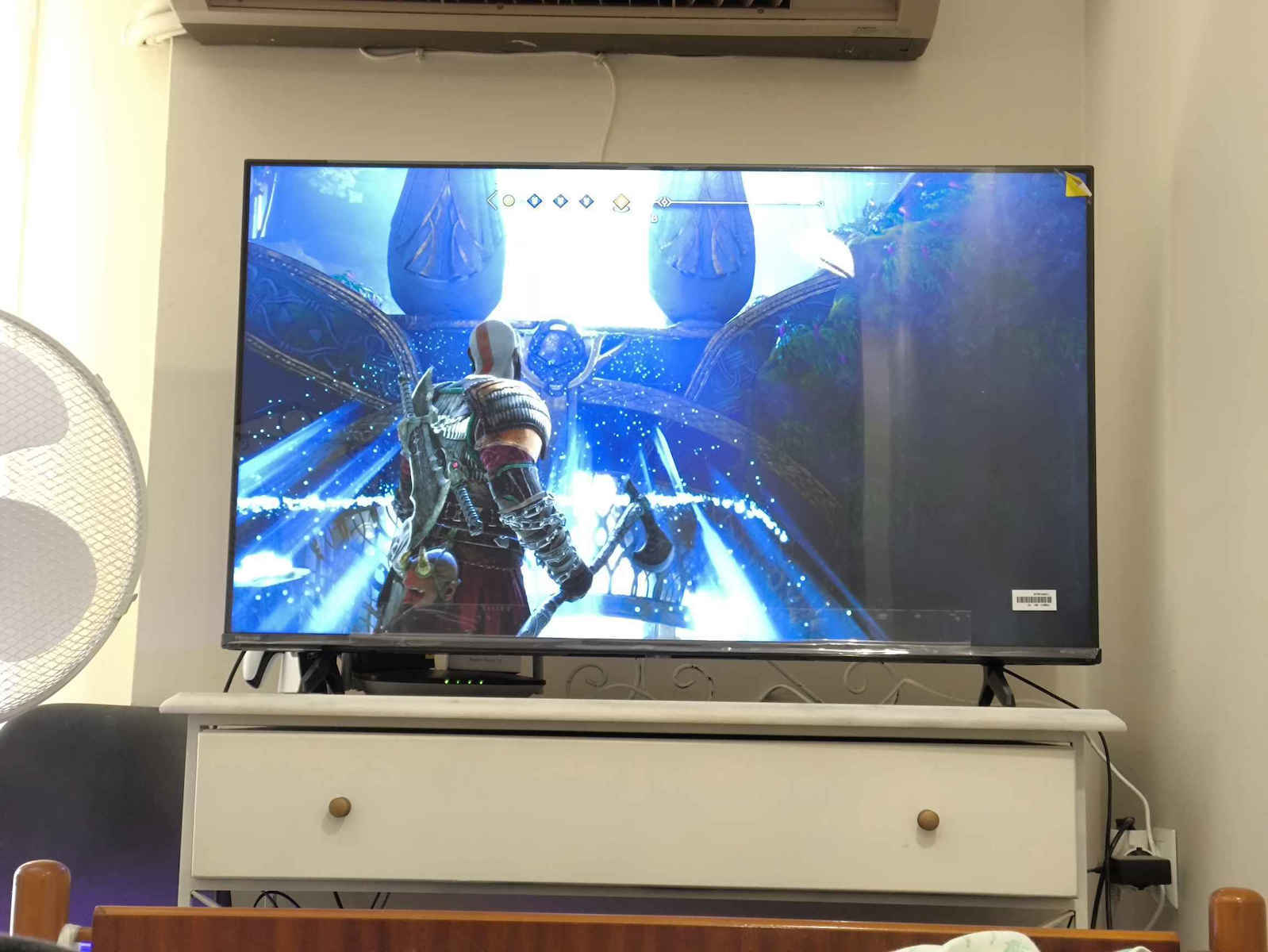

Image
- Diagonal
- 50 "
- Resolution
- 4K Ultra HD
- Refresh Rate
- 50/60 Hz
- Type of Panel
- Direct LED
- HDR Types
- HDR10, HDR10+, Dolby Vision, HLG, AI Upscaling
- Local Dimming
- No
Audio
- Channels
- Stereo
- Power
- 20 W
Features & Functions
- Receiver
- DVB-C, DVB-S2, DVB-T2
- Media Player
- Yes
- PVR Recording
- No
- Hotel Mode
- Yes
- Voice Commands
- No
- HbbTV
- Yes
- VRR
- No
Audio Standards
- Audio Templates
- DTS, DTS Virtual: X
Additional Specifications
- Supported Applications
- Netflix, Youtube, DisneyPlus, Eon
- Software
- Vidaa
- Smart Ecosystem
- Alexa
Wired Connections
- Ethernet
- Yes
- Headphones
- Yes
- Digital Audio Optical
- Yes
- USB
- 2
- HDMI
- 3
- Number of HDMI 2.1
- 3
Wireless Connections
- Wi-Fi
- Yes
- Bluetooth
- Yes
- Miracast
- No
- Chromecast Built-In
- No
- Screen Mirroring
- No
- AirPlay
- Yes
Product Details
- Release Date
- 2024
- Weight
- 9.5 kg
- VESA Mount
- 200 x 400 mm
Energy Label
- Energy Class
- E
Dimensions (without Stand)
- Width
- 1119 mm
- Height
- 649 mm
- Thickness
- 80 mm
Dimensions (with Stand)
- Width
- 1119 mm
- Height
- 702 mm
- Thickness
- 274 mm
Important information
Specifications are collected from official manufacturer websites. Please verify the specifications before proceeding with your final purchase. If you notice any problem you can report it here.
Description
The model A6N from the company Hisense, has a screen size of 50". The minimum recommended viewing distance for this size is 1.9m and the maximum is 3.1m. This size is recommended for placement in living rooms, or larger rooms.
The resolution of the TV is 4K Ultra HD. TVs with 4K Ultra HD resolution are aimed at consumers looking for higher image quality and viewing experience compared to TVs with lower resolutions, such as Full HD or HD Ready. The 4K Ultra HD resolution, which amounts to 3840 x 2160 pixels, offers very high image quality, focusing on detail. These TVs are suitable for watching movies, sports events, gaming, and other entertainment activities that require quality image.
Additionally, these TVs are suitable for use with computers and for modern games with high demands on resolution. They are usually aimed at consumers who want the best possible viewing experience and are ready to invest in a high-quality TV.
The panel of the TV is Direct LED. The main advantages of the Direct LED panel in televisions are uniform brightness across the entire screen, improved contrast, and deeper black representation. The panel consists of multiple small LEDs placed behind the screen and can be controlled individually to offer greater accuracy in color reproduction and improved contrast. Also, televisions with Direct LED panels are usually less expensive compared to OLED and QLED televisions of similar sizes.
Regarding HDR, it is equipped with HDR10, HDR10+, Dolby Vision, HLG, AI Upscaling. High Dynamic Range (HDR) and its various types generally improve the picture quality of televisions and other video playback devices. This is achieved by increasing the dynamic range of colors and brightness of images.
The advantages of HDR are more vivid and natural colors, deeper blacks and brighter whites, more details in the shadows and highlights of the image, and more accurate color reproduction. Additionally, filmmakers can leverage HDR to produce movies with more natural and realistic images.
Finally, devices with HDR support can play content that is encoded with HDR, offering a more impressive viewing experience for the user.
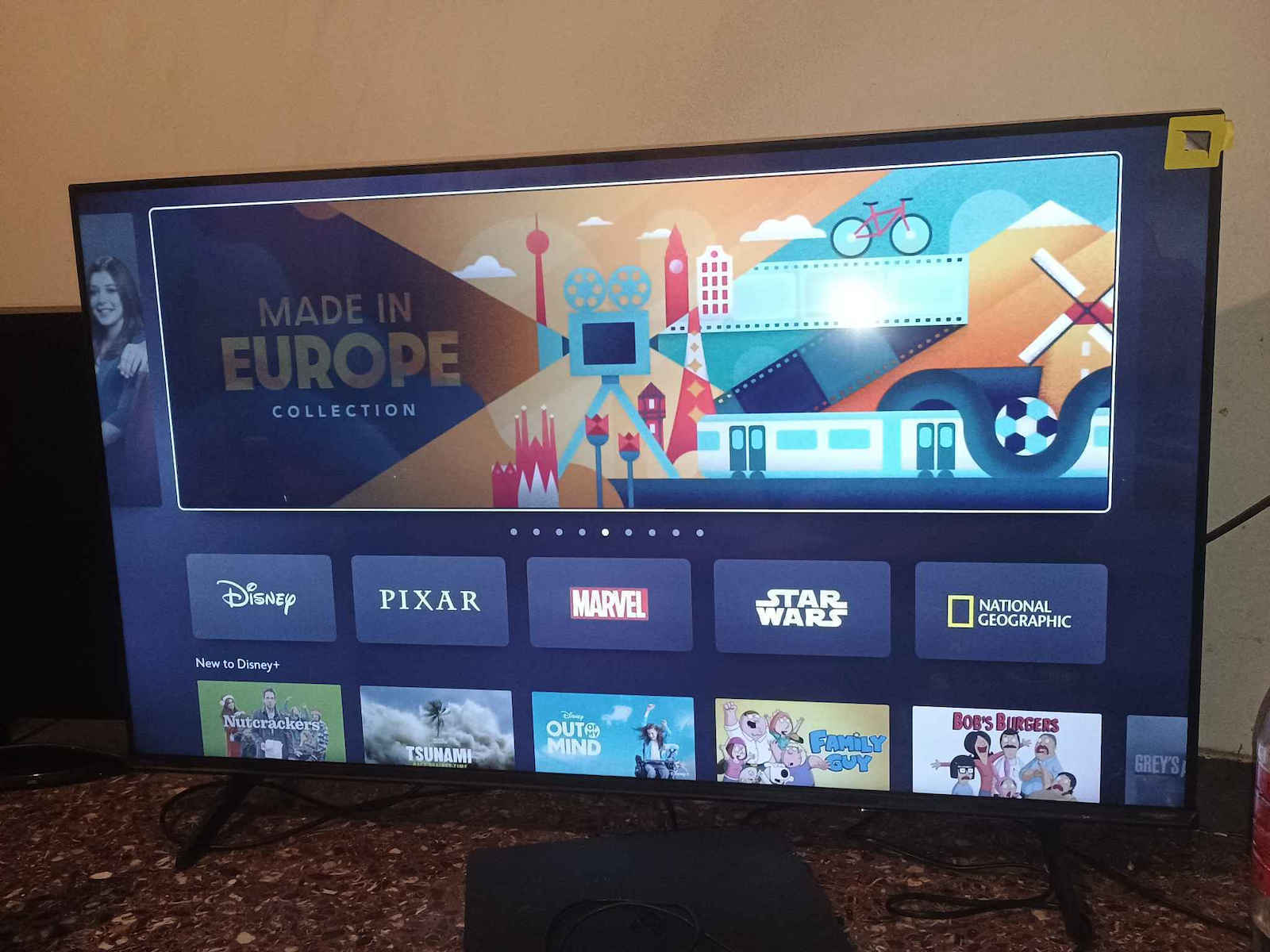
This model belongs to the broader family of Smart TVs. Smart TVs represent the evolution in television technology, as they incorporate Internet functions, allowing browsing of websites and the use of online applications (e.g., Netflix, YouTube, Spotify, etc.). They are, therefore, an example of technological convergence between computers and televisions. The latest Smart TVs have the capability of full Internet browsing, while older ones support access only to popular websites (e.g., YouTube, Facebook, Twitter) through appropriate applications.
A feature that concerns professionals in the hospitality sector is the Hotel Mode available on the model. Specifically, with the Hotel Mode function, you can customize the TV settings such as limiting the maximum volume level or disabling certain functions, like USB or HDMI. You can also protect your settings with a password so that only authorized persons can change the settings.
Additionally, the Hotel Mode function can be used to advertise your business. You can display a customized welcome or advertising message on the screen during the TV startup or show an advertising video or image at a specific time of the day.
The Hotel Mode function can also be used to maintain the TV's condition and its settings. This means that if a user changes some of the TV's settings, these changes will not be saved, and the TV will revert to the default settings upon restart.
- Refresh Rate: 50/60Hz
- Type of Panel: Direct LED
- HDMI: 3
- HDMI 2.1: 3
- USB: 2
- Energy Class: E
- HDR Types: HDR10, HDR10+, Dolby Vision, HLG, AI Upscaling