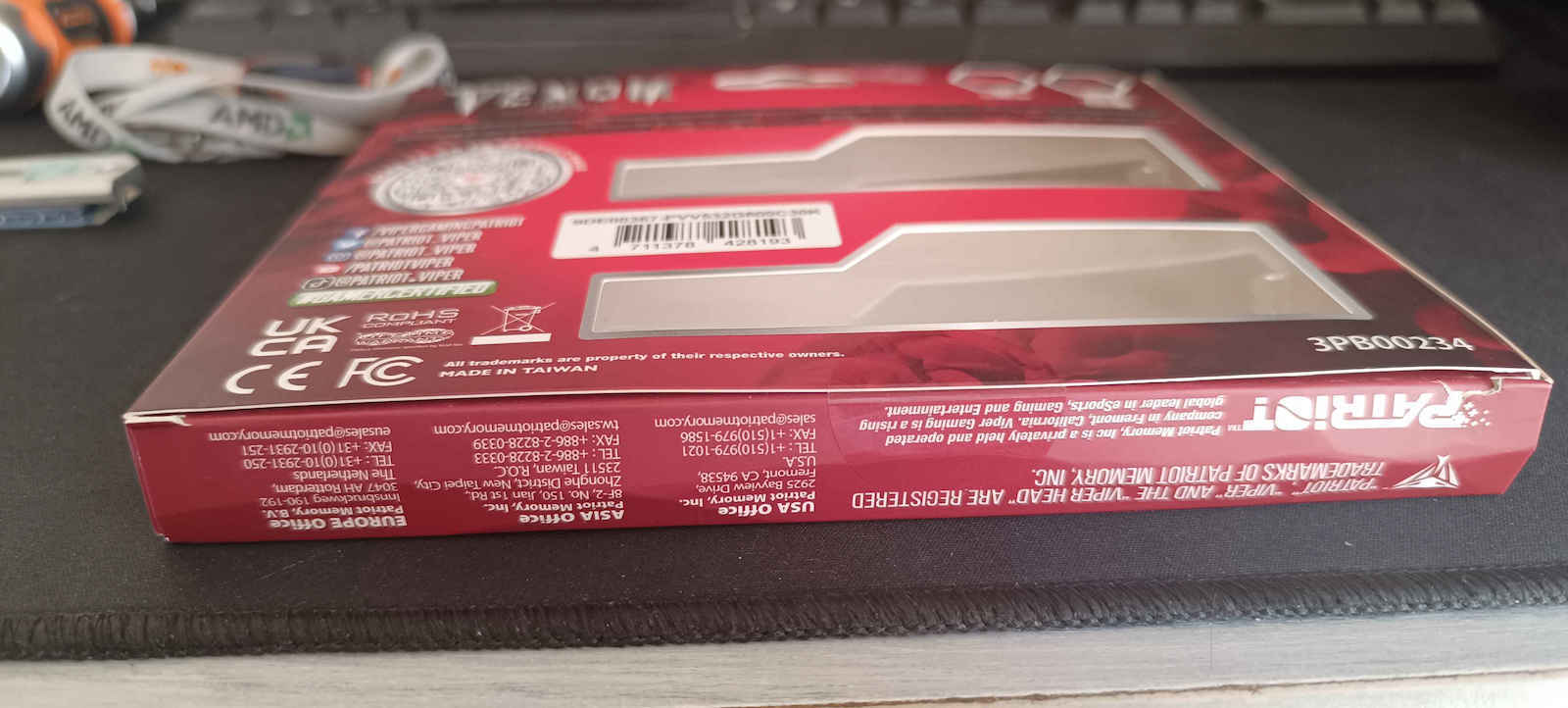
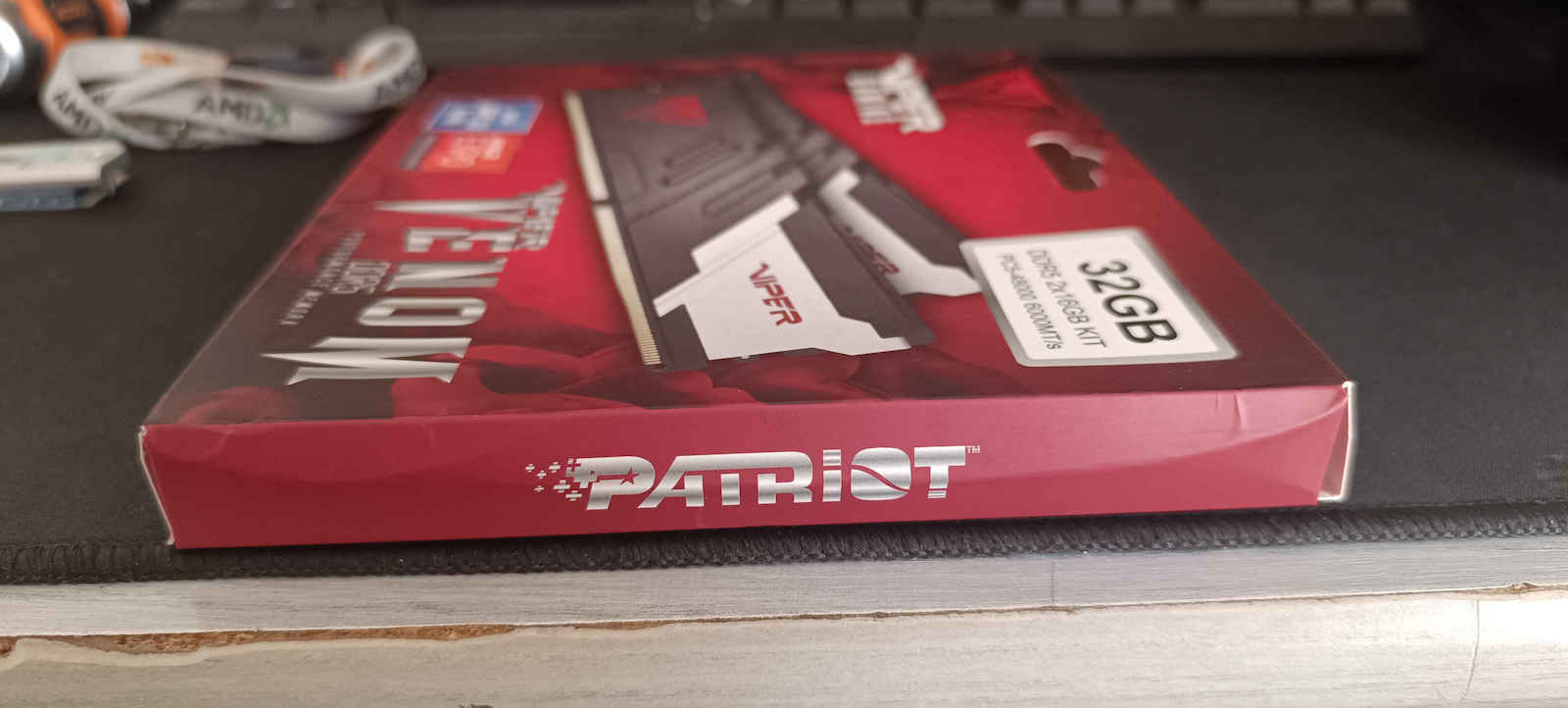
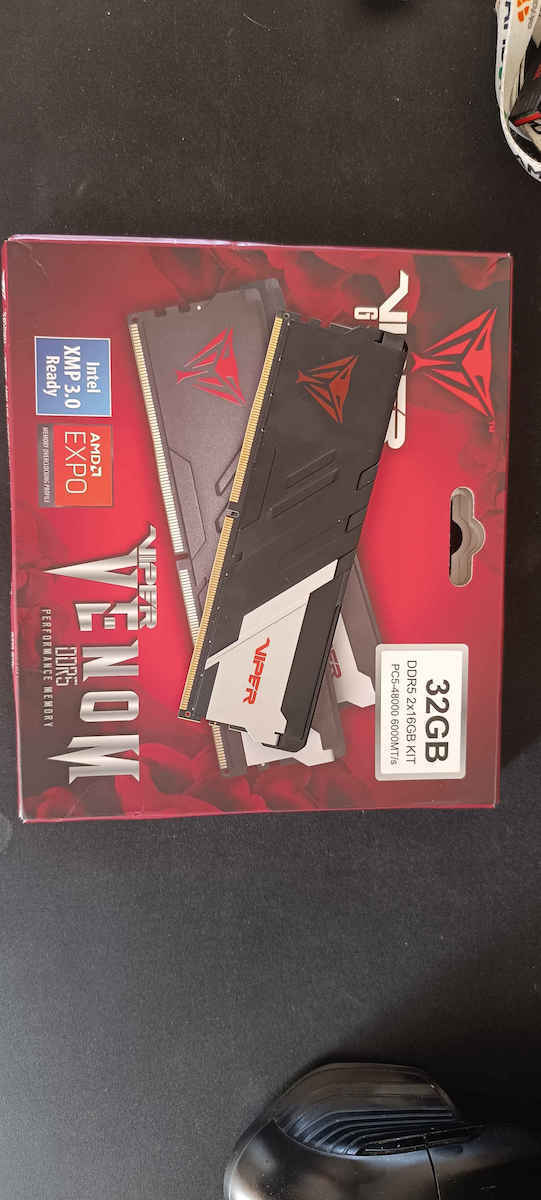
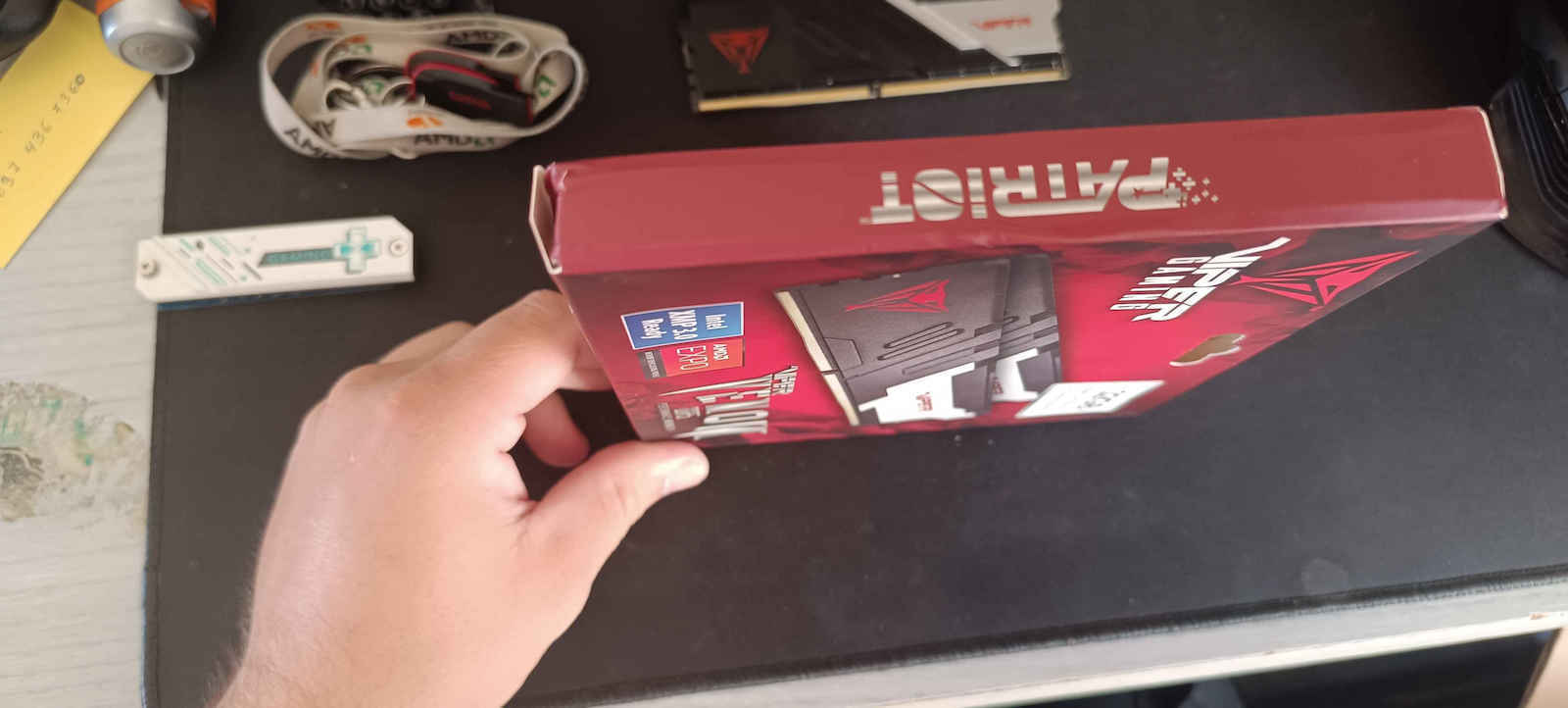
The Patriot Viper Venom DDR5 is aimed at demanding computer users, such as gamers, professionals in video and image editing, designers, and those who require high performance from their computer.
DDR5 is the fifth generation of RAM technology, offering operating speeds from 3200MT/s to 12600MT/s, response times (CAS Latency) from CL28 to CL48, while its capacity has increased up to 64GB per memory module.
Operating speeds: 3200MT/s to 12600MT/s
Response time: CL28 to CL48
Capacity: up to 64GB per memory module
For speed (MT/s) and capacity (GB), the larger the size we choose, the better performance we will have in our system, while for response time (CL), we want the smallest size for the speed (MT/s) we have chosen.
The above characteristics should be compatible with the specifications of our motherboard and processor.
Innovation
The Viper Venom DDR5 memory modules feature innovative integrated power management circuits (PMIC) for more efficient operation and lower power consumption, as well as thermal management technology for longer unit lifespan. This cutting-edge technology offers lightning-fast application startup and enhances your system's capabilities.
Specifications are collected from official manufacturer websites. Please verify the specifications before proceeding with your final purchase. If you notice any problem you can report it here.
Purchased by a friend for a Gigabyte B860 DS3H WIFI6E motherboard with Intel 1851 Socket and Intel Ultra 7 265K processor, it never worked, even though on an older Intel motherboard (with a different socket) and i9-13900K processor it worked fine. Upgrading the motherboard (with other memory modules) to the latest BIOS also did not help. Ultimately, the problem seemed to be that these specific memory modules, although manufactured at the end of 2025, cannot cooperate with the memory controller of the new Ultra processors. In the end, it was necessary to use other memory modules.
The relevant analysis from Gemini:
Here are the exact lines from your dump that prove why this kit will not work on your B860 platform:
1. The Obsolete Chip Density
From your dump: Module Density: 8192 Mb & Device Width: x8
What it means: This means your RAM is built using 8Gb (1 Gigabyte) memory chips. Modern desktop DDR5 is designed entirely around 16Gb (2GB) or 24Gb (3GB) chips. Intel's Arrow Lake memory controller explicitly dropped native architecture support for these first-generation 8Gb baseline dies.
2. The Unconventional Dual-Rank Layout
From your dump: Number Of Ranks: 2
What it means: Because Patriot used tiny 1GB chips to build a 16GB stick, they had to stack them into two physical ranks on a single module. A standard 16GB stick today is always Single-Rank. Shoving a legacy Dual-Rank layout into a brand-new Arrow Lake SoC memory controller causes an immediate electrical calculation error during initialization.
3. The Low-Current Power Setup
From your dump: PMIC0 Type: Small PMIC (Low Current)
What it means: The Power Management IC on your sticks is an older IDT PMIC5100 designed for low-current draws. When your Core Ultra CPU tries to balance the power lines for its new split-tile architecture, this low-current PMIC cannot handle the unique voltage handshakes required by the LGA1851 platform.
This memory kit is fundamentally incompatible with your new processor and motherboard. No software tweak, BIOS update, or cross-flash can alter the physical wiring of the silicon chips.
Αγορασμένη από φίλο για μητρική Gigabyte B860 DS3H WIFI6E με Intel 1851 Socket και επεξεργαστή Intel Ultra 7 265K, δεν λειτούργησε ποτέ, παρότι σε παλιότερη Intel μητρική (με άλλο socket) και επεξεργαστή i9-13900K λειτούργησε κανονικά. Αναβάθμιση της μητρικής (με άλλες μνήμες) στο τελευταίο BIOS επίσης δεν βοήθησε. Και τελικά το πρόβλημα φάνηκε να είναι ότι οι συγκεκριμένες μνήμες, παρότι κατασκευής τέλους του 2025, δεν μπορούν να συνεργαστούν με τον ελεγκτή μνήμης των νέων Ultra επεξεργαστών. Τελικά χρειάστηκε να χρησιμοποιηθούν άλλες μνήμες.
Η σχετική ανάλυση από το Gemini:
Here are the exact lines from your dump that prove why this kit will not work on your B860 platform:
1. The Obsolete Chip Density
From your dump: Module Density: 8192 Mb & Device Width: x8
What it means: This means your RAM is built using 8Gb (1 Gigabyte) memory chips. Modern desktop DDR5 is designed entirely around 16Gb (2GB) or 24Gb (3GB) chips. Intel's Arrow Lake memory controller explicitly dropped native architecture support for these first-generation 8Gb baseline dies.
2. The Unconventional Dual-Rank Layout
From your dump: Number Of Ranks: 2
What it means: Because Patriot used tiny 1GB chips to build a 16GB stick, they had to stack them into two physical ranks on a single module. A standard 16GB stick today is always Single-Rank. Shoving a legacy Dual-Rank layout into a brand-new Arrow Lake SoC memory controller causes an immediate electrical calculation error during initialization.
3. The Low-Current Power Setup
From your dump: PMIC0 Type: Small PMIC (Low Current)
What it means: The Power Management IC on your sticks is an older IDT PMIC5100 designed for low-current draws. When your Core Ultra CPU tries to balance the power lines for its new split-tile architecture, this low-current PMIC cannot handle the unique voltage handshakes required by the LGA1851 platform.
This memory kit is fundamentally incompatible with your new processor and motherboard. No software tweak, BIOS update, or cross-flash can alter the physical wiring of the silicon chips.
So far no problem! I have them on an MSI MAG B650 TOMAHAWK & 7800x3d. They respond quite well to overclocking, I have them at cl28-36-32-36 and in general I have tightened them quite a bit without any issues! They have Hynix chips
Μέχρι τώρα κανένα πρόβλημα! Τις έχω σε MSI MAG B650 TOMAHAWK & 7800x3d. Υπακούν αρκετά καλά στο overclocking, τις έχω cl28-36-32-36 και γενικά τα έχω σφηξει αρκετά χωρίς να μου έχουν δημιουργήσει πρόβλημα! Έχουν τσιπάκια της Hynix
Used with 7600x and b650m - hdv.m2 asrock. All games and applications perfect with expo profile at 6000 and cl30. Instability in some titles that use cryengine and similar. SOLUTION: reduce ram speed < 5400 or even reduce voltage
Χρηση με 7600x και b650m - hdv.m2 asrock. ολα τα παιχνιδια και εφαρμογες τελεια με expo προφιλ στα 6000 και cl30. ασταθεια σε μερικους τιτλους που χρησιμοποιουν cryengine και παεμφερη. ΛΥΣΗ: μειωση ταχυτητας ραμ < 5400 ή και μειωση τασης
Comfortably and immediately recognized by the MSI B650m Gaming Plus and easy to set 2 EXPO Profiles at 5600 & 6000MHz on this particular motherboard.
In a build with 8700G without GPU I had the following benchmarks:
Passmark benchmark 8461 @6000 from 7442 @4800MHz, but in Cinebench R23 multi it was 14859 @6000, 15808 @5600 compared to 16275 @4800!! The second benchmark was unexpected!
Άνετα και άμεσα αναγνωρίστηκε από MSI B650m Gaming Plus και εύκολο να βάλεις 2 EXPO Profiles στα 5600 & 6000MHz στη συγκεκριμένη μητρική.
Σε build με 8700G χωρίς GPU είχα τα εξής benchmarks
Passmark benchmark 8461 @6000 από 7442 @4800MHz, αλλά στο Cinebench R23 multi ήταν 14859 @6000, 15808 @5600 έναντι 16275 @4800!! Απρόσμενο το δεύτερο Benchmark!
On an Asus b650m-plus wifi motherboard, they worked immediately at 6000mhz cl30 just by enabling the expo profile in the bios. Perfect compatibility and operation.
Σε μητρική asus b650m-plus wifi έπαιξαν αμέσως σε 6000mhz cl30 απλά ενεργοποιώντας το expo profile στο bios.Άψογη συμβατότητα και λειτουργία.
Purchased by a friend for a Gigabyte B860 DS3H WIFI6E motherboard with Intel 1851 Socket and Intel Ultra 7 265K processor, it never worked, even though on an older Intel motherboard (with a different socket) and i9-13900K processor it worked fine. Upgrading the motherboard (with other memory modules) to the latest BIOS also did not help. Ultimately, the problem seemed to be that these specific memory modules, although manufactured at the end of 2025, cannot cooperate with the memory controller of the new Ultra processors. In the end, it was necessary to use other memory modules.
The relevant analysis from Gemini:
Here are the exact lines from your dump that prove why this kit will not work on your B860 platform:
1. The Obsolete Chip Density
From your dump: Module Density: 8192 Mb & Device Width: x8
What it means: This means your RAM is built using 8Gb (1 Gigabyte) memory chips. Modern desktop DDR5 is designed entirely around 16Gb (2GB) or 24Gb (3GB) chips. Intel's Arrow Lake memory controller explicitly dropped native architecture support for these first-generation 8Gb baseline dies.
2. The Unconventional Dual-Rank Layout
From your dump: Number Of Ranks: 2
What it means: Because Patriot used tiny 1GB chips to build a 16GB stick, they had to stack them into two physical ranks on a single module. A standard 16GB stick today is always Single-Rank. Shoving a legacy Dual-Rank layout into a brand-new Arrow Lake SoC memory controller causes an immediate electrical calculation error during initialization.
3. The Low-Current Power Setup
From your dump: PMIC0 Type: Small PMIC (Low Current)
What it means: The Power Management IC on your sticks is an older IDT PMIC5100 designed for low-current draws. When your Core Ultra CPU tries to balance the power lines for its new split-tile architecture, this low-current PMIC cannot handle the unique voltage handshakes required by the LGA1851 platform.
This memory kit is fundamentally incompatible with your new processor and motherboard. No software tweak, BIOS update, or cross-flash can alter the physical wiring of the silicon chips.
Αγορασμένη από φίλο για μητρική Gigabyte B860 DS3H WIFI6E με Intel 1851 Socket και επεξεργαστή Intel Ultra 7 265K, δεν λειτούργησε ποτέ, παρότι σε παλιότερη Intel μητρική (με άλλο socket) και επεξεργαστή i9-13900K λειτούργησε κανονικά. Αναβάθμιση της μητρικής (με άλλες μνήμες) στο τελευταίο BIOS επίσης δεν βοήθησε. Και τελικά το πρόβλημα φάνηκε να είναι ότι οι συγκεκριμένες μνήμες, παρότι κατασκευής τέλους του 2025, δεν μπορούν να συνεργαστούν με τον ελεγκτή μνήμης των νέων Ultra επεξεργαστών. Τελικά χρειάστηκε να χρησιμοποιηθούν άλλες μνήμες.
Η σχετική ανάλυση από το Gemini:
Here are the exact lines from your dump that prove why this kit will not work on your B860 platform:
1. The Obsolete Chip Density
From your dump: Module Density: 8192 Mb & Device Width: x8
What it means: This means your RAM is built using 8Gb (1 Gigabyte) memory chips. Modern desktop DDR5 is designed entirely around 16Gb (2GB) or 24Gb (3GB) chips. Intel's Arrow Lake memory controller explicitly dropped native architecture support for these first-generation 8Gb baseline dies.
2. The Unconventional Dual-Rank Layout
From your dump: Number Of Ranks: 2
What it means: Because Patriot used tiny 1GB chips to build a 16GB stick, they had to stack them into two physical ranks on a single module. A standard 16GB stick today is always Single-Rank. Shoving a legacy Dual-Rank layout into a brand-new Arrow Lake SoC memory controller causes an immediate electrical calculation error during initialization.
3. The Low-Current Power Setup
From your dump: PMIC0 Type: Small PMIC (Low Current)
What it means: The Power Management IC on your sticks is an older IDT PMIC5100 designed for low-current draws. When your Core Ultra CPU tries to balance the power lines for its new split-tile architecture, this low-current PMIC cannot handle the unique voltage handshakes required by the LGA1851 platform.
This memory kit is fundamentally incompatible with your new processor and motherboard. No software tweak, BIOS update, or cross-flash can alter the physical wiring of the silicon chips.
So far no problem! I have them on an MSI MAG B650 TOMAHAWK & 7800x3d. They respond quite well to overclocking, I have them at cl28-36-32-36 and in general I have tightened them quite a bit without any issues! They have Hynix chips
Μέχρι τώρα κανένα πρόβλημα! Τις έχω σε MSI MAG B650 TOMAHAWK & 7800x3d. Υπακούν αρκετά καλά στο overclocking, τις έχω cl28-36-32-36 και γενικά τα έχω σφηξει αρκετά χωρίς να μου έχουν δημιουργήσει πρόβλημα! Έχουν τσιπάκια της Hynix
Used with 7600x and b650m - hdv.m2 asrock. All games and applications perfect with expo profile at 6000 and cl30. Instability in some titles that use cryengine and similar. SOLUTION: reduce ram speed < 5400 or even reduce voltage
Χρηση με 7600x και b650m - hdv.m2 asrock. ολα τα παιχνιδια και εφαρμογες τελεια με expo προφιλ στα 6000 και cl30. ασταθεια σε μερικους τιτλους που χρησιμοποιουν cryengine και παεμφερη. ΛΥΣΗ: μειωση ταχυτητας ραμ < 5400 ή και μειωση τασης
Comfortably and immediately recognized by the MSI B650m Gaming Plus and easy to set 2 EXPO Profiles at 5600 & 6000MHz on this particular motherboard.
In a build with 8700G without GPU I had the following benchmarks:
Passmark benchmark 8461 @6000 from 7442 @4800MHz, but in Cinebench R23 multi it was 14859 @6000, 15808 @5600 compared to 16275 @4800!! The second benchmark was unexpected!
Άνετα και άμεσα αναγνωρίστηκε από MSI B650m Gaming Plus και εύκολο να βάλεις 2 EXPO Profiles στα 5600 & 6000MHz στη συγκεκριμένη μητρική.
Σε build με 8700G χωρίς GPU είχα τα εξής benchmarks
Passmark benchmark 8461 @6000 από 7442 @4800MHz, αλλά στο Cinebench R23 multi ήταν 14859 @6000, 15808 @5600 έναντι 16275 @4800!! Απρόσμενο το δεύτερο Benchmark!
The Patriot Viper Venom DDR5 is aimed at demanding computer users, such as gamers, professionals in video and image editing, designers, and those who require high performance from their computer.
DDR5 is the fifth generation of RAM technology, offering operating speeds from 3200MT/s to 12600MT/s, response times (CAS Latency) from CL28 to CL48, while its capacity has increased up to 64GB per memory module.
Operating speeds: 3200MT/s to 12600MT/s
Response time: CL28 to CL48
Capacity: up to 64GB per memory module
For speed (MT/s) and capacity (GB), the larger the size we choose, the better performance we will have in our system, while for response time (CL), we want the smallest size for the speed (MT/s) we have chosen.
The above characteristics should be compatible with the specifications of our motherboard and processor.
Innovation
The Viper Venom DDR5 memory modules feature innovative integrated power management circuits (PMIC) for more efficient operation and lower power consumption, as well as thermal management technology for longer unit lifespan. This cutting-edge technology offers lightning-fast application startup and enhances your system's capabilities.
Specifications are collected from official manufacturer websites. Please verify the specifications before proceeding with your final purchase. If you notice any problem you can report it here.
Purchased by a friend for a Gigabyte B860 DS3H WIFI6E motherboard with Intel 1851 Socket and Intel Ultra 7 265K processor, it never worked, even though on an older Intel motherboard (with a different socket) and i9-13900K processor it worked fine. Upgrading the motherboard (with other memory modules) to the latest BIOS also did not help. Ultimately, the problem seemed to be that these specific memory modules, although manufactured at the end of 2025, cannot cooperate with the memory controller of the new Ultra processors. In the end, it was necessary to use other memory modules.
The relevant analysis from Gemini:
Here are the exact lines from your dump that prove why this kit will not work on your B860 platform:
1. The Obsolete Chip Density
From your dump: Module Density: 8192 Mb & Device Width: x8
What it means: This means your RAM is built using 8Gb (1 Gigabyte) memory chips. Modern desktop DDR5 is designed entirely around 16Gb (2GB) or 24Gb (3GB) chips. Intel's Arrow Lake memory controller explicitly dropped native architecture support for these first-generation 8Gb baseline dies.
2. The Unconventional Dual-Rank Layout
From your dump: Number Of Ranks: 2
What it means: Because Patriot used tiny 1GB chips to build a 16GB stick, they had to stack them into two physical ranks on a single module. A standard 16GB stick today is always Single-Rank. Shoving a legacy Dual-Rank layout into a brand-new Arrow Lake SoC memory controller causes an immediate electrical calculation error during initialization.
3. The Low-Current Power Setup
From your dump: PMIC0 Type: Small PMIC (Low Current)
What it means: The Power Management IC on your sticks is an older IDT PMIC5100 designed for low-current draws. When your Core Ultra CPU tries to balance the power lines for its new split-tile architecture, this low-current PMIC cannot handle the unique voltage handshakes required by the LGA1851 platform.
This memory kit is fundamentally incompatible with your new processor and motherboard. No software tweak, BIOS update, or cross-flash can alter the physical wiring of the silicon chips.
Αγορασμένη από φίλο για μητρική Gigabyte B860 DS3H WIFI6E με Intel 1851 Socket και επεξεργαστή Intel Ultra 7 265K, δεν λειτούργησε ποτέ, παρότι σε παλιότερη Intel μητρική (με άλλο socket) και επεξεργαστή i9-13900K λειτούργησε κανονικά. Αναβάθμιση της μητρικής (με άλλες μνήμες) στο τελευταίο BIOS επίσης δεν βοήθησε. Και τελικά το πρόβλημα φάνηκε να είναι ότι οι συγκεκριμένες μνήμες, παρότι κατασκευής τέλους του 2025, δεν μπορούν να συνεργαστούν με τον ελεγκτή μνήμης των νέων Ultra επεξεργαστών. Τελικά χρειάστηκε να χρησιμοποιηθούν άλλες μνήμες.
Η σχετική ανάλυση από το Gemini:
Here are the exact lines from your dump that prove why this kit will not work on your B860 platform:
1. The Obsolete Chip Density
From your dump: Module Density: 8192 Mb & Device Width: x8
What it means: This means your RAM is built using 8Gb (1 Gigabyte) memory chips. Modern desktop DDR5 is designed entirely around 16Gb (2GB) or 24Gb (3GB) chips. Intel's Arrow Lake memory controller explicitly dropped native architecture support for these first-generation 8Gb baseline dies.
2. The Unconventional Dual-Rank Layout
From your dump: Number Of Ranks: 2
What it means: Because Patriot used tiny 1GB chips to build a 16GB stick, they had to stack them into two physical ranks on a single module. A standard 16GB stick today is always Single-Rank. Shoving a legacy Dual-Rank layout into a brand-new Arrow Lake SoC memory controller causes an immediate electrical calculation error during initialization.
3. The Low-Current Power Setup
From your dump: PMIC0 Type: Small PMIC (Low Current)
What it means: The Power Management IC on your sticks is an older IDT PMIC5100 designed for low-current draws. When your Core Ultra CPU tries to balance the power lines for its new split-tile architecture, this low-current PMIC cannot handle the unique voltage handshakes required by the LGA1851 platform.
This memory kit is fundamentally incompatible with your new processor and motherboard. No software tweak, BIOS update, or cross-flash can alter the physical wiring of the silicon chips.
So far no problem! I have them on an MSI MAG B650 TOMAHAWK & 7800x3d. They respond quite well to overclocking, I have them at cl28-36-32-36 and in general I have tightened them quite a bit without any issues! They have Hynix chips
Μέχρι τώρα κανένα πρόβλημα! Τις έχω σε MSI MAG B650 TOMAHAWK & 7800x3d. Υπακούν αρκετά καλά στο overclocking, τις έχω cl28-36-32-36 και γενικά τα έχω σφηξει αρκετά χωρίς να μου έχουν δημιουργήσει πρόβλημα! Έχουν τσιπάκια της Hynix
Used with 7600x and b650m - hdv.m2 asrock. All games and applications perfect with expo profile at 6000 and cl30. Instability in some titles that use cryengine and similar. SOLUTION: reduce ram speed < 5400 or even reduce voltage
Χρηση με 7600x και b650m - hdv.m2 asrock. ολα τα παιχνιδια και εφαρμογες τελεια με expo προφιλ στα 6000 και cl30. ασταθεια σε μερικους τιτλους που χρησιμοποιουν cryengine και παεμφερη. ΛΥΣΗ: μειωση ταχυτητας ραμ < 5400 ή και μειωση τασης
Comfortably and immediately recognized by the MSI B650m Gaming Plus and easy to set 2 EXPO Profiles at 5600 & 6000MHz on this particular motherboard.
In a build with 8700G without GPU I had the following benchmarks:
Passmark benchmark 8461 @6000 from 7442 @4800MHz, but in Cinebench R23 multi it was 14859 @6000, 15808 @5600 compared to 16275 @4800!! The second benchmark was unexpected!
Άνετα και άμεσα αναγνωρίστηκε από MSI B650m Gaming Plus και εύκολο να βάλεις 2 EXPO Profiles στα 5600 & 6000MHz στη συγκεκριμένη μητρική.
Σε build με 8700G χωρίς GPU είχα τα εξής benchmarks
Passmark benchmark 8461 @6000 από 7442 @4800MHz, αλλά στο Cinebench R23 multi ήταν 14859 @6000, 15808 @5600 έναντι 16275 @4800!! Απρόσμενο το δεύτερο Benchmark!
On an Asus b650m-plus wifi motherboard, they worked immediately at 6000mhz cl30 just by enabling the expo profile in the bios. Perfect compatibility and operation.
Σε μητρική asus b650m-plus wifi έπαιξαν αμέσως σε 6000mhz cl30 απλά ενεργοποιώντας το expo profile στο bios.Άψογη συμβατότητα και λειτουργία.
Purchased by a friend for a Gigabyte B860 DS3H WIFI6E motherboard with Intel 1851 Socket and Intel Ultra 7 265K processor, it never worked, even though on an older Intel motherboard (with a different socket) and i9-13900K processor it worked fine. Upgrading the motherboard (with other memory modules) to the latest BIOS also did not help. Ultimately, the problem seemed to be that these specific memory modules, although manufactured at the end of 2025, cannot cooperate with the memory controller of the new Ultra processors. In the end, it was necessary to use other memory modules.
The relevant analysis from Gemini:
Here are the exact lines from your dump that prove why this kit will not work on your B860 platform:
1. The Obsolete Chip Density
From your dump: Module Density: 8192 Mb & Device Width: x8
What it means: This means your RAM is built using 8Gb (1 Gigabyte) memory chips. Modern desktop DDR5 is designed entirely around 16Gb (2GB) or 24Gb (3GB) chips. Intel's Arrow Lake memory controller explicitly dropped native architecture support for these first-generation 8Gb baseline dies.
2. The Unconventional Dual-Rank Layout
From your dump: Number Of Ranks: 2
What it means: Because Patriot used tiny 1GB chips to build a 16GB stick, they had to stack them into two physical ranks on a single module. A standard 16GB stick today is always Single-Rank. Shoving a legacy Dual-Rank layout into a brand-new Arrow Lake SoC memory controller causes an immediate electrical calculation error during initialization.
3. The Low-Current Power Setup
From your dump: PMIC0 Type: Small PMIC (Low Current)
What it means: The Power Management IC on your sticks is an older IDT PMIC5100 designed for low-current draws. When your Core Ultra CPU tries to balance the power lines for its new split-tile architecture, this low-current PMIC cannot handle the unique voltage handshakes required by the LGA1851 platform.
This memory kit is fundamentally incompatible with your new processor and motherboard. No software tweak, BIOS update, or cross-flash can alter the physical wiring of the silicon chips.
Αγορασμένη από φίλο για μητρική Gigabyte B860 DS3H WIFI6E με Intel 1851 Socket και επεξεργαστή Intel Ultra 7 265K, δεν λειτούργησε ποτέ, παρότι σε παλιότερη Intel μητρική (με άλλο socket) και επεξεργαστή i9-13900K λειτούργησε κανονικά. Αναβάθμιση της μητρικής (με άλλες μνήμες) στο τελευταίο BIOS επίσης δεν βοήθησε. Και τελικά το πρόβλημα φάνηκε να είναι ότι οι συγκεκριμένες μνήμες, παρότι κατασκευής τέλους του 2025, δεν μπορούν να συνεργαστούν με τον ελεγκτή μνήμης των νέων Ultra επεξεργαστών. Τελικά χρειάστηκε να χρησιμοποιηθούν άλλες μνήμες.
Η σχετική ανάλυση από το Gemini:
Here are the exact lines from your dump that prove why this kit will not work on your B860 platform:
1. The Obsolete Chip Density
From your dump: Module Density: 8192 Mb & Device Width: x8
What it means: This means your RAM is built using 8Gb (1 Gigabyte) memory chips. Modern desktop DDR5 is designed entirely around 16Gb (2GB) or 24Gb (3GB) chips. Intel's Arrow Lake memory controller explicitly dropped native architecture support for these first-generation 8Gb baseline dies.
2. The Unconventional Dual-Rank Layout
From your dump: Number Of Ranks: 2
What it means: Because Patriot used tiny 1GB chips to build a 16GB stick, they had to stack them into two physical ranks on a single module. A standard 16GB stick today is always Single-Rank. Shoving a legacy Dual-Rank layout into a brand-new Arrow Lake SoC memory controller causes an immediate electrical calculation error during initialization.
3. The Low-Current Power Setup
From your dump: PMIC0 Type: Small PMIC (Low Current)
What it means: The Power Management IC on your sticks is an older IDT PMIC5100 designed for low-current draws. When your Core Ultra CPU tries to balance the power lines for its new split-tile architecture, this low-current PMIC cannot handle the unique voltage handshakes required by the LGA1851 platform.
This memory kit is fundamentally incompatible with your new processor and motherboard. No software tweak, BIOS update, or cross-flash can alter the physical wiring of the silicon chips.
So far no problem! I have them on an MSI MAG B650 TOMAHAWK & 7800x3d. They respond quite well to overclocking, I have them at cl28-36-32-36 and in general I have tightened them quite a bit without any issues! They have Hynix chips
Μέχρι τώρα κανένα πρόβλημα! Τις έχω σε MSI MAG B650 TOMAHAWK & 7800x3d. Υπακούν αρκετά καλά στο overclocking, τις έχω cl28-36-32-36 και γενικά τα έχω σφηξει αρκετά χωρίς να μου έχουν δημιουργήσει πρόβλημα! Έχουν τσιπάκια της Hynix
Used with 7600x and b650m - hdv.m2 asrock. All games and applications perfect with expo profile at 6000 and cl30. Instability in some titles that use cryengine and similar. SOLUTION: reduce ram speed < 5400 or even reduce voltage
Χρηση με 7600x και b650m - hdv.m2 asrock. ολα τα παιχνιδια και εφαρμογες τελεια με expo προφιλ στα 6000 και cl30. ασταθεια σε μερικους τιτλους που χρησιμοποιουν cryengine και παεμφερη. ΛΥΣΗ: μειωση ταχυτητας ραμ < 5400 ή και μειωση τασης
Comfortably and immediately recognized by the MSI B650m Gaming Plus and easy to set 2 EXPO Profiles at 5600 & 6000MHz on this particular motherboard.
In a build with 8700G without GPU I had the following benchmarks:
Passmark benchmark 8461 @6000 from 7442 @4800MHz, but in Cinebench R23 multi it was 14859 @6000, 15808 @5600 compared to 16275 @4800!! The second benchmark was unexpected!
Άνετα και άμεσα αναγνωρίστηκε από MSI B650m Gaming Plus και εύκολο να βάλεις 2 EXPO Profiles στα 5600 & 6000MHz στη συγκεκριμένη μητρική.
Σε build με 8700G χωρίς GPU είχα τα εξής benchmarks
Passmark benchmark 8461 @6000 από 7442 @4800MHz, αλλά στο Cinebench R23 multi ήταν 14859 @6000, 15808 @5600 έναντι 16275 @4800!! Απρόσμενο το δεύτερο Benchmark!