The model 43QG5C14 by Thomson features a 43" screen size. This size is recommended for placement in living rooms or larger rooms.
4K Ultra HD
The resolution of the TV is 4K Ultra HD. TVs with 4K Ultra HD resolution are aimed at consumers who seek higher image quality and viewing experience compared to TVs with lower resolutions, such as Full HD or HD Ready. The 4K Ultra HD resolution, which amounts to 3840 x 2160 pixels, offers very high image quality, focusing on detail. These TVs are suitable for watching movies, sports events, gaming, and other entertainment activities that require quality images.
Additionally, these TVs are suitable for use with computers and for modern high-demand games in resolution. They are usually aimed at consumers who want the best possible viewing experience and are ready to invest in a high-quality TV.
QLED
The TV panel is QLED. QLED (Quantum dot LED) panels are a screen technology used in some televisions and offer several advantages, such as:
1. High brightness: QLED panels offer high brightness, allowing televisions to display bright images even in bright environments or rooms with many windows.
2. Wider color range: QLED panels offer a wider color range compared to other screen technologies, providing more vivid and accurate colors in images.
3. Superior contrast: QLED panels offer superior contrast in images, creating deeper blacks and brighter whites, providing a more dynamic and sensitive window.
4. Reduced reflections: QLED panels are designed to reduce reflections from light on the screen, offering better visibility and enjoyment of images even in bright spaces.
5. Longer lifespan: QLED panels have a longer lifespan compared to OLED panels, as there is no risk of "burn-in" from static images. This means that QLED televisions can maintain their performance for a longer time.
6. Lower energy consumption: QLED televisions consume less energy than televisions with OLED panels, as the former use LED backlighting while the latter require individual pixel lighting.
Overall, QLED panels offer high brightness, a wider color range, superior contrast, reduced reflections, a longer lifespan, and lower energy consumption compared to other screen technologies, making them ideal for demanding users who seek the best possible picture quality in their television.
HDR
Regarding HDR, it is equipped with Dolby Vision, HDR10. High Dynamic Range (HDR) and its various types generally improve the picture quality of televisions and other video playback devices. This is achieved by increasing the dynamic range of colors and brightness of images.
The advantages of HDR are more vivid and natural colors, deeper blacks and brighter whites, more details in the shadows and highlights of the image, and more accurate color reproduction. Additionally, filmmakers can utilize HDR to produce movies with more natural and realistic images.
Finally, devices with HDR support can play content that is encoded with HDR, offering a more impressive viewing experience for the user.
Smart TV
This model belongs to the broader family of Smart TVs. Smart TVs represent the evolution in television technology, as they incorporate Internet functions, allowing browsing of websites and the use of online applications (e.g., Netflix, YouTube, Spotify, etc.). They are, in other words, an example of the technological convergence between computers and televisions. The latest Smart TVs have the capability for full Internet browsing, while older models support access only to popular websites (e.g., YouTube, Facebook, Twitter) through appropriate applications.
Specifications are collected from official manufacturer websites. Please verify the specifications before proceeding with your final purchase. If you notice any problem you can report it here.
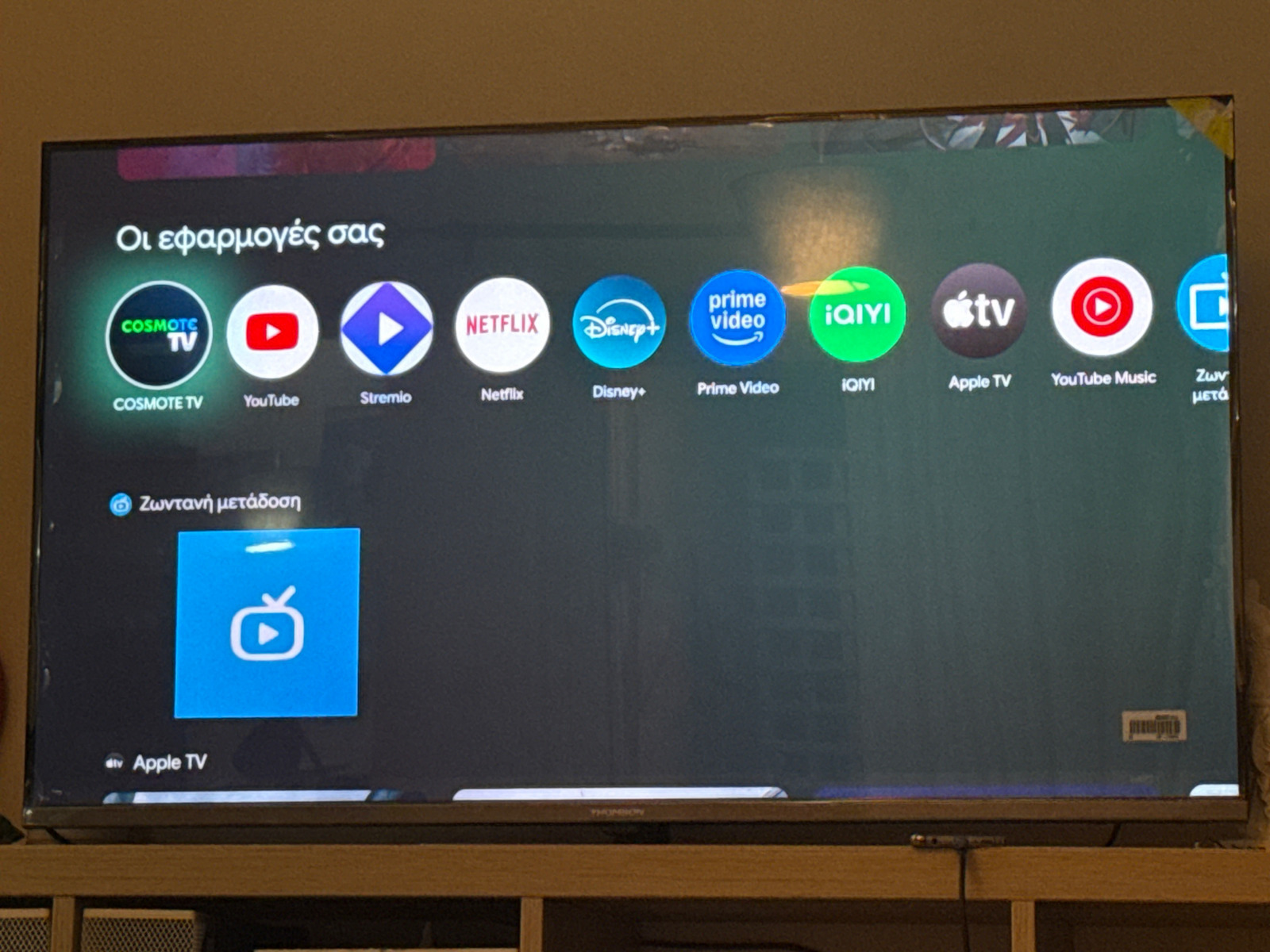
Good QLED panel, a bit strange menu for Google TV, missing settings (compared to the Sony 55X90J in our living room, incredibly many...) especially in sound (no equalizer! Atmos helps a lot in quality) but the sound is very loud and clear! Brightness is very good and colors are very good but a bit "fake", I didn't find Dolby Vision (yet?), unfortunately the 60Hz "show" (negatively), the rotating base adds great flexibility, good remote control (slow changes), channel/program info/indications on screen are awkward to bad, EPG is good. Connectivity is flawless, app menu & downloading looks very good (F1 TV functional in 30''!! we'll see for others, Netflix is fine). Viewing angles up to 15-20 degrees are fine. Overall very good for 320€, very good value for money compared to QLED Samsung, LG (Sony is out of competition...), and probably ideal for a bedroom (viewing at 2.5+m, a 50'' would be perfect but we had space issues...). We'll see about its durability (1 week in my hands...).
Καλό πάνελ qled, λίγο περίεργο μενού για google tv, λείπουν ρυθμίσεις (σε σχέση με την Sony 55X90J στο σαλόνι μας, απίστευτα πολλές...) ειδικά στον ήχο (δεν έχει equalizer! το atmos βοηθά πολύ ποιοτικά) αλλά ο ήχος πολύ δυνατός κ καθαρός! Φωτεινότητα πολύ καλή και χρώματα πολύ καλά αλλά λίγο "ψεύτικα", Dolby Vision δεν βρήκα (ακόμα?), τα 60hz δυστυχώς "φαίνονται" (αρνητικά), η περιστρεφόμενη βάση προσθέτει μεγάλη ευελιξία, καλό τηλεκοντρόλ (αργές αλλαγές), ενδείξεις/πληροφορίες καναλιού/εκπομπής on screen δύστροπες έως κακές, EPG καλό. Συνδεσιμότητα άψογη, app menu & downloading δείχνει πολύ καλό (F1 TV λειτουργικό σε 30''!! θα δούμε κ για άλλα, Netflix μια χαρά). Γωνίες θέασης έως 15-20μοίρες μια χαρά. Συνολικά πολύ καλή για 320€, πολύ καλό vfm σε σχέση με Qled Samsung, LG (Sony εκτός συναγωνισμού...), κ μάλλον ιδανική για κρεβατοκάμαρα (θέαση στα 2,5+μ, μια 50'' θα ήταν τέλεια αλλά είχαμε θέμα χώρου... ). Θα δείξει η αντοχή της (1 εβδομάδα στα χέρια μου...).
Excellent QLED TV with stunning picture quality and several customizations depending on the content you want to watch. Full specs with Dolby Atmos sound and Dolby Vision picture. The refresh rate is at 60 Hz, but for those who want it exclusively for movies, it's just fine. Quite a quality panel, sleek with a very thin bezel around the screen and an aluminum stand. The remote is simple, quality, and backlit in the dark. Plenty of connection ports behind the panel for sound systems, consoles, etc. Finally, it offers a 3-year warranty compared to others that provide 2 years. Google TV software allows you to connect your smartphone as well. What more can you ask for at this price? I recommend it with closed eyes, and because THOMPSON is a very old and recognized company with experience and reliability in its televisions.
Εξαιρετική TV qled με εκπληκτική εικόνα και αρκετές παραμετροποιήσεις σου δίνει ανάλογα με το περιεχόμενο που θέλεις να δεις. Full στα specs με ήχο Dolby Atmos και εικόνα Dolby vision. Ο ρυθμός ανανέωσης είναι στα 60 hz αλλά γι όσους την θέλουν αποκλειστικά για ταινίες είναι μια χαρά. Αρκετά ποιοτικό πάνελ κομψό με πολύ λεπτό πλαίσιο περιμετρικά της οθόνης και με βάση αλουμινίου. Χειριστήριο απλό ποιοτικό καί φωτιζόμενο στο σκοτάδι. Εξόδους για συνδέσεις αρκετές πίσω από τό πάνελ για ηχοσύστημα, κονσόλα κ.τ.λ. Τέλος δίνει 3 χρόνια εγγύηση σε σχέση με τίς υπόλοιπες πού δίνουν 2 χρόνια. Google TV λογισμικό συνδέεις και το smartphone σου. Τί άλλο να ζητήσεις σε αυτά τα χρήματα. Προτείνω με κλειστά μάτια και γιατί ή THOMPSON είναι πολύ παλιά και αναγνωρισμένη εταιρεία με εμπειρία καί αξιοπιστία στις τηλεοράσεις της.
Good QLED panel, a bit strange menu for Google TV, missing settings (compared to the Sony 55X90J in our living room, incredibly many...) especially in sound (no equalizer! Atmos helps a lot in quality) but the sound is very loud and clear! Brightness is very good and colors are very good but a bit "fake", I didn't find Dolby Vision (yet?), unfortunately the 60Hz "show" (negatively), the rotating base adds great flexibility, good remote control (slow changes), channel/program info/indications on screen are awkward to bad, EPG is good. Connectivity is flawless, app menu & downloading looks very good (F1 TV functional in 30''!! we'll see for others, Netflix is fine). Viewing angles up to 15-20 degrees are fine. Overall very good for 320€, very good value for money compared to QLED Samsung, LG (Sony is out of competition...), and probably ideal for a bedroom (viewing at 2.5+m, a 50'' would be perfect but we had space issues...). We'll see about its durability (1 week in my hands...).
Καλό πάνελ qled, λίγο περίεργο μενού για google tv, λείπουν ρυθμίσεις (σε σχέση με την Sony 55X90J στο σαλόνι μας, απίστευτα πολλές...) ειδικά στον ήχο (δεν έχει equalizer! το atmos βοηθά πολύ ποιοτικά) αλλά ο ήχος πολύ δυνατός κ καθαρός! Φωτεινότητα πολύ καλή και χρώματα πολύ καλά αλλά λίγο "ψεύτικα", Dolby Vision δεν βρήκα (ακόμα?), τα 60hz δυστυχώς "φαίνονται" (αρνητικά), η περιστρεφόμενη βάση προσθέτει μεγάλη ευελιξία, καλό τηλεκοντρόλ (αργές αλλαγές), ενδείξεις/πληροφορίες καναλιού/εκπομπής on screen δύστροπες έως κακές, EPG καλό. Συνδεσιμότητα άψογη, app menu & downloading δείχνει πολύ καλό (F1 TV λειτουργικό σε 30''!! θα δούμε κ για άλλα, Netflix μια χαρά). Γωνίες θέασης έως 15-20μοίρες μια χαρά. Συνολικά πολύ καλή για 320€, πολύ καλό vfm σε σχέση με Qled Samsung, LG (Sony εκτός συναγωνισμού...), κ μάλλον ιδανική για κρεβατοκάμαρα (θέαση στα 2,5+μ, μια 50'' θα ήταν τέλεια αλλά είχαμε θέμα χώρου... ). Θα δείξει η αντοχή της (1 εβδομάδα στα χέρια μου...).
Excellent QLED TV with stunning picture quality and several customizations depending on the content you want to watch. Full specs with Dolby Atmos sound and Dolby Vision picture. The refresh rate is at 60 Hz, but for those who want it exclusively for movies, it's just fine. Quite a quality panel, sleek with a very thin bezel around the screen and an aluminum stand. The remote is simple, quality, and backlit in the dark. Plenty of connection ports behind the panel for sound systems, consoles, etc. Finally, it offers a 3-year warranty compared to others that provide 2 years. Google TV software allows you to connect your smartphone as well. What more can you ask for at this price? I recommend it with closed eyes, and because THOMPSON is a very old and recognized company with experience and reliability in its televisions.
Εξαιρετική TV qled με εκπληκτική εικόνα και αρκετές παραμετροποιήσεις σου δίνει ανάλογα με το περιεχόμενο που θέλεις να δεις. Full στα specs με ήχο Dolby Atmos και εικόνα Dolby vision. Ο ρυθμός ανανέωσης είναι στα 60 hz αλλά γι όσους την θέλουν αποκλειστικά για ταινίες είναι μια χαρά. Αρκετά ποιοτικό πάνελ κομψό με πολύ λεπτό πλαίσιο περιμετρικά της οθόνης και με βάση αλουμινίου. Χειριστήριο απλό ποιοτικό καί φωτιζόμενο στο σκοτάδι. Εξόδους για συνδέσεις αρκετές πίσω από τό πάνελ για ηχοσύστημα, κονσόλα κ.τ.λ. Τέλος δίνει 3 χρόνια εγγύηση σε σχέση με τίς υπόλοιπες πού δίνουν 2 χρόνια. Google TV λογισμικό συνδέεις και το smartphone σου. Τί άλλο να ζητήσεις σε αυτά τα χρήματα. Προτείνω με κλειστά μάτια και γιατί ή THOMPSON είναι πολύ παλιά και αναγνωρισμένη εταιρεία με εμπειρία καί αξιοπιστία στις τηλεοράσεις της.
Specifications are collected from official manufacturer websites. Please verify the specifications before proceeding with your final purchase. If you notice any problem you can report it here.
Description
Screen Size
The model 43QG5C14 by Thomson features a 43" screen size. This size is recommended for placement in living rooms or larger rooms.
4K Ultra HD
The resolution of the TV is 4K Ultra HD. TVs with 4K Ultra HD resolution are aimed at consumers who seek higher image quality and viewing experience compared to TVs with lower resolutions, such as Full HD or HD Ready. The 4K Ultra HD resolution, which amounts to 3840 x 2160 pixels, offers very high image quality, focusing on detail. These TVs are suitable for watching movies, sports events, gaming, and other entertainment activities that require quality images.
Additionally, these TVs are suitable for use with computers and for modern high-demand games in resolution. They are usually aimed at consumers who want the best possible viewing experience and are ready to invest in a high-quality TV.
QLED
The TV panel is QLED. QLED (Quantum dot LED) panels are a screen technology used in some televisions and offer several advantages, such as:
1. High brightness: QLED panels offer high brightness, allowing televisions to display bright images even in bright environments or rooms with many windows.
2. Wider color range: QLED panels offer a wider color range compared to other screen technologies, providing more vivid and accurate colors in images.
3. Superior contrast: QLED panels offer superior contrast in images, creating deeper blacks and brighter whites, providing a more dynamic and sensitive window.
4. Reduced reflections: QLED panels are designed to reduce reflections from light on the screen, offering better visibility and enjoyment of images even in bright spaces.
5. Longer lifespan: QLED panels have a longer lifespan compared to OLED panels, as there is no risk of "burn-in" from static images. This means that QLED televisions can maintain their performance for a longer time.
6. Lower energy consumption: QLED televisions consume less energy than televisions with OLED panels, as the former use LED backlighting while the latter require individual pixel lighting.
Overall, QLED panels offer high brightness, a wider color range, superior contrast, reduced reflections, a longer lifespan, and lower energy consumption compared to other screen technologies, making them ideal for demanding users who seek the best possible picture quality in their television.
HDR
Regarding HDR, it is equipped with Dolby Vision, HDR10. High Dynamic Range (HDR) and its various types generally improve the picture quality of televisions and other video playback devices. This is achieved by increasing the dynamic range of colors and brightness of images.
The advantages of HDR are more vivid and natural colors, deeper blacks and brighter whites, more details in the shadows and highlights of the image, and more accurate color reproduction. Additionally, filmmakers can utilize HDR to produce movies with more natural and realistic images.
Finally, devices with HDR support can play content that is encoded with HDR, offering a more impressive viewing experience for the user.
Smart TV
This model belongs to the broader family of Smart TVs. Smart TVs represent the evolution in television technology, as they incorporate Internet functions, allowing browsing of websites and the use of online applications (e.g., Netflix, YouTube, Spotify, etc.). They are, in other words, an example of the technological convergence between computers and televisions. The latest Smart TVs have the capability for full Internet browsing, while older models support access only to popular websites (e.g., YouTube, Facebook, Twitter) through appropriate applications.
Good QLED panel, a bit strange menu for Google TV, missing settings (compared to the Sony 55X90J in our living room, incredibly many...) especially in sound (no equalizer! Atmos helps a lot in quality) but the sound is very loud and clear! Brightness is very good and colors are very good but a bit "fake", I didn't find Dolby Vision (yet?), unfortunately the 60Hz "show" (negatively), the rotating base adds great flexibility, good remote control (slow changes), channel/program info/indications on screen are awkward to bad, EPG is good. Connectivity is flawless, app menu & downloading looks very good (F1 TV functional in 30''!! we'll see for others, Netflix is fine). Viewing angles up to 15-20 degrees are fine. Overall very good for 320€, very good value for money compared to QLED Samsung, LG (Sony is out of competition...), and probably ideal for a bedroom (viewing at 2.5+m, a 50'' would be perfect but we had space issues...). We'll see about its durability (1 week in my hands...).
Καλό πάνελ qled, λίγο περίεργο μενού για google tv, λείπουν ρυθμίσεις (σε σχέση με την Sony 55X90J στο σαλόνι μας, απίστευτα πολλές...) ειδικά στον ήχο (δεν έχει equalizer! το atmos βοηθά πολύ ποιοτικά) αλλά ο ήχος πολύ δυνατός κ καθαρός! Φωτεινότητα πολύ καλή και χρώματα πολύ καλά αλλά λίγο "ψεύτικα", Dolby Vision δεν βρήκα (ακόμα?), τα 60hz δυστυχώς "φαίνονται" (αρνητικά), η περιστρεφόμενη βάση προσθέτει μεγάλη ευελιξία, καλό τηλεκοντρόλ (αργές αλλαγές), ενδείξεις/πληροφορίες καναλιού/εκπομπής on screen δύστροπες έως κακές, EPG καλό. Συνδεσιμότητα άψογη, app menu & downloading δείχνει πολύ καλό (F1 TV λειτουργικό σε 30''!! θα δούμε κ για άλλα, Netflix μια χαρά). Γωνίες θέασης έως 15-20μοίρες μια χαρά. Συνολικά πολύ καλή για 320€, πολύ καλό vfm σε σχέση με Qled Samsung, LG (Sony εκτός συναγωνισμού...), κ μάλλον ιδανική για κρεβατοκάμαρα (θέαση στα 2,5+μ, μια 50'' θα ήταν τέλεια αλλά είχαμε θέμα χώρου... ). Θα δείξει η αντοχή της (1 εβδομάδα στα χέρια μου...).
Excellent QLED TV with stunning picture quality and several customizations depending on the content you want to watch. Full specs with Dolby Atmos sound and Dolby Vision picture. The refresh rate is at 60 Hz, but for those who want it exclusively for movies, it's just fine. Quite a quality panel, sleek with a very thin bezel around the screen and an aluminum stand. The remote is simple, quality, and backlit in the dark. Plenty of connection ports behind the panel for sound systems, consoles, etc. Finally, it offers a 3-year warranty compared to others that provide 2 years. Google TV software allows you to connect your smartphone as well. What more can you ask for at this price? I recommend it with closed eyes, and because THOMPSON is a very old and recognized company with experience and reliability in its televisions.
Εξαιρετική TV qled με εκπληκτική εικόνα και αρκετές παραμετροποιήσεις σου δίνει ανάλογα με το περιεχόμενο που θέλεις να δεις. Full στα specs με ήχο Dolby Atmos και εικόνα Dolby vision. Ο ρυθμός ανανέωσης είναι στα 60 hz αλλά γι όσους την θέλουν αποκλειστικά για ταινίες είναι μια χαρά. Αρκετά ποιοτικό πάνελ κομψό με πολύ λεπτό πλαίσιο περιμετρικά της οθόνης και με βάση αλουμινίου. Χειριστήριο απλό ποιοτικό καί φωτιζόμενο στο σκοτάδι. Εξόδους για συνδέσεις αρκετές πίσω από τό πάνελ για ηχοσύστημα, κονσόλα κ.τ.λ. Τέλος δίνει 3 χρόνια εγγύηση σε σχέση με τίς υπόλοιπες πού δίνουν 2 χρόνια. Google TV λογισμικό συνδέεις και το smartphone σου. Τί άλλο να ζητήσεις σε αυτά τα χρήματα. Προτείνω με κλειστά μάτια και γιατί ή THOMPSON είναι πολύ παλιά και αναγνωρισμένη εταιρεία με εμπειρία καί αξιοπιστία στις τηλεοράσεις της.
Good QLED panel, a bit strange menu for Google TV, missing settings (compared to the Sony 55X90J in our living room, incredibly many...) especially in sound (no equalizer! Atmos helps a lot in quality) but the sound is very loud and clear! Brightness is very good and colors are very good but a bit "fake", I didn't find Dolby Vision (yet?), unfortunately the 60Hz "show" (negatively), the rotating base adds great flexibility, good remote control (slow changes), channel/program info/indications on screen are awkward to bad, EPG is good. Connectivity is flawless, app menu & downloading looks very good (F1 TV functional in 30''!! we'll see for others, Netflix is fine). Viewing angles up to 15-20 degrees are fine. Overall very good for 320€, very good value for money compared to QLED Samsung, LG (Sony is out of competition...), and probably ideal for a bedroom (viewing at 2.5+m, a 50'' would be perfect but we had space issues...). We'll see about its durability (1 week in my hands...).
Καλό πάνελ qled, λίγο περίεργο μενού για google tv, λείπουν ρυθμίσεις (σε σχέση με την Sony 55X90J στο σαλόνι μας, απίστευτα πολλές...) ειδικά στον ήχο (δεν έχει equalizer! το atmos βοηθά πολύ ποιοτικά) αλλά ο ήχος πολύ δυνατός κ καθαρός! Φωτεινότητα πολύ καλή και χρώματα πολύ καλά αλλά λίγο "ψεύτικα", Dolby Vision δεν βρήκα (ακόμα?), τα 60hz δυστυχώς "φαίνονται" (αρνητικά), η περιστρεφόμενη βάση προσθέτει μεγάλη ευελιξία, καλό τηλεκοντρόλ (αργές αλλαγές), ενδείξεις/πληροφορίες καναλιού/εκπομπής on screen δύστροπες έως κακές, EPG καλό. Συνδεσιμότητα άψογη, app menu & downloading δείχνει πολύ καλό (F1 TV λειτουργικό σε 30''!! θα δούμε κ για άλλα, Netflix μια χαρά). Γωνίες θέασης έως 15-20μοίρες μια χαρά. Συνολικά πολύ καλή για 320€, πολύ καλό vfm σε σχέση με Qled Samsung, LG (Sony εκτός συναγωνισμού...), κ μάλλον ιδανική για κρεβατοκάμαρα (θέαση στα 2,5+μ, μια 50'' θα ήταν τέλεια αλλά είχαμε θέμα χώρου... ). Θα δείξει η αντοχή της (1 εβδομάδα στα χέρια μου...).
Excellent QLED TV with stunning picture quality and several customizations depending on the content you want to watch. Full specs with Dolby Atmos sound and Dolby Vision picture. The refresh rate is at 60 Hz, but for those who want it exclusively for movies, it's just fine. Quite a quality panel, sleek with a very thin bezel around the screen and an aluminum stand. The remote is simple, quality, and backlit in the dark. Plenty of connection ports behind the panel for sound systems, consoles, etc. Finally, it offers a 3-year warranty compared to others that provide 2 years. Google TV software allows you to connect your smartphone as well. What more can you ask for at this price? I recommend it with closed eyes, and because THOMPSON is a very old and recognized company with experience and reliability in its televisions.
Εξαιρετική TV qled με εκπληκτική εικόνα και αρκετές παραμετροποιήσεις σου δίνει ανάλογα με το περιεχόμενο που θέλεις να δεις. Full στα specs με ήχο Dolby Atmos και εικόνα Dolby vision. Ο ρυθμός ανανέωσης είναι στα 60 hz αλλά γι όσους την θέλουν αποκλειστικά για ταινίες είναι μια χαρά. Αρκετά ποιοτικό πάνελ κομψό με πολύ λεπτό πλαίσιο περιμετρικά της οθόνης και με βάση αλουμινίου. Χειριστήριο απλό ποιοτικό καί φωτιζόμενο στο σκοτάδι. Εξόδους για συνδέσεις αρκετές πίσω από τό πάνελ για ηχοσύστημα, κονσόλα κ.τ.λ. Τέλος δίνει 3 χρόνια εγγύηση σε σχέση με τίς υπόλοιπες πού δίνουν 2 χρόνια. Google TV λογισμικό συνδέεις και το smartphone σου. Τί άλλο να ζητήσεις σε αυτά τα χρήματα. Προτείνω με κλειστά μάτια και γιατί ή THOMPSON είναι πολύ παλιά και αναγνωρισμένη εταιρεία με εμπειρία καί αξιοπιστία στις τηλεοράσεις της.