History Books

Ιστορία της νεότερης Ευρώπης

Author: Albert S. Lindemann

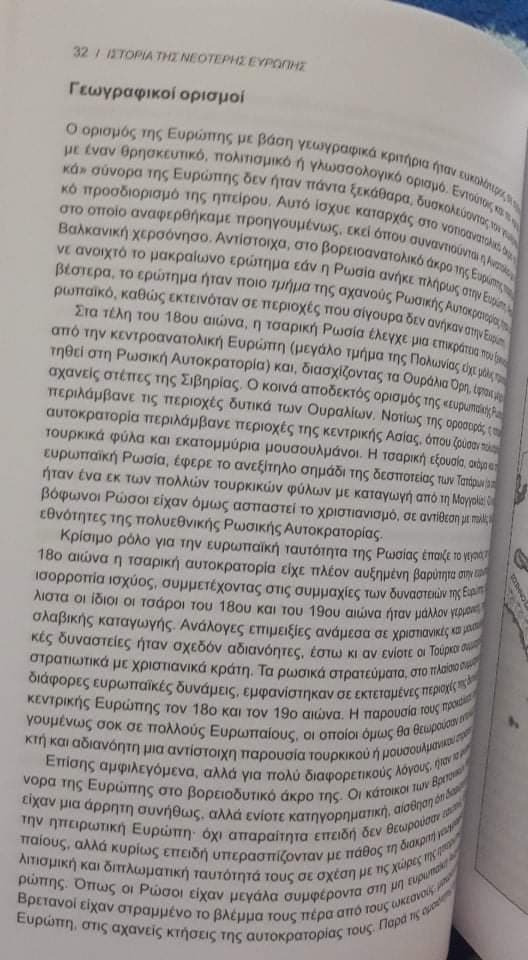
After World War II, the path toward European integration has led to a struggle to define European identity. The vague boundaries –physical, cultural, linguistic– do not allow for the emergence of a...

After World War II, the path toward European integration has led to a struggle to define European identity. The vague boundaries –physical, cultural, linguistic– do not allow for the emergence of a common characteristic that connects all the peoples of Europe.

Albert S. Lindemann approaches the history of the continent through the lens of European identity –...

See full description See full description

Top specs

  • Number of pages Number of pages 584
  • Cover Cover Soft
  • Year of publication Year of publication 2014
  • Publisher Publisher Kritiki
  • See all

Learn more about invoicing

Description

Description

After World War II, the path toward European integration has led to a struggle to define European identity. The vague boundaries –physical, cultural, linguistic– do not allow for the emergence of a common characteristic that connects all the peoples of Europe.

Albert S. Lindemann approaches the history of the continent through the lens of European identity – from the sense of “natural” superiority of the 19th century to the elusive quest for self-definition in the early 21st century. His original narrative, starting from the consequences of Napoleon's defeat at the Battle of Waterloo, takes the reader on a journey through modern Europe, documenting its rise to power, wealth, imperial tendencies, the self-destruction of the two world wars, and the rapid developments following the end of the Cold War.

The advantages that make Albert S. Lindemann's study exceptionally interesting and appealing are not only the clear and concise language, the sense of humor, and the sobriety of the author, but primarily the fresh perspective with which he renegotiates the last two centuries of European history.

Jacob D. Michailidis, Associate Professor of Modern and Contemporary History at Aristotle University of Thessaloniki. He combines the narration of political events with the description of the intellectual, cultural, and social changes in Europe from the French Revolution to the present. Peter C. Caldwell, Rice University.

Manufacturer

See full description

Specifications

Specifications

Author
Albert S. Lindemann
Publisher
Kritiki
Skroutz Book Awards 2025
-
Type
Academic History
Theme
World History, Historical Archives, Science of History, History of Europe
Time Period
Cold War
Language
Greek
Cover
Soft
Number of Pages
584
Release Date
9/2014
Publication Date
2014
Dimensions
17x24 cm
ISBN-13
9789602189269

Important information

Specifications are collected from official manufacturer websites. Please verify the specifications before proceeding with your final purchase. If you notice any problem you can report it here.

See all specifications

Reviews (1)

Reviews

  1. 1
  2. 4 stars
    0
  3. 3 stars
    0
  4. 2 stars
    0
  5. 1 star
    0
Review this product

Reviews by our members

  • Οράτιος Νέλσον
    5
    3 out of 3 members found this review helpful

    Verified purchase

    Very good book for anyone who wants to understand the modern era. The book talks in great detail about the ideological currents and all the -isms that emerged in the 19th century. Of course, it also covers all the other events of the time (July Revolution, 1848 revolutions, women's issue, Boer War, and of course all the well-known events until the end of the 20th century). It also provides some "extra" information like Fun facts. I highly recommend it to those interested in the period, especially historians or philologists.

    Translated from Greek ·
    Did you find this review helpful?
  • Very good book for anyone who wants to understand the modern era. The book talks in great detail about the ideological currents and all the -isms that emerged in the 19th century. Of course, it also covers all the other events of the time (July Revolution, 1848 revolutions, women's issue, Boer War, and of course all the well-known events until the end of the 20th century). It also provides some "extra" information like Fun facts. I highly recommend it to those interested in the period, especially historians or philologists.

    Translated from Greek ·
    3
  • See all

Description & Specifications

After World War II, the path toward European integration has led to a struggle to define European identity. The vague boundaries –physical, cultural, linguistic– do not allow for the emergence of a common characteristic that connects all the peoples of Europe.

Albert S. Lindemann approaches the history of the continent through the lens of European identity – from the sense of “natural” superiority of the 19th century to the elusive quest for self-definition in the early 21st century. His original narrative, starting from the consequences of Napoleon's defeat at the Battle of Waterloo, takes the reader on a journey through modern Europe, documenting its rise to power, wealth, imperial tendencies, the self-destruction of the two world wars, and the rapid developments following the end of the Cold War.

The advantages that make Albert S. Lindemann's study exceptionally interesting and appealing are not only the clear and concise language, the sense of humor, and the sobriety of the author, but primarily the fresh perspective with which he renegotiates the last two centuries of European history.

Jacob D. Michailidis, Associate Professor of Modern and Contemporary History at Aristotle University of Thessaloniki. He combines the narration of political events with the description of the intellectual, cultural, and social changes in Europe from the French Revolution to the present. Peter C. Caldwell, Rice University.

Manufacturer

Author
Albert S. Lindemann
Publisher
Kritiki
Skroutz Book Awards 2025
-
Type
Academic History
Theme
World History, Historical Archives, Science of History, History of Europe
Time Period
Cold War
Language
Greek
Cover
Soft
Number of Pages
584
Release Date
9/2014
Publication Date
2014
Dimensions
17x24 cm
ISBN-13
9789602189269

Important information

Specifications are collected from official manufacturer websites. Please verify the specifications before proceeding with your final purchase. If you notice any problem you can report it here.

Reviews (1)

  1. 1
  2. 4 stars
    0
  3. 3 stars
    0
  4. 2 stars
    0
  5. 1 star
    0
Review this product

Reviews by our members

  • Οράτιος Νέλσον
    5
    3 out of 3 members found this review helpful

    Verified purchase

    Very good book for anyone who wants to understand the modern era. The book talks in great detail about the ideological currents and all the -isms that emerged in the 19th century. Of course, it also covers all the other events of the time (July Revolution, 1848 revolutions, women's issue, Boer War, and of course all the well-known events until the end of the 20th century). It also provides some "extra" information like Fun facts. I highly recommend it to those interested in the period, especially historians or philologists.

    Translated from Greek ·
    Did you find this review helpful?
  • Very good book for anyone who wants to understand the modern era. The book talks in great detail about the ideological currents and all the -isms that emerged in the 19th century. Of course, it also covers all the other events of the time (July Revolution, 1848 revolutions, women's issue, Boer War, and of course all the well-known events until the end of the 20th century). It also provides some "extra" information like Fun facts. I highly recommend it to those interested in the period, especially historians or philologists.

    Translated from Greek ·
    3
  • See all
30,40 €
14,00 €   shipping cost