Type: Classic Literature / Novella
Atmosphere: A melancholic and evocative story that delves into inner decay and fatal passion set against the backdrop of autumnal Venice.
Set the delivery location to see products according to your choice.
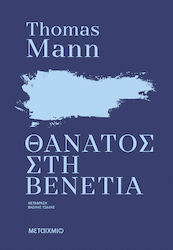
The fifty-year-old Gustav von Aschenbach, a successful writer, travels to Venice for a vacation. During a meal at the hotel, his attention is drawn to an exceptionally beautiful boy. Soon his days begin to revolve around when he will see him again, and his interest starts to turn into an unhealthy obsession. He thus ignores the ominous rumors circulating that a plague is spreading in the city and is drawn into a path of destructive inner desire.
Death in Venice is a masterpiece story about obsession, the creator's anguish, and the abyss of the end.
Type: Classic Literature / Novella
Atmosphere: A melancholic and evocative story that delves into inner decay and fatal passion set against the backdrop of autumnal Venice.
The internal conflict between reason and uncontrollable passion.
The quest for absolute beauty and artistic perfection.
Decay, loneliness, and the inevitable path towards the end.
It is one of the most important works of world literature, written with masterful precision.
The psychological portrait of the main character, Gustav von Aschenbach, is striking and timeless.
The atmospheric description of Venice acts as a living character reflecting the psychology of the protagonists.
Do you enjoy classic readings that delve into the human soul and are not afraid to confront existential questions and the dark side of desire.
"Gustav Aschenbach, or von Aschenbach as he was officially called from his fiftieth birthday onwards, had left his house on Prinz-Regenten-Strasse in Munich one spring afternoon in 19.. - a year that had shown such a threatening face to our world for months - to take a longer walk alone. Irritated by the difficult and dangerous work of the morning hours, which at that moment required maximum attention, prudence, insight, and strictness of will, the writer had not been able, even after lunch, to stop the continuous creative movement inside him, that motus animi continuus which, according to Cicero, constitutes the essence of eloquence, nor had he found the relieving sleep that, with the increasing wear of his strength, had now become necessary once a day.
So, immediately after tea, he sought the outdoors, hoping that the air and movement would refresh him and help him have a productive evening. It was early May and, after some rainy and cold weeks, a false summer had arrived. The English Garden, although it still had only its first tender green, was full of dust from the people and the carriages.
At Aumeister, where the increasingly remote paths had led him, Aschenbach had glanced at the restaurant’s garden, at the edge of which stood some carriages and taxis, had taken the road back through the fields outside the park as darkness fell, and was waiting in front of the Northern Cemetery for the tram that would take him back to the city."
Thomas Mann (1875-1955) was one of the greatest German writers and a leading figure in European literature of the 20th century. In 1929, he was awarded the Nobel Prize in Literature, mainly for his monumental work The Buddenbrooks. During the rise of Nazism, he left Germany and lived in exile in Switzerland and the USA, where he continued his work advocating humanistic values. His works, such as The Magic Mountain and Death in Venice, are distinguished by deep psychological analysis and reflection on art and life.
Specifications are collected from official manufacturer websites. Please verify the specifications before proceeding with your final purchase. If you notice any problem you can report it here.