Greek Fiction Books

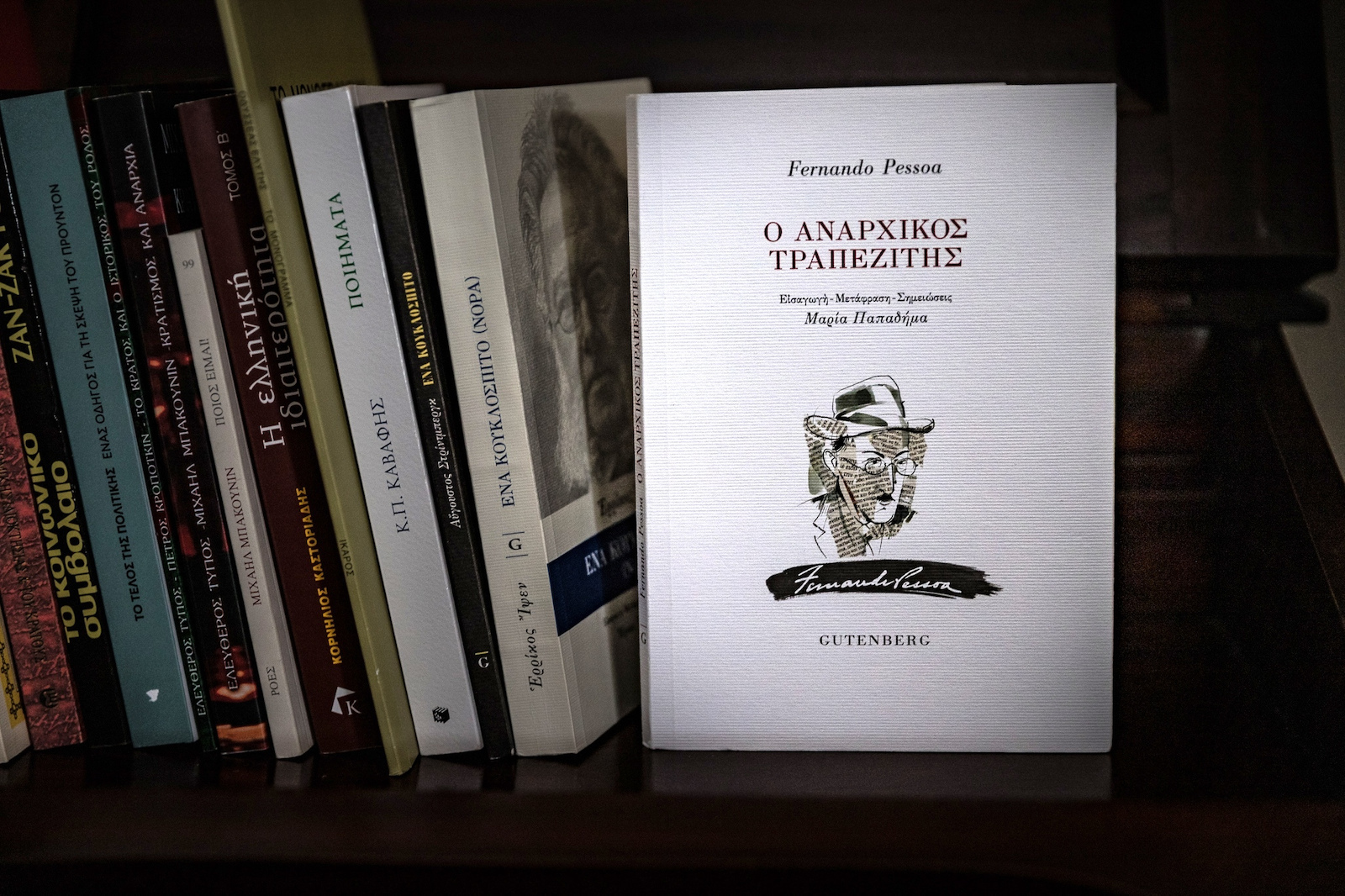
Ο Αναρχικός Τραπεζίτης

Author: Fernando Pessoa

The short story with the provocative title The Anarchist Banker was published for the first time in 1922. Allegory, dialectical satire, a model construction of strict inductive reasoning, it possesses...

The short story with the provocative title The Anarchist Banker was published for the first time in 1922. Allegory, dialectical satire, a model construction of strict inductive reasoning, it possesses the inherent relevance that characterizes the entire work of Pessoa.

On the opposite side of The Book of Disquiet, The Anarchist Banker deals with the...

See full description See full description
  • Release 6/2016
  • Pages Pages 88
  • Cover Cover Soft
  • Translation Translation Maria Papadima
  • Publisher Publisher Gutenberg
  • See all
5 60
Delivery by Tue, 07 Jul
14,00 €   shipping cost
Sent from Greece
From Bookliberty 4.9 (1.9K Skroutz Hub reviews)

Description

Description

The short story with the provocative title The Anarchist Banker was published for the first time in 1922. Allegory, dialectical satire, a model construction of strict inductive reasoning, it possesses the inherent relevance that characterizes the entire work of Pessoa.

On the opposite side of The Book of Disquiet, The Anarchist Banker deals with the practical side of life: society and its inventions, money, the exercise of power, and its laws. This time, Pessoa gives the floor to the political heteronym of the poet.

Manufacturer

See full description

Specifications

Specifications

Author
Fernando Pessoa
Publisher
Gutenberg
Original Title
Fernando Pessoa, O Banqueiro Anarquista
Type
Classic Literature
Cover
Soft
Number of Pages
88
Release Date
6/2016
Publication Date
2016
Dimensions
14x21 cm
ISBN-13
9789600117981

Important information

Specifications are collected from official manufacturer websites. Please verify the specifications before proceeding with your final purchase. If you notice any problem you can report it here.

See all specifications

Reviews (4)

Reviews

  1. 4
  2. 4 stars
    0
  3. 3 stars
    0
  4. 2 stars
    0
  5. 1 star
    0
Review this product
  • Paper quality
  • Was it easy to read?
  • Was it interesting enough?
  • I liked the writing style
  • I would read a book by the same author
  • I would recommend it for reading

Reviews by our members

  • Giorgos_Sardelis.
    5
    1 out of 1 members found this review helpful

    Pessoa was extremely prolific, signing his works with his own name as well as using the names of fictional characters ("heteronyms") that he created, many of whom held extreme views.

    Politically, he was anything but an anarchist. As he described himself, he was a conservative of the British type and believed in his own form of nationalism. He supported the coups of 1917 and 1927 as a transition from a period of instability in Portugal to a new constitutional normality. Disappointed by Salazar's dictatorship, he criticized it and faced censorship. Throughout his life, he was involved with mysticism and spiritualism and maintained personal relationships with the notorious Aleister Crowley.

    He signed "The Anarchist Banker" with his real name. With ideas that intertwine anarcho-capitalism with the philosophy of anarcho-individualism and Stirner's philosophy (see Max Stirner), "The Anarchist Banker" could range from farce and satire to a way of popularizing a "personal" anarchism, without constituting any clear ideology of anarchy. However, it provides much food for thought. The counterargument to this oxymoron could vindicate Trotsky, who characterized anarchism as "bourgeois liberalism without police."

    Pessoa refers to various theories and ideological frameworks, which, however, require a cognitive background to be understood in their entirety. This may possibly challenge the reader.

    Translated from Greek ·
    Did you find this review helpful?
  • Verified purchase

  • Verified purchase

    • Paper quality
    • Was it easy to read?
    • Was it interesting enough?
    • I liked the writing style
    • I would read a book by the same author
    • I would recommend it for reading
  • Pessoa was extremely prolific, signing his works with his own name as well as using the names of fictional characters ("heteronyms") that he created, many of whom held extreme views.

    Politically, he was anything but an anarchist. As he described himself, he was a conservative of the British type and believed in his own form of nationalism. He supported the coups of 1917 and 1927 as a transition from a period of instability in Portugal to a new constitutional normality. Disappointed by Salazar's dictatorship, he criticized it and faced censorship. Throughout his life, he was involved with mysticism and spiritualism and maintained personal relationships with the notorious Aleister Crowley.

    He signed "The Anarchist Banker" with his real name. With ideas that intertwine anarcho-capitalism with the philosophy of anarcho-individualism and Stirner's philosophy (see Max Stirner), "The Anarchist Banker" could range from farce and satire to a way of popularizing a "personal" anarchism, without constituting any clear ideology of anarchy. However, it provides much food for thought. The counterargument to this oxymoron could vindicate Trotsky, who characterized anarchism as "bourgeois liberalism without police."

    Pessoa refers to various theories and ideological frameworks, which, however, require a cognitive background to be understood in their entirety. This may possibly challenge the reader.

    Translated from Greek ·
    1
  • 0
  • 0
  • 0
  • See all

Description & Specifications

The short story with the provocative title The Anarchist Banker was published for the first time in 1922. Allegory, dialectical satire, a model construction of strict inductive reasoning, it possesses the inherent relevance that characterizes the entire work of Pessoa.

On the opposite side of The Book of Disquiet, The Anarchist Banker deals with the practical side of life: society and its inventions, money, the exercise of power, and its laws. This time, Pessoa gives the floor to the political heteronym of the poet.

Manufacturer

Author
Fernando Pessoa
Publisher
Gutenberg
Original Title
Fernando Pessoa, O Banqueiro Anarquista
Type
Classic Literature
Cover
Soft
Number of Pages
88
Release Date
6/2016
Publication Date
2016
Dimensions
14x21 cm
ISBN-13
9789600117981

Important information

Specifications are collected from official manufacturer websites. Please verify the specifications before proceeding with your final purchase. If you notice any problem you can report it here.

Reviews (4)

  1. 4
  2. 4 stars
    0
  3. 3 stars
    0
  4. 2 stars
    0
  5. 1 star
    0
Review this product
  • Paper quality
  • Was it easy to read?
  • Was it interesting enough?
  • I liked the writing style
  • I would read a book by the same author
  • I would recommend it for reading

Reviews by our members

  • Giorgos_Sardelis.
    5
    1 out of 1 members found this review helpful

    Pessoa was extremely prolific, signing his works with his own name as well as using the names of fictional characters ("heteronyms") that he created, many of whom held extreme views.

    Politically, he was anything but an anarchist. As he described himself, he was a conservative of the British type and believed in his own form of nationalism. He supported the coups of 1917 and 1927 as a transition from a period of instability in Portugal to a new constitutional normality. Disappointed by Salazar's dictatorship, he criticized it and faced censorship. Throughout his life, he was involved with mysticism and spiritualism and maintained personal relationships with the notorious Aleister Crowley.

    He signed "The Anarchist Banker" with his real name. With ideas that intertwine anarcho-capitalism with the philosophy of anarcho-individualism and Stirner's philosophy (see Max Stirner), "The Anarchist Banker" could range from farce and satire to a way of popularizing a "personal" anarchism, without constituting any clear ideology of anarchy. However, it provides much food for thought. The counterargument to this oxymoron could vindicate Trotsky, who characterized anarchism as "bourgeois liberalism without police."

    Pessoa refers to various theories and ideological frameworks, which, however, require a cognitive background to be understood in their entirety. This may possibly challenge the reader.

    Translated from Greek ·
    Did you find this review helpful?
  • Verified purchase

  • Verified purchase

    • Paper quality
    • Was it easy to read?
    • Was it interesting enough?
    • I liked the writing style
    • I would read a book by the same author
    • I would recommend it for reading
  • Pessoa was extremely prolific, signing his works with his own name as well as using the names of fictional characters ("heteronyms") that he created, many of whom held extreme views.

    Politically, he was anything but an anarchist. As he described himself, he was a conservative of the British type and believed in his own form of nationalism. He supported the coups of 1917 and 1927 as a transition from a period of instability in Portugal to a new constitutional normality. Disappointed by Salazar's dictatorship, he criticized it and faced censorship. Throughout his life, he was involved with mysticism and spiritualism and maintained personal relationships with the notorious Aleister Crowley.

    He signed "The Anarchist Banker" with his real name. With ideas that intertwine anarcho-capitalism with the philosophy of anarcho-individualism and Stirner's philosophy (see Max Stirner), "The Anarchist Banker" could range from farce and satire to a way of popularizing a "personal" anarchism, without constituting any clear ideology of anarchy. However, it provides much food for thought. The counterargument to this oxymoron could vindicate Trotsky, who characterized anarchism as "bourgeois liberalism without police."

    Pessoa refers to various theories and ideological frameworks, which, however, require a cognitive background to be understood in their entirety. This may possibly challenge the reader.

    Translated from Greek ·
    1
  • 0
  • 0
  • 0
  • See all
5,60 €
14,00 €   shipping cost