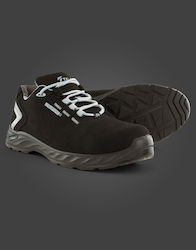
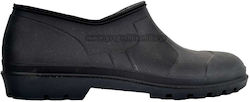
S0: Simple work shoe without any type of safety features or toe protection.
OB: Without metal or synthetic toe cap. Meets minimum safety requirements and features a slip-resistant sole.
O1: Without metal or synthetic toe cap. They feature a slip-resistant sole, provide antistatic properties, and have energy absorption in the heel. Additionally, they offer resistance to fuels and oils.
O2: Without metal or synthetic toe cap. They have all the characteristics of the O1 category, providing additional water resistance.
SB: They provide basic protection and have a metal or synthetic toe cap.
SBP: They feature toe protection and are resistant to punctures from sharp objects.
S1: They feature toe protection, have antistatic properties, energy absorption in the heel, and are resistant to fuels and oils.
S1P: They feature toe protection, provide all the protections of the S1 level, and are resistant to puncture from sharp objects.
S2: They feature toe protection, provide all the protections of level S1, and have additional resistance to water and other liquids.
S3: They feature toe protection, provide all the protections of level S2, and have enhanced puncture resistance and a non-slip sole.
S1PS: They feature toe protection, provide all the protections of the S1 level, and are resistant to puncture from sharp objects (tested with a 3.0 mm diameter nail).
Combined Slip Resistance (SRC): They provide protection against slipping on all types of hard floors, on wet smooth surfaces as well as hard oily surfaces.
Slip Resistance (SR): Sole with special materials that provides better grip and stability on different surfaces.
Slip Resistance Wet Floors (SRA): With slip resistance in areas with wet smooth floors, such as tiles.
Oil Resistance (FO): They maintain traction and prevent slipping in areas with oils, greasy substances, and hydrocarbons, reducing the risk of accidents.
Slip Resistance Oily Floors (SRB): With slip resistance on oily hard floors, such as paint or resin coatings.