According to the materialistic perspective, the essential element in history is ultimately: the production and reproduction of direct life. However, this in turn has a dual character.
On one hand, the...
According to the materialistic perspective, the essential element in history is ultimately: the production and reproduction of direct life. However, this in turn has a dual character.
On one hand, the production of the means of sustenance, objects for nourishment, clothing, housing, and the tools needed for these. On the other hand, the production of human...
According to the materialistic perspective, the essential element in history is ultimately: the production and reproduction of direct life. However, this in turn has a dual character.
On one hand, the production of the means of sustenance, objects for nourishment, clothing, housing, and the tools needed for these. On the other hand, the production of human beings themselves, the reproduction of the species.
The social institutions where people of a certain historical period and a certain country live are determined by both aspects of production: by the stage of development of labor on one hand, and of the family on the other.
The less developed labor is, the more restricted the quantity of its products, and thus the wealth of society is, the more it seems that social organization is dominated by kinship ties.
Within this structure of society based on kinship ties, however, the productivity of labor increasingly develops. Along with it, private property and exchange develop, the differences in wealth, the possibility of exploiting foreign labor power and thus the basis for class contradictions: new social elements, which entire generations try to adapt the old social order to the new conditions, until ultimately the irreconcilability of both causes a complete upheaval.
The old society, based on kinship associations, is blown apart by the clash of the newly developed social classes. In its place comes a new society, organized into a state, where its lower units are no longer kinship associations but local associations, a society where the family system is entirely dominated by the system of property and where those class contradictions and class struggles develop freely, which constitute the content of all recorded history so far.
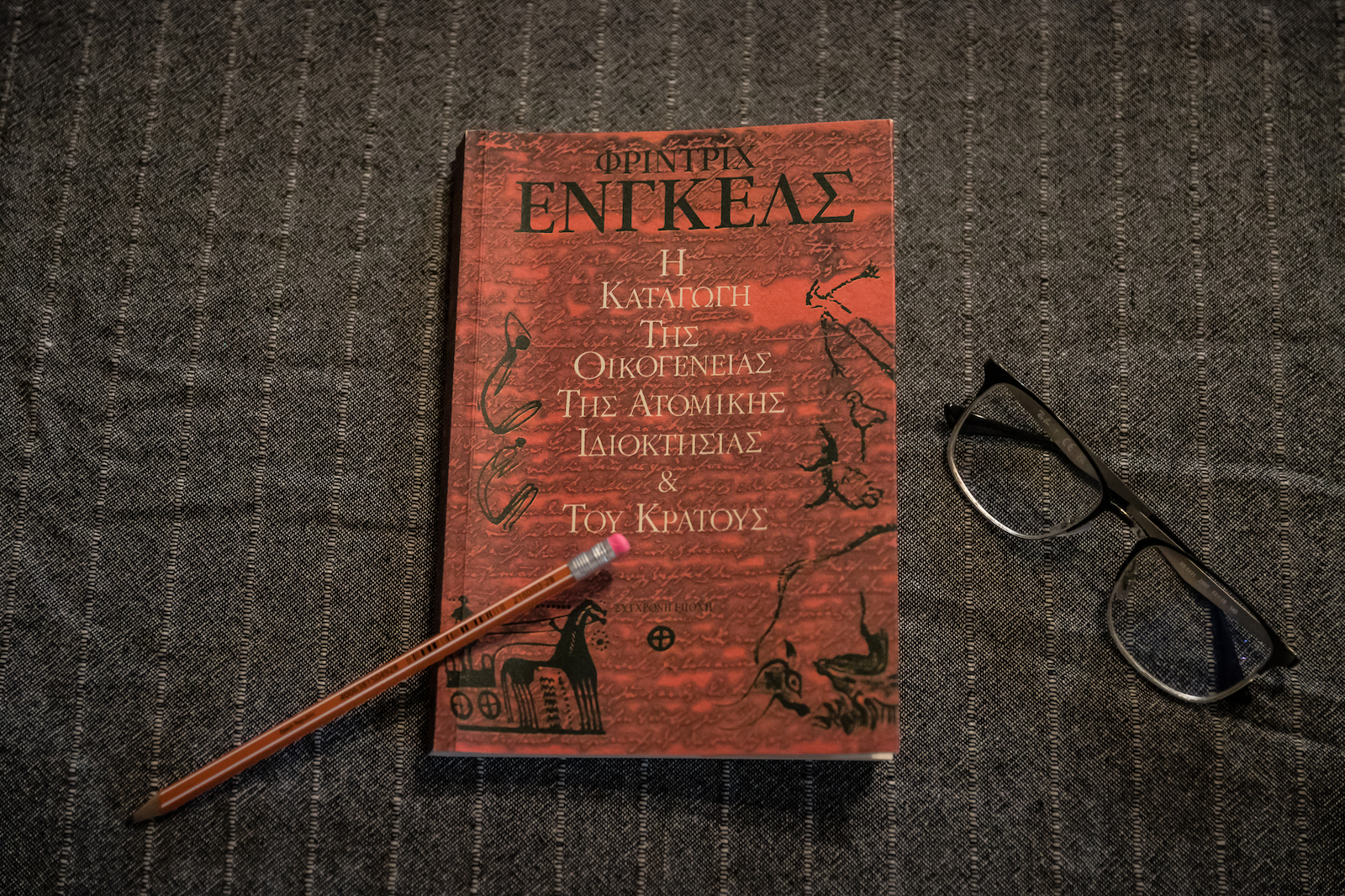
Der Ursprung der Familie, des Privateigentums und des Staats
Type
Humanities, Political Sciences, Sociology
Language
Greek
Cover
Soft
Number of Pages
223
Release Date
1/1997
Publication Date
1997
Dimensions
14x21 cm
ISBN-13
9789602247358
Important information
Specifications are collected from official manufacturer websites. Please verify the specifications before proceeding with your final purchase. If you notice any problem you can report it here.
Engels and Marx opened a new path of worldview when they laid the foundations of materialistic dialectics and the materialistic perception of history. By the term "historical materialism," we refer to Marx's view, based on which history is permeated by class struggle. Marx believed that it is the economic conditions that shape history and social structures.
“With the word materialism,” wrote Friedrich Engels, “the small-minded hypocrite understands greed, the lust of the eye, the lust of the flesh, arrogance, avarice, miserliness, greed, the pursuit of profit, and the deceptions of the stock market - in short, all the filthy immorality in which he indulges privately.”
Friedrich Engels coined the term "historical materialism" and described it as “the view of the course of history that seeks the ultimate cause and the great driving force of all significant historical events in the economic development of society, in the changes in the modes of production and exchange, in the consequent division of society into distinct classes, and in the struggle of these classes against each other.”
“The Origin of the Family, Private Property and the State” was published in 1884 and constitutes an anthropological treatise, based partly on notes by Karl Marx for Lewis Henry Morgan's book, “Ancient Society” (1877), from which Engels and Marx were influenced regarding social structure and culture.
Engels agrees with Morgan that initially societies were matriarchal, adding political dimensions and considering that the “defeat of women” is due to the advent of agriculture and animal husbandry. For Engels, property rights and enforced monogamy lead to an increase in sexual immorality and prostitution.
The only class, according to Engels, that is free from these constraints of property, and as a result from the danger of moral decay, is the proletariat, as it lacks the economic means that constitute the basis (as well as the threat to) bourgeois marriage. Therefore, monogamy is guaranteed by the fact that their relationship is entirely voluntary.
O Ένγκελς και ο Μάρξ άνοιγαν μιας νέα ατραπό κοσμοαντίληψης, όταν έθεταν τις βάσεις της υλιστικής διαλεκτικής και της υλιστικής αντίληψης της ιστορίας. Με τον όρο «ιστορικός υλισμός», αναφερόμαστε στην άποψη του Μαρξ, βάση της οποίας, η ιστορία διακατέχεται από ταξική πάλη. Ο Μαρξ πίστευε πως είναι οι οικονομικές συνθήκες αυτές που διαμορφώνουν την ιστορία και τις κοινωνικές δομές.
«Με τη λέξη υλισμός», έγραφε ο Φρίντριχ Ένγκελς, «ο μικρόψυχος υποκριτής αντιλαμβάνεται τη λαιμαργία, τη λαγνεία της όρασης, τη λαγνεία της σάρκας, την αλαζονεία, την πλεονεξία, τη φιλαργυρία, την απληστία, το κυνήγι του κέρδους και τις απάτες του χρηματιστηρίου - κοντολογίς, όλη τη βρομερή ανηθικότητα, στην οποία επιδίδεται κατ' ιδίαν.»
Ο Φρίντριχ Ένγκελς επινόησε τον όρο «ιστορικός υλισμός» και τον περιέγραψε ως «τη θέαση της πορείας της ιστορίας που αναζητά την τελική αιτία και τη μεγάλη κινητήρια δύναμη όλων των σημαντικών ιστορικών γεγονότων στην οικονομική ανάπτυξη της κοινωνίας, στις αλλαγές στους τρόπους της παραγωγής και της ανταλλαγής, στη συνακόλουθη διαίρεση της κοινωνίας σε διακριτές τάξεις, και στην πάλη αυτών των τάξεων μεταξύ τους».
«Η Καταγωγή της Οικογένειας, της Ατομικής Ιδιοκτησίας και του Κράτους» εκδόθηκε το 1884 και αποτελεί μια ανθρωπολογική πραγματεία, βασιζόμενη εν μέρει σε σημειώσεις του Καρλ Μαρξ για το βιβλίο του Λιούις Χένρι Μόργκαν, «Ancient Society» (1877), από το οποίο επηρεάστηκαν Ένγκελς και Μαρξ, όσον αφορά στην κοινωνική δομή και τον πολιτισμό.
Ο Ένγκελς συμφωνεί με τον Μόργκαν στο ότι αρχικά οι κοινωνίες ήταν μητριαρχικές, προσθέτοντας πολιτικές διαστάσεις και θεωρώντας ότι η «ήττα των γυναικών» οφείλεται στην έναρξη της γεωργίας και της κτηνοτροφίας. Για τον Ένγκελς τα δικαιώματα ιδιοκτησίας και η αναγκαστική μονογαμία οδηγούν στην αύξηση της σεξουαλικής ανηθικότητας και της πορνείας.
Η μόνη τάξη, σύμφωνα με τον Ένγκελς, που είναι απαλλαγμένη από αυτούς τους περιορισμούς της ιδιοκτησίας, και ως αποτέλεσμα από τον κίνδυνο της ηθικής παρακμής, είναι το προλεταριάτο, καθώς του λείπουν τα οικονομικά μέσα που αποτελούν τη βάση (καθώς και την απειλή για) τον αστικό γάμο. Επομένως, η μονογαμία είναι εγγυημένη από το γεγονός ότι η δική τους σχέση είναι πλήρως εθελοντική.
Engels and Marx opened a new path of worldview when they laid the foundations of materialistic dialectics and the materialistic perception of history. By the term "historical materialism," we refer to Marx's view, based on which history is permeated by class struggle. Marx believed that it is the economic conditions that shape history and social structures.
“With the word materialism,” wrote Friedrich Engels, “the small-minded hypocrite understands greed, the lust of the eye, the lust of the flesh, arrogance, avarice, miserliness, greed, the pursuit of profit, and the deceptions of the stock market - in short, all the filthy immorality in which he indulges privately.”
Friedrich Engels coined the term "historical materialism" and described it as “the view of the course of history that seeks the ultimate cause and the great driving force of all significant historical events in the economic development of society, in the changes in the modes of production and exchange, in the consequent division of society into distinct classes, and in the struggle of these classes against each other.”
“The Origin of the Family, Private Property and the State” was published in 1884 and constitutes an anthropological treatise, based partly on notes by Karl Marx for Lewis Henry Morgan's book, “Ancient Society” (1877), from which Engels and Marx were influenced regarding social structure and culture.
Engels agrees with Morgan that initially societies were matriarchal, adding political dimensions and considering that the “defeat of women” is due to the advent of agriculture and animal husbandry. For Engels, property rights and enforced monogamy lead to an increase in sexual immorality and prostitution.
The only class, according to Engels, that is free from these constraints of property, and as a result from the danger of moral decay, is the proletariat, as it lacks the economic means that constitute the basis (as well as the threat to) bourgeois marriage. Therefore, monogamy is guaranteed by the fact that their relationship is entirely voluntary.
O Ένγκελς και ο Μάρξ άνοιγαν μιας νέα ατραπό κοσμοαντίληψης, όταν έθεταν τις βάσεις της υλιστικής διαλεκτικής και της υλιστικής αντίληψης της ιστορίας. Με τον όρο «ιστορικός υλισμός», αναφερόμαστε στην άποψη του Μαρξ, βάση της οποίας, η ιστορία διακατέχεται από ταξική πάλη. Ο Μαρξ πίστευε πως είναι οι οικονομικές συνθήκες αυτές που διαμορφώνουν την ιστορία και τις κοινωνικές δομές.
«Με τη λέξη υλισμός», έγραφε ο Φρίντριχ Ένγκελς, «ο μικρόψυχος υποκριτής αντιλαμβάνεται τη λαιμαργία, τη λαγνεία της όρασης, τη λαγνεία της σάρκας, την αλαζονεία, την πλεονεξία, τη φιλαργυρία, την απληστία, το κυνήγι του κέρδους και τις απάτες του χρηματιστηρίου - κοντολογίς, όλη τη βρομερή ανηθικότητα, στην οποία επιδίδεται κατ' ιδίαν.»
Ο Φρίντριχ Ένγκελς επινόησε τον όρο «ιστορικός υλισμός» και τον περιέγραψε ως «τη θέαση της πορείας της ιστορίας που αναζητά την τελική αιτία και τη μεγάλη κινητήρια δύναμη όλων των σημαντικών ιστορικών γεγονότων στην οικονομική ανάπτυξη της κοινωνίας, στις αλλαγές στους τρόπους της παραγωγής και της ανταλλαγής, στη συνακόλουθη διαίρεση της κοινωνίας σε διακριτές τάξεις, και στην πάλη αυτών των τάξεων μεταξύ τους».
«Η Καταγωγή της Οικογένειας, της Ατομικής Ιδιοκτησίας και του Κράτους» εκδόθηκε το 1884 και αποτελεί μια ανθρωπολογική πραγματεία, βασιζόμενη εν μέρει σε σημειώσεις του Καρλ Μαρξ για το βιβλίο του Λιούις Χένρι Μόργκαν, «Ancient Society» (1877), από το οποίο επηρεάστηκαν Ένγκελς και Μαρξ, όσον αφορά στην κοινωνική δομή και τον πολιτισμό.
Ο Ένγκελς συμφωνεί με τον Μόργκαν στο ότι αρχικά οι κοινωνίες ήταν μητριαρχικές, προσθέτοντας πολιτικές διαστάσεις και θεωρώντας ότι η «ήττα των γυναικών» οφείλεται στην έναρξη της γεωργίας και της κτηνοτροφίας. Για τον Ένγκελς τα δικαιώματα ιδιοκτησίας και η αναγκαστική μονογαμία οδηγούν στην αύξηση της σεξουαλικής ανηθικότητας και της πορνείας.
Η μόνη τάξη, σύμφωνα με τον Ένγκελς, που είναι απαλλαγμένη από αυτούς τους περιορισμούς της ιδιοκτησίας, και ως αποτέλεσμα από τον κίνδυνο της ηθικής παρακμής, είναι το προλεταριάτο, καθώς του λείπουν τα οικονομικά μέσα που αποτελούν τη βάση (καθώς και την απειλή για) τον αστικό γάμο. Επομένως, η μονογαμία είναι εγγυημένη από το γεγονός ότι η δική τους σχέση είναι πλήρως εθελοντική.
According to the materialistic perspective, the essential element in history is ultimately: the production and reproduction of direct life. However, this in turn has a dual character.
On one hand, the production of the means of sustenance, objects for nourishment, clothing, housing, and the tools needed for these. On the other hand, the production of human beings themselves, the reproduction of the species.
The social institutions where people of a certain historical period and a certain country live are determined by both aspects of production: by the stage of development of labor on one hand, and of the family on the other.
The less developed labor is, the more restricted the quantity of its products, and thus the wealth of society is, the more it seems that social organization is dominated by kinship ties.
Within this structure of society based on kinship ties, however, the productivity of labor increasingly develops. Along with it, private property and exchange develop, the differences in wealth, the possibility of exploiting foreign labor power and thus the basis for class contradictions: new social elements, which entire generations try to adapt the old social order to the new conditions, until ultimately the irreconcilability of both causes a complete upheaval.
The old society, based on kinship associations, is blown apart by the clash of the newly developed social classes. In its place comes a new society, organized into a state, where its lower units are no longer kinship associations but local associations, a society where the family system is entirely dominated by the system of property and where those class contradictions and class struggles develop freely, which constitute the content of all recorded history so far.
Der Ursprung der Familie, des Privateigentums und des Staats
Type
Humanities, Political Sciences, Sociology
Language
Greek
Cover
Soft
Number of Pages
223
Release Date
1/1997
Publication Date
1997
Dimensions
14x21 cm
ISBN-13
9789602247358
Important information
Specifications are collected from official manufacturer websites. Please verify the specifications before proceeding with your final purchase. If you notice any problem you can report it here.
Engels and Marx opened a new path of worldview when they laid the foundations of materialistic dialectics and the materialistic perception of history. By the term "historical materialism," we refer to Marx's view, based on which history is permeated by class struggle. Marx believed that it is the economic conditions that shape history and social structures.
“With the word materialism,” wrote Friedrich Engels, “the small-minded hypocrite understands greed, the lust of the eye, the lust of the flesh, arrogance, avarice, miserliness, greed, the pursuit of profit, and the deceptions of the stock market - in short, all the filthy immorality in which he indulges privately.”
Friedrich Engels coined the term "historical materialism" and described it as “the view of the course of history that seeks the ultimate cause and the great driving force of all significant historical events in the economic development of society, in the changes in the modes of production and exchange, in the consequent division of society into distinct classes, and in the struggle of these classes against each other.”
“The Origin of the Family, Private Property and the State” was published in 1884 and constitutes an anthropological treatise, based partly on notes by Karl Marx for Lewis Henry Morgan's book, “Ancient Society” (1877), from which Engels and Marx were influenced regarding social structure and culture.
Engels agrees with Morgan that initially societies were matriarchal, adding political dimensions and considering that the “defeat of women” is due to the advent of agriculture and animal husbandry. For Engels, property rights and enforced monogamy lead to an increase in sexual immorality and prostitution.
The only class, according to Engels, that is free from these constraints of property, and as a result from the danger of moral decay, is the proletariat, as it lacks the economic means that constitute the basis (as well as the threat to) bourgeois marriage. Therefore, monogamy is guaranteed by the fact that their relationship is entirely voluntary.
O Ένγκελς και ο Μάρξ άνοιγαν μιας νέα ατραπό κοσμοαντίληψης, όταν έθεταν τις βάσεις της υλιστικής διαλεκτικής και της υλιστικής αντίληψης της ιστορίας. Με τον όρο «ιστορικός υλισμός», αναφερόμαστε στην άποψη του Μαρξ, βάση της οποίας, η ιστορία διακατέχεται από ταξική πάλη. Ο Μαρξ πίστευε πως είναι οι οικονομικές συνθήκες αυτές που διαμορφώνουν την ιστορία και τις κοινωνικές δομές.
«Με τη λέξη υλισμός», έγραφε ο Φρίντριχ Ένγκελς, «ο μικρόψυχος υποκριτής αντιλαμβάνεται τη λαιμαργία, τη λαγνεία της όρασης, τη λαγνεία της σάρκας, την αλαζονεία, την πλεονεξία, τη φιλαργυρία, την απληστία, το κυνήγι του κέρδους και τις απάτες του χρηματιστηρίου - κοντολογίς, όλη τη βρομερή ανηθικότητα, στην οποία επιδίδεται κατ' ιδίαν.»
Ο Φρίντριχ Ένγκελς επινόησε τον όρο «ιστορικός υλισμός» και τον περιέγραψε ως «τη θέαση της πορείας της ιστορίας που αναζητά την τελική αιτία και τη μεγάλη κινητήρια δύναμη όλων των σημαντικών ιστορικών γεγονότων στην οικονομική ανάπτυξη της κοινωνίας, στις αλλαγές στους τρόπους της παραγωγής και της ανταλλαγής, στη συνακόλουθη διαίρεση της κοινωνίας σε διακριτές τάξεις, και στην πάλη αυτών των τάξεων μεταξύ τους».
«Η Καταγωγή της Οικογένειας, της Ατομικής Ιδιοκτησίας και του Κράτους» εκδόθηκε το 1884 και αποτελεί μια ανθρωπολογική πραγματεία, βασιζόμενη εν μέρει σε σημειώσεις του Καρλ Μαρξ για το βιβλίο του Λιούις Χένρι Μόργκαν, «Ancient Society» (1877), από το οποίο επηρεάστηκαν Ένγκελς και Μαρξ, όσον αφορά στην κοινωνική δομή και τον πολιτισμό.
Ο Ένγκελς συμφωνεί με τον Μόργκαν στο ότι αρχικά οι κοινωνίες ήταν μητριαρχικές, προσθέτοντας πολιτικές διαστάσεις και θεωρώντας ότι η «ήττα των γυναικών» οφείλεται στην έναρξη της γεωργίας και της κτηνοτροφίας. Για τον Ένγκελς τα δικαιώματα ιδιοκτησίας και η αναγκαστική μονογαμία οδηγούν στην αύξηση της σεξουαλικής ανηθικότητας και της πορνείας.
Η μόνη τάξη, σύμφωνα με τον Ένγκελς, που είναι απαλλαγμένη από αυτούς τους περιορισμούς της ιδιοκτησίας, και ως αποτέλεσμα από τον κίνδυνο της ηθικής παρακμής, είναι το προλεταριάτο, καθώς του λείπουν τα οικονομικά μέσα που αποτελούν τη βάση (καθώς και την απειλή για) τον αστικό γάμο. Επομένως, η μονογαμία είναι εγγυημένη από το γεγονός ότι η δική τους σχέση είναι πλήρως εθελοντική.
Engels and Marx opened a new path of worldview when they laid the foundations of materialistic dialectics and the materialistic perception of history. By the term "historical materialism," we refer to Marx's view, based on which history is permeated by class struggle. Marx believed that it is the economic conditions that shape history and social structures.
“With the word materialism,” wrote Friedrich Engels, “the small-minded hypocrite understands greed, the lust of the eye, the lust of the flesh, arrogance, avarice, miserliness, greed, the pursuit of profit, and the deceptions of the stock market - in short, all the filthy immorality in which he indulges privately.”
Friedrich Engels coined the term "historical materialism" and described it as “the view of the course of history that seeks the ultimate cause and the great driving force of all significant historical events in the economic development of society, in the changes in the modes of production and exchange, in the consequent division of society into distinct classes, and in the struggle of these classes against each other.”
“The Origin of the Family, Private Property and the State” was published in 1884 and constitutes an anthropological treatise, based partly on notes by Karl Marx for Lewis Henry Morgan's book, “Ancient Society” (1877), from which Engels and Marx were influenced regarding social structure and culture.
Engels agrees with Morgan that initially societies were matriarchal, adding political dimensions and considering that the “defeat of women” is due to the advent of agriculture and animal husbandry. For Engels, property rights and enforced monogamy lead to an increase in sexual immorality and prostitution.
The only class, according to Engels, that is free from these constraints of property, and as a result from the danger of moral decay, is the proletariat, as it lacks the economic means that constitute the basis (as well as the threat to) bourgeois marriage. Therefore, monogamy is guaranteed by the fact that their relationship is entirely voluntary.
O Ένγκελς και ο Μάρξ άνοιγαν μιας νέα ατραπό κοσμοαντίληψης, όταν έθεταν τις βάσεις της υλιστικής διαλεκτικής και της υλιστικής αντίληψης της ιστορίας. Με τον όρο «ιστορικός υλισμός», αναφερόμαστε στην άποψη του Μαρξ, βάση της οποίας, η ιστορία διακατέχεται από ταξική πάλη. Ο Μαρξ πίστευε πως είναι οι οικονομικές συνθήκες αυτές που διαμορφώνουν την ιστορία και τις κοινωνικές δομές.
«Με τη λέξη υλισμός», έγραφε ο Φρίντριχ Ένγκελς, «ο μικρόψυχος υποκριτής αντιλαμβάνεται τη λαιμαργία, τη λαγνεία της όρασης, τη λαγνεία της σάρκας, την αλαζονεία, την πλεονεξία, τη φιλαργυρία, την απληστία, το κυνήγι του κέρδους και τις απάτες του χρηματιστηρίου - κοντολογίς, όλη τη βρομερή ανηθικότητα, στην οποία επιδίδεται κατ' ιδίαν.»
Ο Φρίντριχ Ένγκελς επινόησε τον όρο «ιστορικός υλισμός» και τον περιέγραψε ως «τη θέαση της πορείας της ιστορίας που αναζητά την τελική αιτία και τη μεγάλη κινητήρια δύναμη όλων των σημαντικών ιστορικών γεγονότων στην οικονομική ανάπτυξη της κοινωνίας, στις αλλαγές στους τρόπους της παραγωγής και της ανταλλαγής, στη συνακόλουθη διαίρεση της κοινωνίας σε διακριτές τάξεις, και στην πάλη αυτών των τάξεων μεταξύ τους».
«Η Καταγωγή της Οικογένειας, της Ατομικής Ιδιοκτησίας και του Κράτους» εκδόθηκε το 1884 και αποτελεί μια ανθρωπολογική πραγματεία, βασιζόμενη εν μέρει σε σημειώσεις του Καρλ Μαρξ για το βιβλίο του Λιούις Χένρι Μόργκαν, «Ancient Society» (1877), από το οποίο επηρεάστηκαν Ένγκελς και Μαρξ, όσον αφορά στην κοινωνική δομή και τον πολιτισμό.
Ο Ένγκελς συμφωνεί με τον Μόργκαν στο ότι αρχικά οι κοινωνίες ήταν μητριαρχικές, προσθέτοντας πολιτικές διαστάσεις και θεωρώντας ότι η «ήττα των γυναικών» οφείλεται στην έναρξη της γεωργίας και της κτηνοτροφίας. Για τον Ένγκελς τα δικαιώματα ιδιοκτησίας και η αναγκαστική μονογαμία οδηγούν στην αύξηση της σεξουαλικής ανηθικότητας και της πορνείας.
Η μόνη τάξη, σύμφωνα με τον Ένγκελς, που είναι απαλλαγμένη από αυτούς τους περιορισμούς της ιδιοκτησίας, και ως αποτέλεσμα από τον κίνδυνο της ηθικής παρακμής, είναι το προλεταριάτο, καθώς του λείπουν τα οικονομικά μέσα που αποτελούν τη βάση (καθώς και την απειλή για) τον αστικό γάμο. Επομένως, η μονογαμία είναι εγγυημένη από το γεγονός ότι η δική τους σχέση είναι πλήρως εθελοντική.