Greek Fiction Books

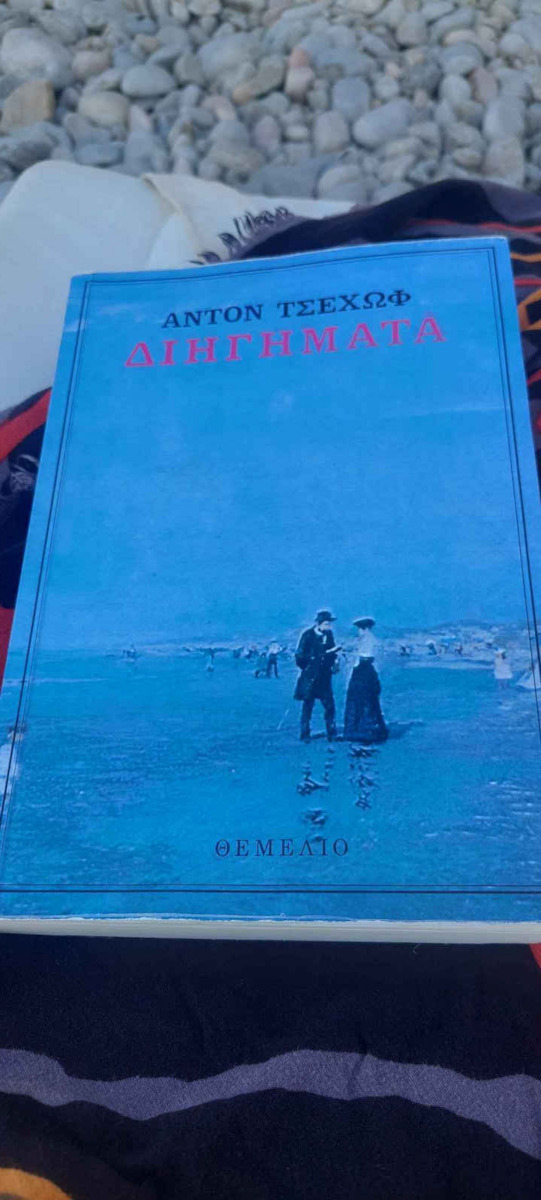
Διηγήματα

Author: Anton Chekhov

Anton Pavlovich Chekhov embodies a monumental figure in the history of Russian literature. Tragic yet satirical, he revealed, sometimes with touching tenderness and at other times with a humorous...

Anton Pavlovich Chekhov embodies a monumental figure in the history of Russian literature. Tragic yet satirical, he revealed, sometimes with touching tenderness and at other times with a humorous spirit, the darkest and most sensitive corners of the human soul, exposing, at times with gentle fingers and at other times with a scalpel, the horrific aspects of...

See full description See full description
  • Release 3/2000
  • Pages Pages 326
  • Cover Cover Soft
  • Translation Translation Kyriakos Simopoulos
  • Publisher Publisher THemelio
  • See all
12 70
Delivery Thu, 25 Jun - Mon, 29 Jun
14,00 €   shipping cost
Sent from Greece
From BooksAndToys 5.0 (53)
Greece
5 pieces
See Books on the page of BooksAndToys

Description

Description

Anton Pavlovich Chekhov embodies a monumental figure in the history of Russian literature. Tragic yet satirical, he revealed, sometimes with touching tenderness and at other times with a humorous spirit, the darkest and most sensitive corners of the human soul, exposing, at times with gentle fingers and at other times with a scalpel, the horrific aspects of life, the social wounds, and the masked misery.

In his work, pre-revolutionary Russia is depicted not in grand compositions like those of Tolstoy, but in countless small images, revealing documents of a harsh era. In Tolstoy, we discern a vast perspective on life; it is the eye that gazes from afar. In Chekhov, on the other hand, we see the anatomist of everyday life, the itinerant who sneaks into alleys and yards, the creator who holds the heart of man in his palm.

Chekhov's life was a journey of suffering. He came into the world as a serf and died at the age of 44 from tuberculosis. In the peasant village where he was born, on the steppe that stretches over the Sea of Azov, young Antosha was simply a 'soul', a number, the property of the landowner. The abolition of serfdom came a year later, in 1861. Chekhov took his first steps in that nightmarish world brought to life by Nikolai Gogol in the travels of Chichikov.

'I did not live the life of a child,' Chekhov narrates. His early years passed amidst the terrible fermentation of intellectual upheavals, in the bustling movement of the masses of the vast country with its primitive economy. With the reform of Alexander II, landowners could no longer sell or gamble their 'souls'. But the land remained in the same hands, and the degradation took on a new direction.

With the development of industry in urban centers, mass migration of the hungry to the great Russian cities began. From the izbas of Taganrog, Chekhov's family found itself in Moscow. The trial continues in another form. Parents and children sleep on the ground, famished by hunger, frozen by the cold. Antosha is now twenty years old and has been soaked in the most depressing experience. From this nightmarish apprenticeship, the work of the great creator will soon bear fruit.

He had intensely lived the stagnant life of the Russian province, the ignorance and endurance of the peasantry, and witnessed up close the tragedies of the lives of the muzhiks. He grew up amid decay, in an era when serfdom had been abolished, but not the slaves. In Moscow, he felt the anxiety of the masses on his own body, the hunger and despair in the dark alleys. In his father's grocery store, he saw people up close, where he distinguished the types he would later portray in his immortal stories.

Manufacturer

See full description

Specifications

Specifications

Author
Anton Chekhov
Publisher
THemelio
Type
Classic Literature
Cover
Soft
Number of Pages
326
Release Date
3/2000
Publication Date
2000
Dimensions
14x21 cm
ISBN-13
9789607293411

Important information

Specifications are collected from official manufacturer websites. Please verify the specifications before proceeding with your final purchase. If you notice any problem you can report it here.

See all specifications

Reviews (1)

Reviews

  1. 1
  2. 4 stars
    0
  3. 3 stars
    0
  4. 2 stars
    0
  5. 1 star
    0
Review this product

Reviews by our members

  • despoina_ska

    Verified purchase

    • Paper quality
    • Was it easy to read?
    • Was it interesting enough?
    • I liked the writing style
    • I would read a book by the same author
    • I would recommend it for reading

Description & Specifications

Anton Pavlovich Chekhov embodies a monumental figure in the history of Russian literature. Tragic yet satirical, he revealed, sometimes with touching tenderness and at other times with a humorous spirit, the darkest and most sensitive corners of the human soul, exposing, at times with gentle fingers and at other times with a scalpel, the horrific aspects of life, the social wounds, and the masked misery.

In his work, pre-revolutionary Russia is depicted not in grand compositions like those of Tolstoy, but in countless small images, revealing documents of a harsh era. In Tolstoy, we discern a vast perspective on life; it is the eye that gazes from afar. In Chekhov, on the other hand, we see the anatomist of everyday life, the itinerant who sneaks into alleys and yards, the creator who holds the heart of man in his palm.

Chekhov's life was a journey of suffering. He came into the world as a serf and died at the age of 44 from tuberculosis. In the peasant village where he was born, on the steppe that stretches over the Sea of Azov, young Antosha was simply a 'soul', a number, the property of the landowner. The abolition of serfdom came a year later, in 1861. Chekhov took his first steps in that nightmarish world brought to life by Nikolai Gogol in the travels of Chichikov.

'I did not live the life of a child,' Chekhov narrates. His early years passed amidst the terrible fermentation of intellectual upheavals, in the bustling movement of the masses of the vast country with its primitive economy. With the reform of Alexander II, landowners could no longer sell or gamble their 'souls'. But the land remained in the same hands, and the degradation took on a new direction.

With the development of industry in urban centers, mass migration of the hungry to the great Russian cities began. From the izbas of Taganrog, Chekhov's family found itself in Moscow. The trial continues in another form. Parents and children sleep on the ground, famished by hunger, frozen by the cold. Antosha is now twenty years old and has been soaked in the most depressing experience. From this nightmarish apprenticeship, the work of the great creator will soon bear fruit.

He had intensely lived the stagnant life of the Russian province, the ignorance and endurance of the peasantry, and witnessed up close the tragedies of the lives of the muzhiks. He grew up amid decay, in an era when serfdom had been abolished, but not the slaves. In Moscow, he felt the anxiety of the masses on his own body, the hunger and despair in the dark alleys. In his father's grocery store, he saw people up close, where he distinguished the types he would later portray in his immortal stories.

Manufacturer

Author
Anton Chekhov
Publisher
THemelio
Type
Classic Literature
Cover
Soft
Number of Pages
326
Release Date
3/2000
Publication Date
2000
Dimensions
14x21 cm
ISBN-13
9789607293411

Important information

Specifications are collected from official manufacturer websites. Please verify the specifications before proceeding with your final purchase. If you notice any problem you can report it here.

Reviews (1)

  1. 1
  2. 4 stars
    0
  3. 3 stars
    0
  4. 2 stars
    0
  5. 1 star
    0
Review this product

Reviews by our members

  • despoina_ska

    Verified purchase

    • Paper quality
    • Was it easy to read?
    • Was it interesting enough?
    • I liked the writing style
    • I would read a book by the same author
    • I would recommend it for reading
12,70 €
14,00 €   shipping cost