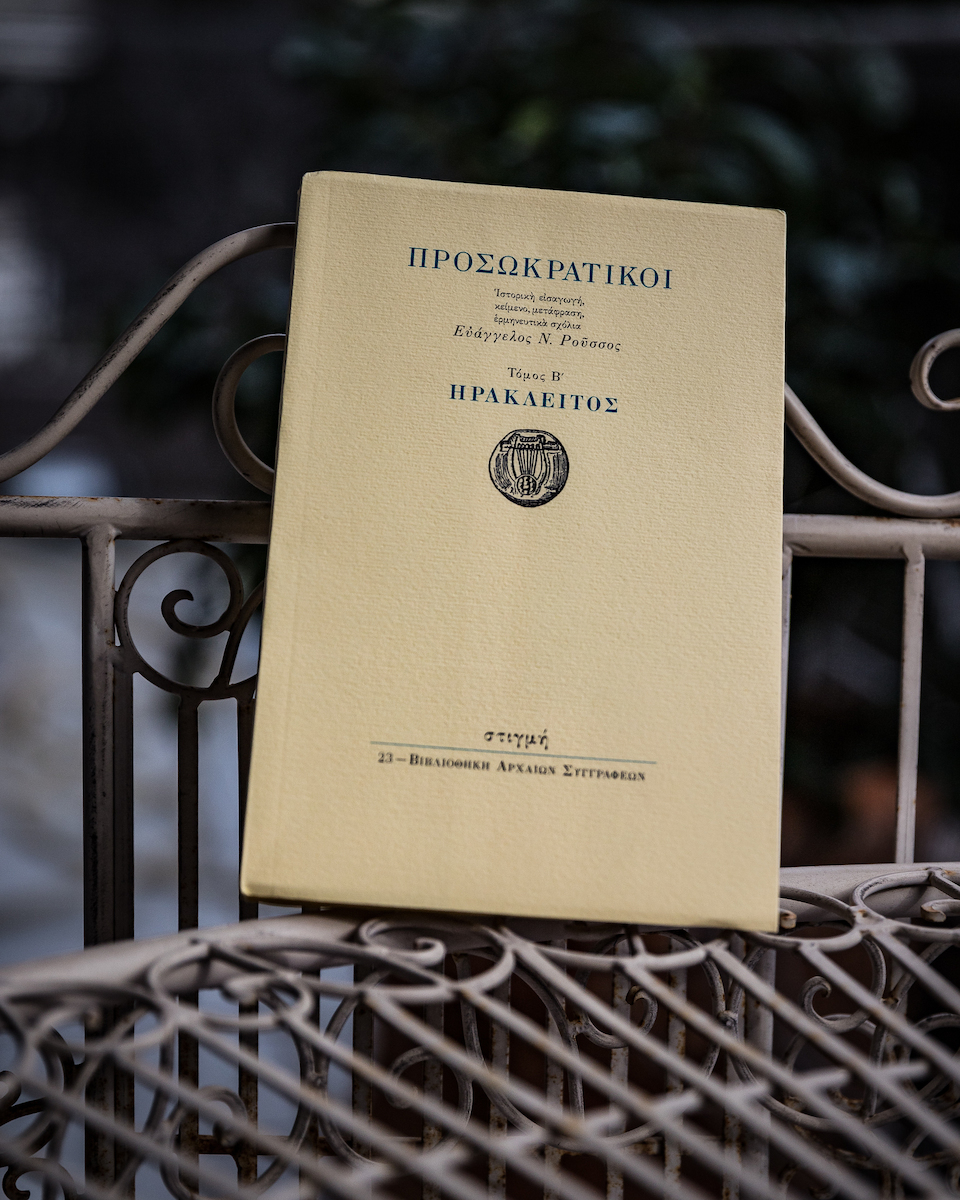
"War is the father of all and king of all; it shows some to be gods, others to be men, some it makes slaves, and others free."
The above excerpt is perhaps one of the most famous of Heraclitus and is often interpreted as if he were some warlike "dog of war." Although easily memorable due to the poetic nature of his writing, Heraclitus is considered by many to be aphoristic and obscure, which has given him the reputation of being "dark" since antiquity and contributed to his allure. However, the truth is simpler and perhaps even more captivating.
Heraclitus wrote in a dual manner, consciously charging his words with different layers of meaning, which had to (and must) be approached as riddles that are primarily solved experientially and empirically. In other words, his truth lies beneath the surface of the words he uses.
The main pillars of his thought were that a) people must know the Logos (a unifying, objective principle), b) the world is constantly changing, c) the essence of the world is eternal fire (fire symbolizes continuous change), and finally d) the balance, solidity, and harmony of the world is maintained through continuous movement, competition, and the interweaving of opposites.
Given that his work survives in fragments, one initial innovation of his seems to be the introduction of the human element into cosmology, inaugurating in pre-Socratic cosmogony the anthropocentrism that would come to monopolize classical thought. Thus, although he is presented by sources as an antisocial character—and for some, a misanthrope—Heraclitus may have been the first humanist philosopher.
A second innovation of his was that, although at first glance he appears as a monist (everything comes from one element and consists of variations of it, which in his case is fire), Heraclitus radically alters his generative element: "from fire, the first change is sea; and from sea, half is land, and the other half is fiery current"—that is, the changes of fire are initially into sea (not generally water), and from sea, half is land, the other half is fiery stream (hurricane, whirlwind). Therefore, Heraclitus' fire can qualitatively transform into anything, and everything can be turned into fire ("the exchange of fire is all things and fire is all things").
Returning to the excerpt about war, therefore, Heraclitus obviously does not mean armed conflict but the palindromic or retrograde harmony (thesis-antithesis-synthesis), that is, the competitive, opposing forces that act simultaneously to produce balanced and harmonious work, as happens on the vibrating string of a musical instrument to produce sound.
In an era when demonstrative reasoning was still in its infancy, Heraclitus uses commonly accepted empirical examples. And his influence extends from his contemporaries to our days; especially in our days.
In conclusion, Heraclitus is not read, studied, or philosophized; he is lived.
«Πόλεμος πάντων μὲν πατήρ ἐστι, πάντων δὲ βασιλεύς, καὶ τοὺς μὲν θεοὺς ἔδειξε τοὺς δὲ ἀνθρώπους, τοὺς μὲν δούλους ἐποίησε τοὺς δὲ ἐλευθέρους». («Ο πόλεμος είναι πατέρα όλων και βασιλιάς όλων· και άλλους τους αναδεικνύει θεούς, άλλους ανθρώπους, άλλους τους κάνει δούλους, άλλους ελεύθερους»).
Το παραπάνω απόσπασμα, ενδεχομένως να είναι από τα πιο γνωστά του Ηρακλείτου και πολλές φορές ερμηνεύεται ωσάν ο ίδιος να ήταν κάποιο φιλοπόλεμο «σκυλί του πολέμου». Παρότι εύκολα απομνημονεύσιμος, λόγω της ποιητικότητας της γραφής του, ο Ηρακλείτος θεωρείται από πολλούς αφοριστικός και δυσνόητος, πράγμα που από την αρχαιότητα του προσέδωσε τη φήμη του «σκοτεινού» και συνείσφερε στη γοητεία του. Ωστόσο η αλήθεια είναι πιο απλή και ενδεχομένως ακόμα πιο γοητευτική.
Ο Ηράκλειτος έγραφε διττά και αυτό το έκανε συνειδητά φορτίζοντας της λέξεις του με διαφορετικά στρώματα νοήματος, τα οποία έπρεπε (και πρέπει) να προσεγγίζονται σαν γρίφοι που επιλύονται κυρίως βιωματικά και εμπειρικά. Με άλλα λόγια, η αλήθεια (του) κρύβεται κάτω από την επιφάνεια των λέξεων που χρησιμοποιεί.
Οι βασικοί πυλώνες της σκέψης του ήταν ότι α) οι άνθρωποι πρέπει να γνωρίζουν το Λόγο (μια ενοποιητική, αντικειμενική, αρχή), β) ο κόσμος μεταβάλλεται συνέχεια, γ) η ουσία του κόσμου είναι άεναο πυρ (η φωτιά συμβολίζει τη συνεχή μεταβολή), και τέλος δ) η ισορροπία, η στιβαρότητα και η αρμονία του κόσμου διατηρείται με τη συνεχή κίνηση, τον ανταγωνισμό και τη συναρμογή των αντιθέτων.
Δεδομένου ότι το έργο του διασώζεται αποσπασματικά, μια πρώτη καινοτομία του φαίνεται να ήταν η εισαγωγή του ανθρώπινου στοιχείου στην κοσμολογία, εγκαινιάζοντας στην κοσμογονική προσωκρατική φιλοσοφία, τον ανθρωποκεντρισμό που έμελλε να μονοπωλήσει τη κλασική σκέψη. Παρότι, λοιπόν, παρουσιάζεται από τις πηγές ως αντικοινωνικός χαρακτήρας - και για κάποιους μισάνθρωπος, ο Ηράκλειτος ενδεχομένως να ήταν ο πρώτος ανθρωπιστής φιλόσοφος.
Μια δεύτερη καινοτομία του ήταν ότι, καίτοι εκ πρώτης ανάγνωσης παρουσιάζεται ως μονιστής (όλα προέρχονται από ένα στοιχείο και αποτελούνται από παραλλαγές αυτού, που στη περίπτωση του είναι το πυρ), ο Ηράκλειτος μεταβάλλει ριζοσπαστικά το γενεσιουργό του στοιχείο: «πυρός τροπαί πρώτον θάλασσα, θαλάσσης δε το μεν ήμισυ γη, το δε ήμισυ πρηστήρ», δηλαδή οι μεταβολές της φωτιά είναι αρχικά σε θάλασσα (όχι γενικώς νερό), και από θάλασσα το μισό γη, το άλλο μισό πύρινο ρεύμα (τυφώνας, ανεμοστρόβιλος). Το πυρ του Ηρακλείτου, λοιπόν, μπορεί να μετασχηματιστεί ποιοτικά σε οτιδήποτε και το καθετί μπορεί να μετατραπεί σε φωτιά («πυρός τε ἀνταμοιβὴ τὰ πάντα καὶ πῦρ ἁπάντων»).
Επιστρέφοντας στο απόσπασμα περί πολέμου, λοιπόν, ο Ηράκλειτος προφανώς δεν εννοεί την ένοπλη σύγκρουση, αλλά τη παλίντονο ή παλίντροπο αρμονία (θέση-αντίθεση-σύνθεση), δηλαδή τις ανταγωνιστικές, αντίρροπες δυνάμεις, που ασκούνται ταυτόχρονα για να παραχθεί έργο ισορροπημένο και αρμονικό, όπως γίνεται επάνω στη παλλόμενη χορδή κάποιου μουσικού οργάνου, για να παραχθεί ήχος.
Σε μια εποχή που που η αποδεικτική συλλογιστική βρισκόταν ακόμα στα σπάργανα, ο Ηράκλειτος χρησιμοποιεί κοινώς αποδεκτά εμπειρικά παραδείγματα. Και η επίδραση του εκτείνεται από τους σύγχρονους του έως τις ημέρες μας· ειδικά στις ημέρες μας.
Εν κατακλείδι, ο Ηράκλειτος δεν διαβάζεται, δεν μελετάται, δεν φιλοσοφείται· επί-βιώνεται.
"War is the father of all and king of all; it shows some to be gods, others to be men, some it makes slaves, and others free."
The above excerpt is perhaps one of the most famous of Heraclitus and is often interpreted as if he were some warlike "dog of war." Although easily memorable due to the poetic nature of his writing, Heraclitus is considered by many to be aphoristic and obscure, which has given him the reputation of being "dark" since antiquity and contributed to his allure. However, the truth is simpler and perhaps even more captivating.
Heraclitus wrote in a dual manner, consciously charging his words with different layers of meaning, which had to (and must) be approached as riddles that are primarily solved experientially and empirically. In other words, his truth lies beneath the surface of the words he uses.
The main pillars of his thought were that a) people must know the Logos (a unifying, objective principle), b) the world is constantly changing, c) the essence of the world is eternal fire (fire symbolizes continuous change), and finally d) the balance, solidity, and harmony of the world is maintained through continuous movement, competition, and the interweaving of opposites.
Given that his work survives in fragments, one initial innovation of his seems to be the introduction of the human element into cosmology, inaugurating in pre-Socratic cosmogony the anthropocentrism that would come to monopolize classical thought. Thus, although he is presented by sources as an antisocial character—and for some, a misanthrope—Heraclitus may have been the first humanist philosopher.
A second innovation of his was that, although at first glance he appears as a monist (everything comes from one element and consists of variations of it, which in his case is fire), Heraclitus radically alters his generative element: "from fire, the first change is sea; and from sea, half is land, and the other half is fiery current"—that is, the changes of fire are initially into sea (not generally water), and from sea, half is land, the other half is fiery stream (hurricane, whirlwind). Therefore, Heraclitus' fire can qualitatively transform into anything, and everything can be turned into fire ("the exchange of fire is all things and fire is all things").
Returning to the excerpt about war, therefore, Heraclitus obviously does not mean armed conflict but the palindromic or retrograde harmony (thesis-antithesis-synthesis), that is, the competitive, opposing forces that act simultaneously to produce balanced and harmonious work, as happens on the vibrating string of a musical instrument to produce sound.
In an era when demonstrative reasoning was still in its infancy, Heraclitus uses commonly accepted empirical examples. And his influence extends from his contemporaries to our days; especially in our days.
In conclusion, Heraclitus is not read, studied, or philosophized; he is lived.
«Πόλεμος πάντων μὲν πατήρ ἐστι, πάντων δὲ βασιλεύς, καὶ τοὺς μὲν θεοὺς ἔδειξε τοὺς δὲ ἀνθρώπους, τοὺς μὲν δούλους ἐποίησε τοὺς δὲ ἐλευθέρους». («Ο πόλεμος είναι πατέρα όλων και βασιλιάς όλων· και άλλους τους αναδεικνύει θεούς, άλλους ανθρώπους, άλλους τους κάνει δούλους, άλλους ελεύθερους»).
Το παραπάνω απόσπασμα, ενδεχομένως να είναι από τα πιο γνωστά του Ηρακλείτου και πολλές φορές ερμηνεύεται ωσάν ο ίδιος να ήταν κάποιο φιλοπόλεμο «σκυλί του πολέμου». Παρότι εύκολα απομνημονεύσιμος, λόγω της ποιητικότητας της γραφής του, ο Ηρακλείτος θεωρείται από πολλούς αφοριστικός και δυσνόητος, πράγμα που από την αρχαιότητα του προσέδωσε τη φήμη του «σκοτεινού» και συνείσφερε στη γοητεία του. Ωστόσο η αλήθεια είναι πιο απλή και ενδεχομένως ακόμα πιο γοητευτική.
Ο Ηράκλειτος έγραφε διττά και αυτό το έκανε συνειδητά φορτίζοντας της λέξεις του με διαφορετικά στρώματα νοήματος, τα οποία έπρεπε (και πρέπει) να προσεγγίζονται σαν γρίφοι που επιλύονται κυρίως βιωματικά και εμπειρικά. Με άλλα λόγια, η αλήθεια (του) κρύβεται κάτω από την επιφάνεια των λέξεων που χρησιμοποιεί.
Οι βασικοί πυλώνες της σκέψης του ήταν ότι α) οι άνθρωποι πρέπει να γνωρίζουν το Λόγο (μια ενοποιητική, αντικειμενική, αρχή), β) ο κόσμος μεταβάλλεται συνέχεια, γ) η ουσία του κόσμου είναι άεναο πυρ (η φωτιά συμβολίζει τη συνεχή μεταβολή), και τέλος δ) η ισορροπία, η στιβαρότητα και η αρμονία του κόσμου διατηρείται με τη συνεχή κίνηση, τον ανταγωνισμό και τη συναρμογή των αντιθέτων.
Δεδομένου ότι το έργο του διασώζεται αποσπασματικά, μια πρώτη καινοτομία του φαίνεται να ήταν η εισαγωγή του ανθρώπινου στοιχείου στην κοσμολογία, εγκαινιάζοντας στην κοσμογονική προσωκρατική φιλοσοφία, τον ανθρωποκεντρισμό που έμελλε να μονοπωλήσει τη κλασική σκέψη. Παρότι, λοιπόν, παρουσιάζεται από τις πηγές ως αντικοινωνικός χαρακτήρας - και για κάποιους μισάνθρωπος, ο Ηράκλειτος ενδεχομένως να ήταν ο πρώτος ανθρωπιστής φιλόσοφος.
Μια δεύτερη καινοτομία του ήταν ότι, καίτοι εκ πρώτης ανάγνωσης παρουσιάζεται ως μονιστής (όλα προέρχονται από ένα στοιχείο και αποτελούνται από παραλλαγές αυτού, που στη περίπτωση του είναι το πυρ), ο Ηράκλειτος μεταβάλλει ριζοσπαστικά το γενεσιουργό του στοιχείο: «πυρός τροπαί πρώτον θάλασσα, θαλάσσης δε το μεν ήμισυ γη, το δε ήμισυ πρηστήρ», δηλαδή οι μεταβολές της φωτιά είναι αρχικά σε θάλασσα (όχι γενικώς νερό), και από θάλασσα το μισό γη, το άλλο μισό πύρινο ρεύμα (τυφώνας, ανεμοστρόβιλος). Το πυρ του Ηρακλείτου, λοιπόν, μπορεί να μετασχηματιστεί ποιοτικά σε οτιδήποτε και το καθετί μπορεί να μετατραπεί σε φωτιά («πυρός τε ἀνταμοιβὴ τὰ πάντα καὶ πῦρ ἁπάντων»).
Επιστρέφοντας στο απόσπασμα περί πολέμου, λοιπόν, ο Ηράκλειτος προφανώς δεν εννοεί την ένοπλη σύγκρουση, αλλά τη παλίντονο ή παλίντροπο αρμονία (θέση-αντίθεση-σύνθεση), δηλαδή τις ανταγωνιστικές, αντίρροπες δυνάμεις, που ασκούνται ταυτόχρονα για να παραχθεί έργο ισορροπημένο και αρμονικό, όπως γίνεται επάνω στη παλλόμενη χορδή κάποιου μουσικού οργάνου, για να παραχθεί ήχος.
Σε μια εποχή που που η αποδεικτική συλλογιστική βρισκόταν ακόμα στα σπάργανα, ο Ηράκλειτος χρησιμοποιεί κοινώς αποδεκτά εμπειρικά παραδείγματα. Και η επίδραση του εκτείνεται από τους σύγχρονους του έως τις ημέρες μας· ειδικά στις ημέρες μας.
Εν κατακλείδι, ο Ηράκλειτος δεν διαβάζεται, δεν μελετάται, δεν φιλοσοφείται· επί-βιώνεται.
Specifications are collected from official manufacturer websites. Please verify the specifications before proceeding with your final purchase. If you notice any problem you can report it here.
"War is the father of all and king of all; it shows some to be gods, others to be men, some it makes slaves, and others free."
The above excerpt is perhaps one of the most famous of Heraclitus and is often interpreted as if he were some warlike "dog of war." Although easily memorable due to the poetic nature of his writing, Heraclitus is considered by many to be aphoristic and obscure, which has given him the reputation of being "dark" since antiquity and contributed to his allure. However, the truth is simpler and perhaps even more captivating.
Heraclitus wrote in a dual manner, consciously charging his words with different layers of meaning, which had to (and must) be approached as riddles that are primarily solved experientially and empirically. In other words, his truth lies beneath the surface of the words he uses.
The main pillars of his thought were that a) people must know the Logos (a unifying, objective principle), b) the world is constantly changing, c) the essence of the world is eternal fire (fire symbolizes continuous change), and finally d) the balance, solidity, and harmony of the world is maintained through continuous movement, competition, and the interweaving of opposites.
Given that his work survives in fragments, one initial innovation of his seems to be the introduction of the human element into cosmology, inaugurating in pre-Socratic cosmogony the anthropocentrism that would come to monopolize classical thought. Thus, although he is presented by sources as an antisocial character—and for some, a misanthrope—Heraclitus may have been the first humanist philosopher.
A second innovation of his was that, although at first glance he appears as a monist (everything comes from one element and consists of variations of it, which in his case is fire), Heraclitus radically alters his generative element: "from fire, the first change is sea; and from sea, half is land, and the other half is fiery current"—that is, the changes of fire are initially into sea (not generally water), and from sea, half is land, the other half is fiery stream (hurricane, whirlwind). Therefore, Heraclitus' fire can qualitatively transform into anything, and everything can be turned into fire ("the exchange of fire is all things and fire is all things").
Returning to the excerpt about war, therefore, Heraclitus obviously does not mean armed conflict but the palindromic or retrograde harmony (thesis-antithesis-synthesis), that is, the competitive, opposing forces that act simultaneously to produce balanced and harmonious work, as happens on the vibrating string of a musical instrument to produce sound.
In an era when demonstrative reasoning was still in its infancy, Heraclitus uses commonly accepted empirical examples. And his influence extends from his contemporaries to our days; especially in our days.
In conclusion, Heraclitus is not read, studied, or philosophized; he is lived.
«Πόλεμος πάντων μὲν πατήρ ἐστι, πάντων δὲ βασιλεύς, καὶ τοὺς μὲν θεοὺς ἔδειξε τοὺς δὲ ἀνθρώπους, τοὺς μὲν δούλους ἐποίησε τοὺς δὲ ἐλευθέρους». («Ο πόλεμος είναι πατέρα όλων και βασιλιάς όλων· και άλλους τους αναδεικνύει θεούς, άλλους ανθρώπους, άλλους τους κάνει δούλους, άλλους ελεύθερους»).
Το παραπάνω απόσπασμα, ενδεχομένως να είναι από τα πιο γνωστά του Ηρακλείτου και πολλές φορές ερμηνεύεται ωσάν ο ίδιος να ήταν κάποιο φιλοπόλεμο «σκυλί του πολέμου». Παρότι εύκολα απομνημονεύσιμος, λόγω της ποιητικότητας της γραφής του, ο Ηρακλείτος θεωρείται από πολλούς αφοριστικός και δυσνόητος, πράγμα που από την αρχαιότητα του προσέδωσε τη φήμη του «σκοτεινού» και συνείσφερε στη γοητεία του. Ωστόσο η αλήθεια είναι πιο απλή και ενδεχομένως ακόμα πιο γοητευτική.
Ο Ηράκλειτος έγραφε διττά και αυτό το έκανε συνειδητά φορτίζοντας της λέξεις του με διαφορετικά στρώματα νοήματος, τα οποία έπρεπε (και πρέπει) να προσεγγίζονται σαν γρίφοι που επιλύονται κυρίως βιωματικά και εμπειρικά. Με άλλα λόγια, η αλήθεια (του) κρύβεται κάτω από την επιφάνεια των λέξεων που χρησιμοποιεί.
Οι βασικοί πυλώνες της σκέψης του ήταν ότι α) οι άνθρωποι πρέπει να γνωρίζουν το Λόγο (μια ενοποιητική, αντικειμενική, αρχή), β) ο κόσμος μεταβάλλεται συνέχεια, γ) η ουσία του κόσμου είναι άεναο πυρ (η φωτιά συμβολίζει τη συνεχή μεταβολή), και τέλος δ) η ισορροπία, η στιβαρότητα και η αρμονία του κόσμου διατηρείται με τη συνεχή κίνηση, τον ανταγωνισμό και τη συναρμογή των αντιθέτων.
Δεδομένου ότι το έργο του διασώζεται αποσπασματικά, μια πρώτη καινοτομία του φαίνεται να ήταν η εισαγωγή του ανθρώπινου στοιχείου στην κοσμολογία, εγκαινιάζοντας στην κοσμογονική προσωκρατική φιλοσοφία, τον ανθρωποκεντρισμό που έμελλε να μονοπωλήσει τη κλασική σκέψη. Παρότι, λοιπόν, παρουσιάζεται από τις πηγές ως αντικοινωνικός χαρακτήρας - και για κάποιους μισάνθρωπος, ο Ηράκλειτος ενδεχομένως να ήταν ο πρώτος ανθρωπιστής φιλόσοφος.
Μια δεύτερη καινοτομία του ήταν ότι, καίτοι εκ πρώτης ανάγνωσης παρουσιάζεται ως μονιστής (όλα προέρχονται από ένα στοιχείο και αποτελούνται από παραλλαγές αυτού, που στη περίπτωση του είναι το πυρ), ο Ηράκλειτος μεταβάλλει ριζοσπαστικά το γενεσιουργό του στοιχείο: «πυρός τροπαί πρώτον θάλασσα, θαλάσσης δε το μεν ήμισυ γη, το δε ήμισυ πρηστήρ», δηλαδή οι μεταβολές της φωτιά είναι αρχικά σε θάλασσα (όχι γενικώς νερό), και από θάλασσα το μισό γη, το άλλο μισό πύρινο ρεύμα (τυφώνας, ανεμοστρόβιλος). Το πυρ του Ηρακλείτου, λοιπόν, μπορεί να μετασχηματιστεί ποιοτικά σε οτιδήποτε και το καθετί μπορεί να μετατραπεί σε φωτιά («πυρός τε ἀνταμοιβὴ τὰ πάντα καὶ πῦρ ἁπάντων»).
Επιστρέφοντας στο απόσπασμα περί πολέμου, λοιπόν, ο Ηράκλειτος προφανώς δεν εννοεί την ένοπλη σύγκρουση, αλλά τη παλίντονο ή παλίντροπο αρμονία (θέση-αντίθεση-σύνθεση), δηλαδή τις ανταγωνιστικές, αντίρροπες δυνάμεις, που ασκούνται ταυτόχρονα για να παραχθεί έργο ισορροπημένο και αρμονικό, όπως γίνεται επάνω στη παλλόμενη χορδή κάποιου μουσικού οργάνου, για να παραχθεί ήχος.
Σε μια εποχή που που η αποδεικτική συλλογιστική βρισκόταν ακόμα στα σπάργανα, ο Ηράκλειτος χρησιμοποιεί κοινώς αποδεκτά εμπειρικά παραδείγματα. Και η επίδραση του εκτείνεται από τους σύγχρονους του έως τις ημέρες μας· ειδικά στις ημέρες μας.
Εν κατακλείδι, ο Ηράκλειτος δεν διαβάζεται, δεν μελετάται, δεν φιλοσοφείται· επί-βιώνεται.
"War is the father of all and king of all; it shows some to be gods, others to be men, some it makes slaves, and others free."
The above excerpt is perhaps one of the most famous of Heraclitus and is often interpreted as if he were some warlike "dog of war." Although easily memorable due to the poetic nature of his writing, Heraclitus is considered by many to be aphoristic and obscure, which has given him the reputation of being "dark" since antiquity and contributed to his allure. However, the truth is simpler and perhaps even more captivating.
Heraclitus wrote in a dual manner, consciously charging his words with different layers of meaning, which had to (and must) be approached as riddles that are primarily solved experientially and empirically. In other words, his truth lies beneath the surface of the words he uses.
The main pillars of his thought were that a) people must know the Logos (a unifying, objective principle), b) the world is constantly changing, c) the essence of the world is eternal fire (fire symbolizes continuous change), and finally d) the balance, solidity, and harmony of the world is maintained through continuous movement, competition, and the interweaving of opposites.
Given that his work survives in fragments, one initial innovation of his seems to be the introduction of the human element into cosmology, inaugurating in pre-Socratic cosmogony the anthropocentrism that would come to monopolize classical thought. Thus, although he is presented by sources as an antisocial character—and for some, a misanthrope—Heraclitus may have been the first humanist philosopher.
A second innovation of his was that, although at first glance he appears as a monist (everything comes from one element and consists of variations of it, which in his case is fire), Heraclitus radically alters his generative element: "from fire, the first change is sea; and from sea, half is land, and the other half is fiery current"—that is, the changes of fire are initially into sea (not generally water), and from sea, half is land, the other half is fiery stream (hurricane, whirlwind). Therefore, Heraclitus' fire can qualitatively transform into anything, and everything can be turned into fire ("the exchange of fire is all things and fire is all things").
Returning to the excerpt about war, therefore, Heraclitus obviously does not mean armed conflict but the palindromic or retrograde harmony (thesis-antithesis-synthesis), that is, the competitive, opposing forces that act simultaneously to produce balanced and harmonious work, as happens on the vibrating string of a musical instrument to produce sound.
In an era when demonstrative reasoning was still in its infancy, Heraclitus uses commonly accepted empirical examples. And his influence extends from his contemporaries to our days; especially in our days.
In conclusion, Heraclitus is not read, studied, or philosophized; he is lived.
«Πόλεμος πάντων μὲν πατήρ ἐστι, πάντων δὲ βασιλεύς, καὶ τοὺς μὲν θεοὺς ἔδειξε τοὺς δὲ ἀνθρώπους, τοὺς μὲν δούλους ἐποίησε τοὺς δὲ ἐλευθέρους». («Ο πόλεμος είναι πατέρα όλων και βασιλιάς όλων· και άλλους τους αναδεικνύει θεούς, άλλους ανθρώπους, άλλους τους κάνει δούλους, άλλους ελεύθερους»).
Το παραπάνω απόσπασμα, ενδεχομένως να είναι από τα πιο γνωστά του Ηρακλείτου και πολλές φορές ερμηνεύεται ωσάν ο ίδιος να ήταν κάποιο φιλοπόλεμο «σκυλί του πολέμου». Παρότι εύκολα απομνημονεύσιμος, λόγω της ποιητικότητας της γραφής του, ο Ηρακλείτος θεωρείται από πολλούς αφοριστικός και δυσνόητος, πράγμα που από την αρχαιότητα του προσέδωσε τη φήμη του «σκοτεινού» και συνείσφερε στη γοητεία του. Ωστόσο η αλήθεια είναι πιο απλή και ενδεχομένως ακόμα πιο γοητευτική.
Ο Ηράκλειτος έγραφε διττά και αυτό το έκανε συνειδητά φορτίζοντας της λέξεις του με διαφορετικά στρώματα νοήματος, τα οποία έπρεπε (και πρέπει) να προσεγγίζονται σαν γρίφοι που επιλύονται κυρίως βιωματικά και εμπειρικά. Με άλλα λόγια, η αλήθεια (του) κρύβεται κάτω από την επιφάνεια των λέξεων που χρησιμοποιεί.
Οι βασικοί πυλώνες της σκέψης του ήταν ότι α) οι άνθρωποι πρέπει να γνωρίζουν το Λόγο (μια ενοποιητική, αντικειμενική, αρχή), β) ο κόσμος μεταβάλλεται συνέχεια, γ) η ουσία του κόσμου είναι άεναο πυρ (η φωτιά συμβολίζει τη συνεχή μεταβολή), και τέλος δ) η ισορροπία, η στιβαρότητα και η αρμονία του κόσμου διατηρείται με τη συνεχή κίνηση, τον ανταγωνισμό και τη συναρμογή των αντιθέτων.
Δεδομένου ότι το έργο του διασώζεται αποσπασματικά, μια πρώτη καινοτομία του φαίνεται να ήταν η εισαγωγή του ανθρώπινου στοιχείου στην κοσμολογία, εγκαινιάζοντας στην κοσμογονική προσωκρατική φιλοσοφία, τον ανθρωποκεντρισμό που έμελλε να μονοπωλήσει τη κλασική σκέψη. Παρότι, λοιπόν, παρουσιάζεται από τις πηγές ως αντικοινωνικός χαρακτήρας - και για κάποιους μισάνθρωπος, ο Ηράκλειτος ενδεχομένως να ήταν ο πρώτος ανθρωπιστής φιλόσοφος.
Μια δεύτερη καινοτομία του ήταν ότι, καίτοι εκ πρώτης ανάγνωσης παρουσιάζεται ως μονιστής (όλα προέρχονται από ένα στοιχείο και αποτελούνται από παραλλαγές αυτού, που στη περίπτωση του είναι το πυρ), ο Ηράκλειτος μεταβάλλει ριζοσπαστικά το γενεσιουργό του στοιχείο: «πυρός τροπαί πρώτον θάλασσα, θαλάσσης δε το μεν ήμισυ γη, το δε ήμισυ πρηστήρ», δηλαδή οι μεταβολές της φωτιά είναι αρχικά σε θάλασσα (όχι γενικώς νερό), και από θάλασσα το μισό γη, το άλλο μισό πύρινο ρεύμα (τυφώνας, ανεμοστρόβιλος). Το πυρ του Ηρακλείτου, λοιπόν, μπορεί να μετασχηματιστεί ποιοτικά σε οτιδήποτε και το καθετί μπορεί να μετατραπεί σε φωτιά («πυρός τε ἀνταμοιβὴ τὰ πάντα καὶ πῦρ ἁπάντων»).
Επιστρέφοντας στο απόσπασμα περί πολέμου, λοιπόν, ο Ηράκλειτος προφανώς δεν εννοεί την ένοπλη σύγκρουση, αλλά τη παλίντονο ή παλίντροπο αρμονία (θέση-αντίθεση-σύνθεση), δηλαδή τις ανταγωνιστικές, αντίρροπες δυνάμεις, που ασκούνται ταυτόχρονα για να παραχθεί έργο ισορροπημένο και αρμονικό, όπως γίνεται επάνω στη παλλόμενη χορδή κάποιου μουσικού οργάνου, για να παραχθεί ήχος.
Σε μια εποχή που που η αποδεικτική συλλογιστική βρισκόταν ακόμα στα σπάργανα, ο Ηράκλειτος χρησιμοποιεί κοινώς αποδεκτά εμπειρικά παραδείγματα. Και η επίδραση του εκτείνεται από τους σύγχρονους του έως τις ημέρες μας· ειδικά στις ημέρες μας.
Εν κατακλείδι, ο Ηράκλειτος δεν διαβάζεται, δεν μελετάται, δεν φιλοσοφείται· επί-βιώνεται.