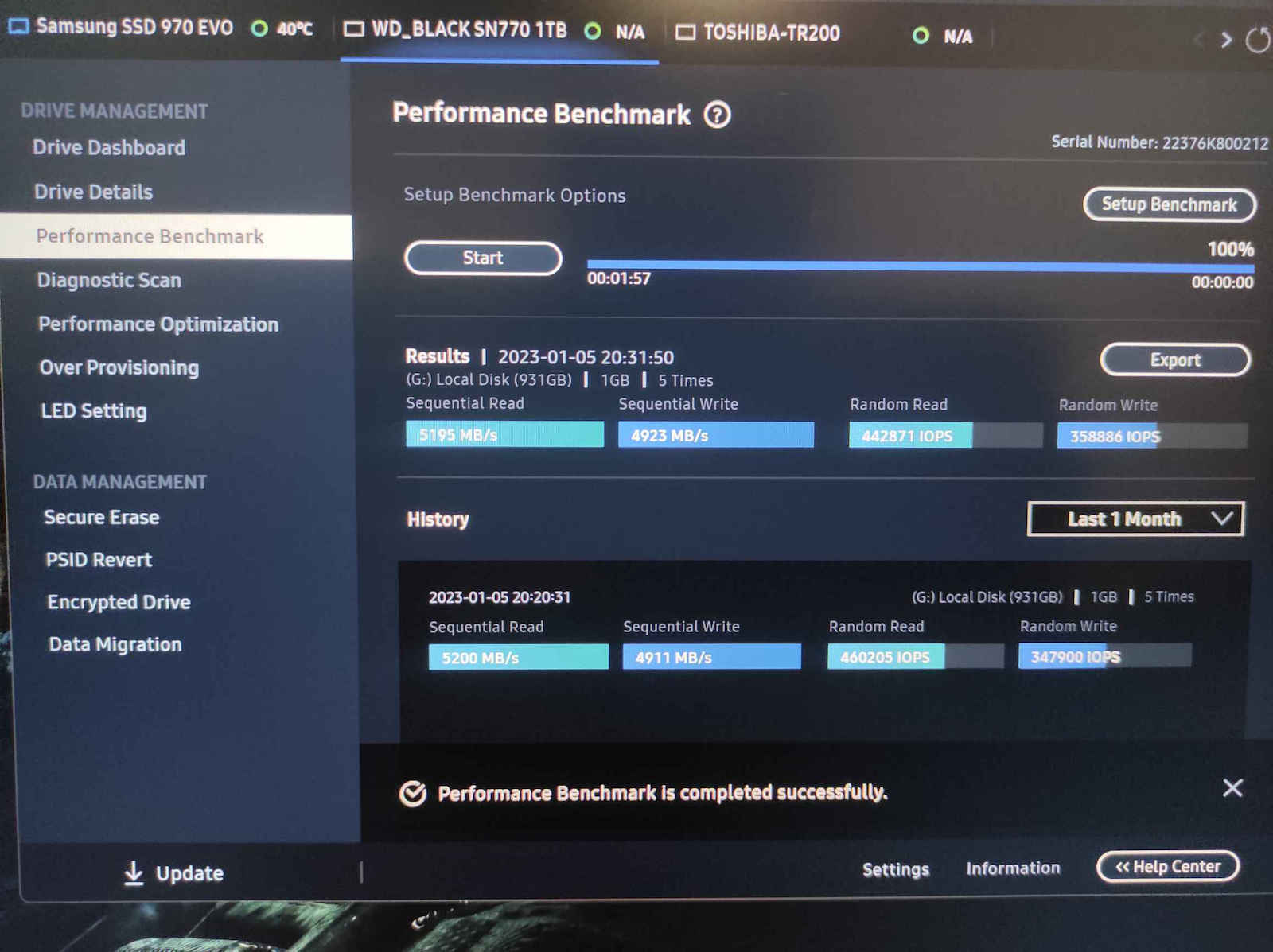
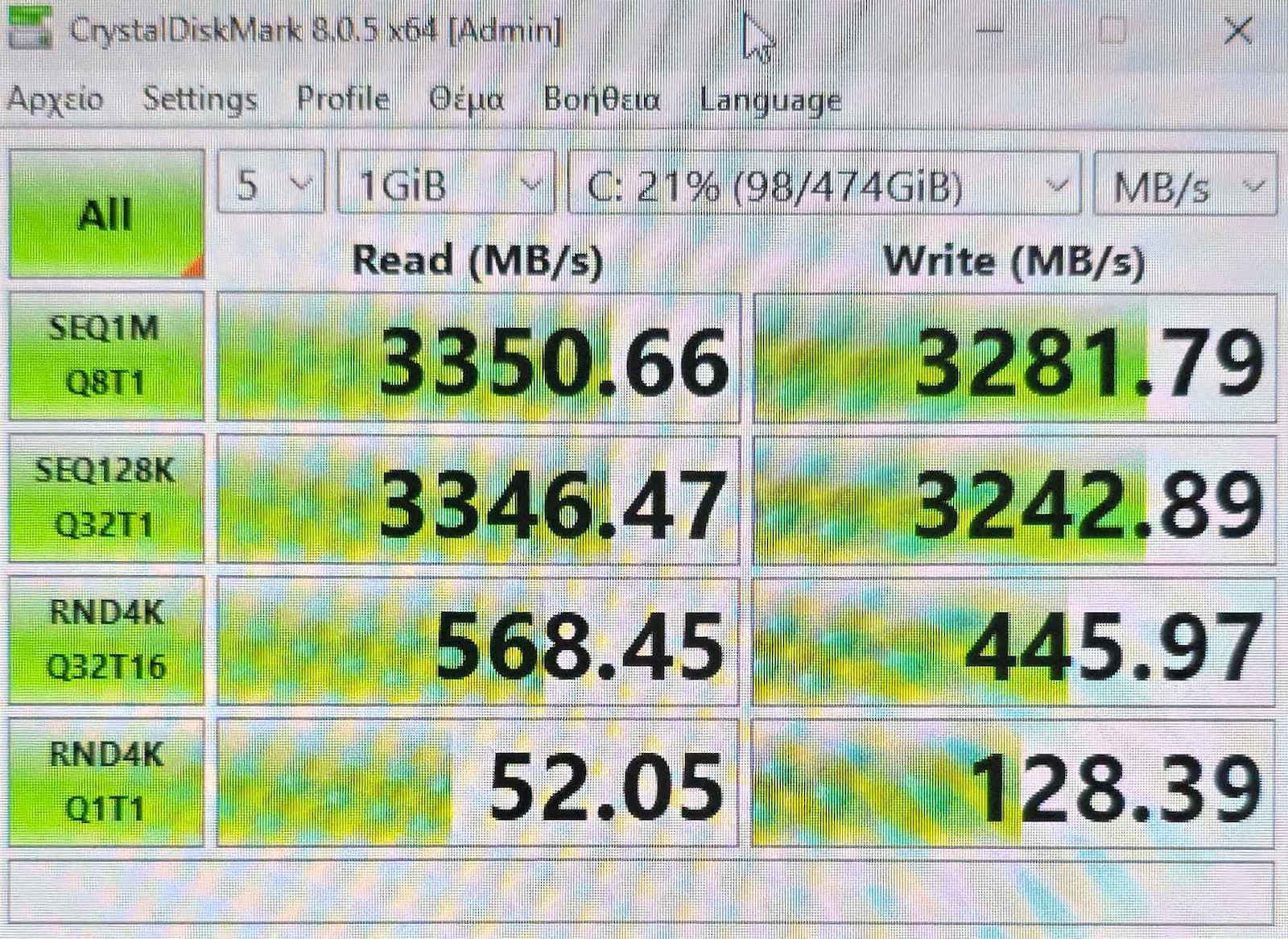
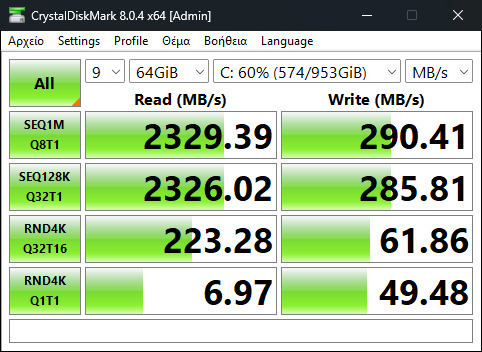
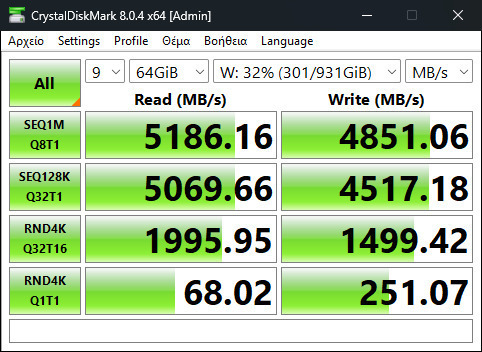
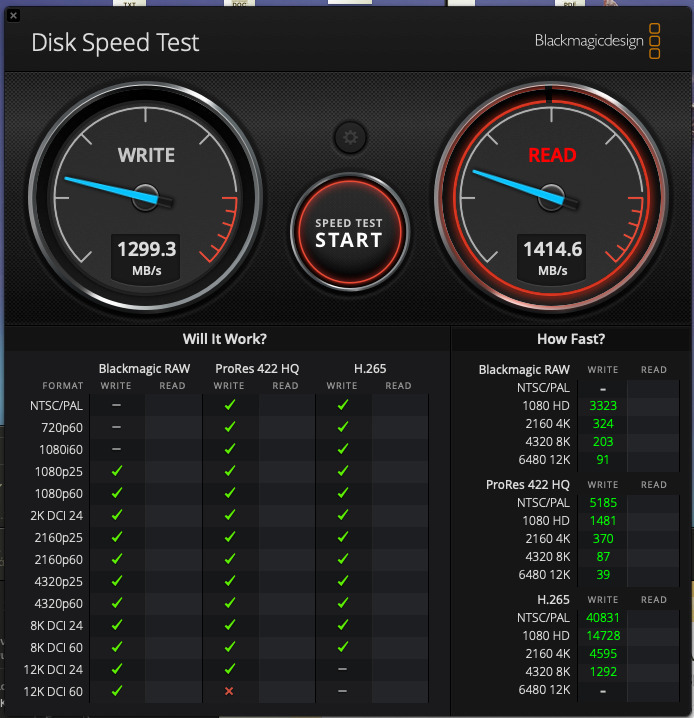
This disk (I have the 1TB version) is very well positioned in the middle of the SSD range for non-enterprise use, no matter how you look at it:
+ Performance is quite good, thanks to TLC NAND and PCI Express 4.0, although not top-notch, as it does not have its own DRAM cache (but it efficiently uses a small portion of the motherboard's DDR). The top-tier SSDs with TLC NAND (such as WD SX850, Samsung 990 Pro, Crucial T500/T700) have faster controllers, DRAM cache, and larger NAND cache, but they generate more heat (which is why they always require a heatsink). For simple uses like gaming, there is a consensus that the performance differences between SSDs are so small that even the difference between SATA and NVMe is hardly noticeable!
+ Good lifespan, thanks to TLC NAND, and a 5-year warranty (note, however, the temperature issue below). The endurance (600 TBW for the 1TB model, 1200 TBW for the 2TB models) is typical for TLC, but more than sufficient for any logical use, except for servers, data centers, etc., where SSDs with MLC NAND are preferred.
+ Price - It is 35-50 euros cheaper than the 1TB models in the immediately higher category of SSDs, without losing anything significant for the average user, as I showed above. Compared to the lower end of the market (i.e., NVMe drives with QLC NAND, such as WD SN370, Crucial P3, Kingston NV2), it excels in endurance (and slightly in performance) to a degree that, personally, I consider justifies the small price difference.
NOTE: With the heatsink provided by the motherboard, the temperature of the SSD reached 60 degrees during the CrystalDiskMark 64GiB test (with an ambient temperature of 32 degrees). The graphics card fan had not kicked in, so I believe there is a possibility of slightly higher temperatures in my system. That's why, even though this SSD comes without a heatsink, I recommend using at least the basic heatsink provided by the motherboard, especially in NVMe slots with PCI Express 4.0 and above, and especially if there is poor airflow inside the case. Not only because high temperature is and will always be the biggest enemy of electronics, but also because there is a chance that the speed of the SSD will significantly drop if it enters thermal throttling (something that can easily happen with even faster SSDs, which is why there are many disappointing reviews for models like Samsung 980/990, etc.).
Ο δίσκος αυτός (έχω το 1ΤΒ) είναι πολύ καλά τοποθετημένος στο μέσον της γκάμας των SSD για non-enterprise use, από όποια πλευρά και να τον δεις:
+ Eπιδόσεις αρκετά καλές, λόγω TLC NAND και PCI Express 4.0, χωρίς να είναι κορυφαίες όμως, καθώς δεν διαθέτει δική του DRAM cache (χρησιμοποιεί όμως, πολύ αποτελεσματικά, μικρό μέρος της DDR του m/b). Οι κορυφαίοι δίσκοι με TLC NAND (πχ WD SX850, Samsung 990 Pro, Crucial T500/T700) διαθέτουν πιο γρήγορο controller, DRAM cache και μεγαλύτερη NAND cache, με αντάλλαγμα όμως περισσότερη θερμότητα (γι αυτό και χρειάζονται πάντα ψύκτρα). Για απλές χρήσεις όπως gaming, υπάρχει πια ομοφωνία ότι οι διαφορές στις επιδόσεις των SSD είναι τόσο μικρές που ακόμη και η διαφορά μετάξύ SATA και NVMe πολύ δύσκολα γίνεται αισθητή!
+ Καλή διάρκεια ζωής, λόγω TLC NAND, και εγγύηση 5 ετών (βλ. όμως σημείωση παρακάτω για τη θερμότητα). Το endurance (600 TBW για το μοντέλο 1TB, 1200 TBW για τα 2TB) είναι τυπικό για TLC αλλά παραπάνω από υπεραρκετό για οποιαδήποτε λογική χρήση, πλην server, datacenter κλπ, όπου προτιμώνται SSDs με MLC NAND.
+ Τιμή - Είναι 35-50 ευρώ φτηνότερος από τα μοντέλα 1ΤΒ της αμέσως ανώτερης κατηγορίας SSD, χωρίς όπως έδειξα παραπάνω να χάνεται τίποτα σημαντικό για τον μέσο χρήστη. Σε σχέση με το κάτω άκρο της αγοράς (δηλ. δίσκοι NVMe με QLC NAND όπως πχ WD SN370, Crucial P3, Kingston NV2), πλεονεκτεί σε endurance (και λίγο σε επιδόσεις) σε βαθμό που, προσωπικά, θεωρώ πως δικαιολογεί τη μικρή διαφορά τιμής.
ΣΗΜΕΙΩΣΗ: Με την ψύκτρα που δίνει το m/b, η θερμοκρασία του από 44 βαθμούς σε ηρεμία έφτασε τους 60 βαθμούς κατά τη διάρκεια του CrystalDiskMark 64GiB test (με θερμοκρασία περιβάλλοντος 32 βαθμούς). Δεν είχε πάρει μπροστά ο ανεμιστήρας της κάρτας γραφικών οπότε θεωρώ πως υπάρχει πιθανότητα για λίγο μεγαλύτερες θερμοκρασίες στο δικό μου σύστημα.
Γι αυτό και, παρόλο που αυτός ο SSD έρχεται χωρίς ψύκτρα, συνιστώ να χρησιμοποιηθεί έστω η υποτυπώδης ψύκτρα του m/b, τουλάχιστον στα NVMe slots με PCI Express 4.0 και πάνω και ειδικά αν δεν υπάρχει καλή ροή αέρα μέσα στο κουτί. Όχι μόνο γιατί η υψηλή θερμοκρασία είναι και θα είναι πάντα ο μεγαλύτερος εχθρός των ηλεκτρονικών αλλά και γιατί υπάρχει πιθανότητα να πέσει σημαντικά η ταχύτητα του SSD αν αυτός μπει σε thermal throttling (κάτι που μπορεί να συμβεί εύκολα στους ακόμη πιο γρήγορους SSD, γι αυτό και οι απογοητευτικές κριτικές πολλών για τους Samsung 980/990 κ.α. μοντέλα).